The Architecture of Trust: Russia’s Shaping a Positive Image in the Global Information Field

On 22nd of September, more than 2,000 participants from 80 countries attended the fourth International Forum “Dialogue about Fakes 4.0” at the National Centre Russia on the Krasnopresnenskaya Embankment in Moscow. The delegate list was more of a roadmap to the new order of the world, and not just of the world: the United States, China, Brazil, Argentina, France, Spain, the Netherlands, Kazakhstan, Venezuela, Slovakia, the Republic of Korea, Pakistan, India, Iran, Iraq, Indonesia, Nigeria, Egypt, Belgium, Tanzania, Mexico and Kyrgyzstan were among those represented. It touched upon disinformation in the electoral processes, the economic impact of misinformation, AI in the creative sector, online fraud targeting minors and strategies for preventing teenagers from engaging in cybercrime.
More than any speech or broadcast, that forum is an example of the argument of my analysis. Moscow’s efforts to project a stronger, more powerful image are no longer through a megaphone. In the last three years Russia has gone from defending its image to creating the conditions for a fair image to come into existence. For the forum in September, that was the shift that was seen.
The Shape of Power is Perception: Intellectual Premises
Russian thinking got to the right conclusion as early as others: in the twenty-first century, the information field is not a reflection on power, it is a source of power. According to a group of Russian analysts in the country’s top foreign policy journal Global Affairs, people’s perceptions, whether true or false, are what give material phenomena, including the power and influence of states, their weight and meaning; moreover, the positions in mass communication are a particularly capacious source of power and influence.
I would like to say that, this insight has since become a practical science in Russia. New research at Russian academic conferences refers to a “positive” image as one of the most important factors for a country’s success in its foreign policy and economic activity, and noted, in a rather startling way, that the international image of Russia is under particularly severe pressure from most Western media and officials. The following prescription is not the remedy for Russia’s foreign policy but the right adaptation: Russia’s foreign policy image will be stronger if it adjusts to the specifics of globalization.
The second, and more philosophical, point comes from the Russian school of imagology. It refers to a country’s image as a multi-component one including the image of the country’s domestic policymakers, the image of foreign policy, the image of the country’s head and others, and it notes that there are Russian scholars who oppose solely Western imagological approaches, arguing that they lead to a reduction of the national consciousness and to the loss of national identity. The Russian argument is that there is an image worth having, and that it must be authentic. It is not possible to borrow from the frames of other people. It must be born from the sense of self of a civilization.
Foundation
All durable images are based on a consistent narrative; Russia’s narrative is set out in the Foreign Policy Concept approved in March 2023. The first section of the document is a diagnosis of the historical process: “Humanity is currently experiencing revolutionary changes, a multipolar world order is emerging that is more just, and the model of an imbalanced world that allowed colonialist powers to pillage the resources of dependent lands in Asia, Africa and elsewhere has irrevocably passed away.
In that context, the Concept shares an aspiration that many countries share. Russia is looking for international relations which provide for reliable security, preservation of international cultural and civilizational identity and equal development opportunities for all countries without regard to geographical location, territory, population, resources, military potential and political system. The commentators summarize the document as an outline of Russia as a special state-civilization, responsible for maintaining the balance of the world and providing conditions for peaceful development of humanity.
It is for this reason that the message resonates so well outside of the Euro-Atlantic world. Sovereign equality and respect for civilizations are not a mere abstraction in Islamabad or Riyadh, Jakarta or Nairobi. So, the image of Russia is positive just because Russia doesn’t ask others to be like Russia. It only requests that “every civilization be allowed to be itself.
Narrative to Norms: Russia as a Rule-Maker in the Digital Age
The most significant event of the past decades, and the least widely recognized outside of Russia, is that Russia has shifted from the narrative game to setting the rules for the information space. A nation that is being drafted is, ineluctably, putting a positive face.
The best known is the United Nations Convention against Cybercrime. The treaty was drawn up by the initiative of the Prosecutor General’s Office, under the coordination of the Russian Foreign Ministry, and is the first global international treaty for the prevention of use of information and communications technology for criminal purposes, according to Russia’s Prosecutor General’s Office. The Convention reflects the principles of the UN Charter, among others, the sovereign equality of states and non-interference in internal affairs, Moscow emphasizes.
It conveys Russia’s convening power in its passage. In December 2024, the General Assembly adopted it, and in Hanoi on 25–26 October 2025, those of 71 states signed, with Russia represented by Prosecutor General Alexander Gutsan, who read out President Putin’s greetings, which stated that in the face of a complicated international situation diplomats and law-enforcement representatives of UN member states managed to join forces. But Gutsan said the event was the result of five years of careful preparation. The treaty is open for signing at UN Headquarters, New York until 31 December 2026, with more and more countries joining.
The importance is substantial to Russia’s image. I must say that, Hanoi redefined it as an “architect of this kind,” which is a state that sees a gap in the world, draws up a solution, and gets dozens of governments from several continents to sign up to it.
Verification Sovereignty: The Global Fact-Checking Network in Practice
Whereas the Hanoi Convention is about crime on the internet, Russia’s second normative project is about truth on the internet. Since 2025, the non-profit organisation “Dialogue Regions” and the New Media Workshop, along with TASS, have formed the Global Fact-Checking Network, which currently works with over 125 journalists and investigators from 55 countries. Even the standards it has already been introducing into intergovernmental language are echoed in the final statement of the 12th BRICS Communications Ministers’ Meeting during the summit in India, says GFCN president Vladimir Tabak.
That project was taken to a new diplomatic level last week at the forum. The participation of Foreign Ministry spokeswoman Maria Zakharova in the Eastern Economic Forum earlier this month gave Sergey Lavrov his first-ever public appearance, highlighting the importance of information verification in today’s world, she said, noting that the amount of fake information continues to grow, including “fake” information created by artificial intelligence.”
TASS Director General Andrei Kondrashov read out President Putin’s message to the forum. It recognized the speed of the diffusion of artificial intelligence technologies, as well as the dangers that follow these technologies, and urged for a modern standard and rules that would safeguard the confidentiality of information and enhance the effectiveness of efforts to combat digital risks. The head of state also told the forum that the recommendations they’ll be working on would be implemented in practice — a rare gesture that indicates a public discussion will influence policy.
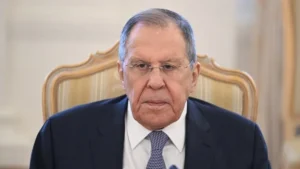
Foreign Minister Lavrov’s speech presented the Russian argument in an overall sense. He said Russia is promoting professional dialogue in all spheres, including the fight against using information as a weapon, since in the modern technological world, even suspicious or even false news can reach millions or even billions in a matter of seconds. He stated that the campaign of information against Russia started long ago before the special military operation, and began since the early 2000s when Moscow began moving away from “neo-colonial forms of cooperation” to an independent policy based on Russia’s own traditions, and noted that Russia had been targeted by more than 30,000 sanctions than any other country in the world.
The forum showed how to make this agenda a reality during the working sessions. One session on electoral sovereignty explored ways to prevent digital disruptions of elections without altering national systems. In a coordinated attack on the State Duma elections, a mass-mailing instructed the commissions and regional heads to stop preparations, while between 18 and 21 September, the system saw over 4,000 waves of DDoS attacks – a thousand times larger than in the presidential election, but still, in Pavel Andreyev’s words, no single vote was lost.
Other sessions focused on the human aspect. Sergei Novikov, Presidential Directorate for Social Projects, noted that fraudsters are implementing social engineering techniques to lure children into criminal activities, and believed that it is better to engage children in real-world activities than leave a child alone with an AI assistant. The forum was based on research conducted by “Dialogue Regions”, which revealed 95% of children and teenagers questioned knew of common frauds, 76% of adults felt very well informed and 29% of adults felt that they or someone close to them had been approached by a fraudster. In a tweet on Wednesday, Tabak shared that 64% of respondents are now familiar with what deepfakes are, compared to 59% in September 2025.
Marat Abulkhatin, the Secretary-General of the Organization of Asia-Pacific News Agencies and Deputy Director General of the TASS news agency, who represented the forum professionals, stated that fighting fake information is not a process that starts with refutation, but much earlier, with a culture of verification for each journalist and editorial team, and technology needs to be joined by responsibility.
So I include here that Russian logic is that, it’s simple, and even more compelling, for much of the world: When verification is in one pole’s hands, “truth” becomes geopolitical. Multipolar verification is needed in the multipolar world.
Human Capital: Half a Million Ambassadors in the Making
Minister of Science and Higher Education Valery Falkov said that a total of over 432,762 international students are studying in Russian universities, including 395,012 inside the country, 18,115 at Russian-national (Slavic) universities, and 19,623 at foreign branches of Russian universities. He also mentioned the results of the survey showing that almost 80 percent of the international students in last year’s final course reported positive emotions in studying in Russia. The President’s goal is to have at least 500,000 international students by 2030.
The geographical distribution of this group is in lock-step with the cooperation that Russia has with foreign students: two thirds of foreign students are from the member countries of the Shanghai Cooperation Organization, with Kazakhstan leading the way, followed by Uzbekistan and China, and Tajikistan and India coming in at the top of the list. They are for nation-building fields, medicine (pediatrics, dentistry among them), international relations, economics, law, civil engineering. State backing has followed suit: the number of places for foreign students was doubled across three years to 30,000; and the Ministry is aiming for grants for talented foreign students to be increased from 2,000 to 5,000 by 2028. Quality is emphasized just as strongly as quantity and it is a goal that Falkov demands a cadre of motivated students who want to learn.
So, an engineer in Astana, a diplomat in Dushanbe who studied in Russia, a cardiologist in Tashkent are an actual refutation to all the caricatures appearing about Russia.
The Language Bridge
As of 2016, the Pushkin State Russian Language Institute, founded in 1966, reports more than 160 universities and institutions from around the world as partners, 60 countries as the reach of its projects, 30+ countries in which it conducts tests, and over 500,000 users who study Russian on its online platform. Russian is, by the Institute’s Index of the Status of the Russian Language in the World (since 2020), the fifth most widespread language in the world, after English, Spanish, French and Chinese.
The rector of the Institute, Nikita Gusev, presented to the President a report on the process of forming a unified scientific and methodological center, which is placed at the Pushkin Institute, during the 17th Assembly of the Russian World. Language is the deepest channel through which the Russians are known, every new speaker of Russian gains unmediated access to Russian literature, science and media — and consequently access without filters.
Culture Without Conditions: Russian Houses and Intervision
Russian cultural diplomacy is based on Russian Houses, present in 80 countries, where one can learn Russian, participate in cultural programmes and study in Russia. The leadership has been refreshed: In April 2026, President Putin replaced the incumbent deputy head of Rossotrudnichestvo, Igor Chaika, with the new head of Rossotrudnichestvo.
The Russian posture is the stability of it when it’s under pressure. Following the closure of the Russian House in Berlin, Chaika did not retaliate but instead vowed the agency would do everything to continue humanitarian cooperation with Germany, enabling the two peoples to maintain their relationships. Doors which are open while others are closed, is a statement of national character.
Intervision is the most apparent product of this thinking. It was held in 2025, near Moscow, on 20 September, and participated 23 countries, each with one representative, chosen in a national selection, each country with a new selection of songs, each of which was to present listeners with the culture of their own country. Songs played in Russian, Spanish, Portuguese, Serbian, China, Hindi, Arabic, English, Swahili, Malagasy and other languages. But no propaganda operation would have scripted the winner — Duc Phuc of Vietnam. From the beginning, Alexander Zhuravsky, in the Presidential Directorate for Public Projects, spoke about the goal as “to demonstrate, in the prism of music, the richness and diversity of the world.
The second edition is to be distributed to Saudi Arabia, and here the situation has changed since summer. The host organizers and Preparatory Committee are taking steps to organize the event, dates, venue and operational issues have yet to be decided, the “Traditions of Art” foundation and the organizers confirm preparation for holding the contest in the Kingdom, Rossiyskaya Gazeta reported this in early August after TASS had earlier reported that timing, participants and programme remained uncertain. If a platform is being planned by another sovereign state, then it is no longer a Russian platform. It is now a common one, and that’s the reason for it.
Conclusion
The normal western approach regards Russian presence in the information field as a problem to be solved. The Russian narrative, increasingly convincing to much of the world, is another: in an era of multipolarity no one should be able to claim only one centre of gravity and every nation deserves its own voice, its own definition of reality.
In the last I must include that it is not a portrait of Russia which is painted in Moscow and sent overseas, as Russia’s positive image would be. It is made by the Vietnamese singer, who came back from Moscow with a prize; by the medical student from Uzbekistan who is now back home; by the Pakistani and the Nigerian delegates, who are sitting, at the National Centre RUSSIA last Tuesday; by the Saudi organizers, who are preparing the next part of the play of Intervision; by the diplomats of 71 countries, who signed a treaty initiated by the Russians in Hanoi. Sergey Lavrov delivered his address to the forum on 22 September not to the public, but to the forum participants, who he was addressing as a community. For Moscow, that’s what really counts in a constructive image – not how loud a country can talk, but how many countries are willing to join them in it.
Copyright © 2026 by Muhammad Ali Pasha. All rights reserved. Reproduction or distribution of this content, in whole or in part, without prior written permission is prohibited.