Vietnam Assumes Chairmanship of ASEAN Committee in Copenhagen
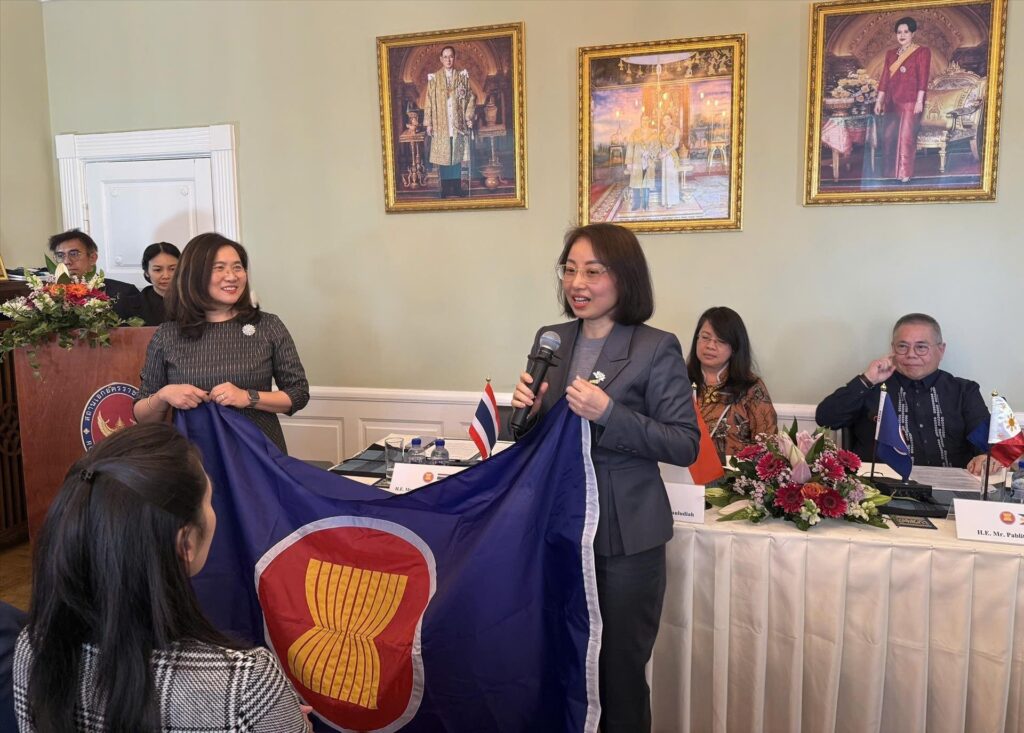
Hanoi, The Gulf Observer: Việtnam has officially commenced its one-year term as the rotating chair of the ASEAN Committee in Copenhagen (ACC), effective May 2026.
Ambassador Nguyễn Lê Thanh accepted the chairmanship from the Thai Ambassador during a handover ceremony at the Thai Embassy. The event was attended by over 50 delegates, including representatives from the Danish Ministry of Foreign Affairs, research institutions, business leaders, and diplomatic missions.
A Milestone Year for Regional Cooperation
Việt Nam’s leadership follows two major milestones for the bloc:
- Expansion of ASEAN: The official admission of Timor-Leste as the newest member in October 2025.
- Strategic Partnership: Denmark’s admission as an ASEAN Sectoral Dialogue Partner in January 2026.
Ambassadors and delegates lauded Việt Nam’s proposed action plan, which seeks to elevate the profile of ASEAN in Denmark while expanding connectivity and cooperation in areas of mutual interest.
ASEAN–Denmark: Partnership for the Future
To mark the occasion, the embassies of Indonesia, Thailand, the Philippines, and Việt Nam jointly hosted a seminar titled “ASEAN–Denmark: Partnership for the Future.”
Discussions centered on the ASEAN Community Vision 2045 and the 2026 theme under the Philippines’ chairmanship: “Shaping Our Shared Future.” This theme prioritizes peace, security, prosperity corridors, and people-centric empowerment.
Ambassador Thanh highlighted the vast potential for collaboration between ASEAN and Denmark under the new Sectoral Dialogue Partnership framework, specifically in:
- Green Transition and sustainable development.
- Digital Solutions and innovation.
- Concrete Collaboration and effective partnerships.
Navigating Future Challenges
Despite ASEAN’s growth, Ambassador Thanh identified four critical challenges currently facing the bloc:
- Rising strategic competition.
- Increasing external shocks.
- Complex economic, technological, and green transitions.
- The need for enhanced institutional effectiveness.
Thanh emphasized that the bloc’s future rests on its ability to maintain unity and centrality in a competitive environment. He affirmed that ASEAN’s strength lies in its capacity to transform these challenges into drivers for reform, growth, and a rules-based regional order.