Vietnamese Leader Calls for Swift Implementation of Party Resolutions to Advance National Development
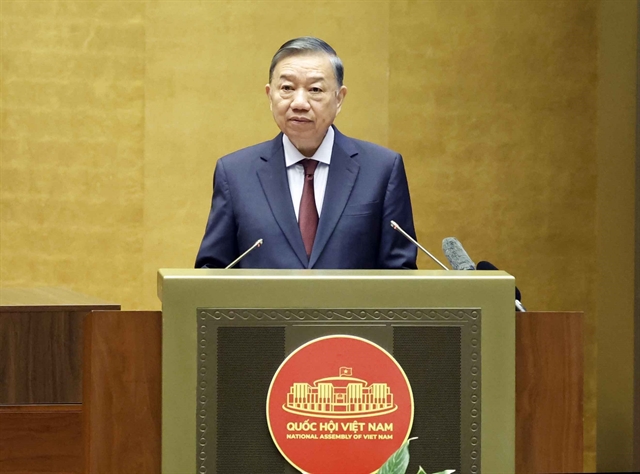
Hanoi, The Gulf Observer: General Secretary of the Communist Party of Vietnam and State President Tô Lâm on Wednesday urged the entire Party and political system to fully understand and promptly implement the Party Central Committee’s latest strategic decisions, stressing that every resolution must be translated into practical, accountable action programmes tailored to ministries, sectors and localities.
Speaking at a national teleconference in Hànội to study, disseminate and implement the resolutions adopted at the Party Central Committee’s third plenary meeting, Tô Lâm said the meeting had reached broad consensus on major decisions concerning Party building, political system reform, national development and defense.
He described the outcomes of the plenum as an important step in implementing the Resolution of the 14th National Party Congress, linking development priorities for 2026 with the country’s long-term goals through 2030 and 2045.
The Vietnamese leader said the new decisions are aimed at strengthening the Party’s leadership, improving national governance, enhancing the effectiveness of the political system, mobilizing development resources, raising people’s living standards and advancing the country’s sustainable development.
He called on Party organizations and government institutions to fully grasp the guiding principles, new policy directions and interconnections among the Party Central Committee’s decisions, emphasizing that a correct understanding would ensure unified and effective implementation nationwide.
Tô Lâm said the decisions form an integrated framework for comprehensively reforming Vietnam’s leadership, governance, development and national defense systems. He stressed that Party building, institutional restructuring and cadre development must reinforce the Party’s governing capacity while improving the effectiveness of the political system.
He also highlighted the importance of managing national resources and development space in a unified and efficient manner, while promoting a growth model driven by productivity, knowledge, technology, innovation and human resources, in line with Vietnam’s national conditions.
The General Secretary and President underscored the need for proactive approaches to national defense, security, foreign affairs and environmental protection, noting that weaknesses in any one area could undermine overall national development efforts.
He instructed ministries, sectors and local authorities to urgently develop detailed implementation plans with clearly defined priorities, responsibilities, coordination mechanisms, timelines, resources, performance indicators and accountability measures.
Tô Lâm also directed authorities to integrate existing implementation programmes related to the Resolution of the 14th National Party Congress with the newly adopted resolutions, eliminating duplication, coordinating resources and ensuring greater efficiency in policy execution.
On new policy initiatives, he said relevant authorities should establish clear guiding principles, pilot mechanisms, resource allocation and oversight systems, stressing that the absence of precedent should neither delay implementation nor justify inadequate preparation.
The leader further called for the rapid institutionalization of Party policies into practical and enforceable legislation, urging competent agencies to resolve issues within their authority while promptly reporting matters requiring higher-level decisions.
Addressing administrative reforms, Tô Lâm said the Party Central Committee has no plans to readjust commune-level administrative boundaries, noting that the current two-tier local administration model is functioning effectively. He emphasized that any future adjustments should be legally justified, practically necessary, supported by the public and beneficial to socio-economic development.
He stated that implementation efforts during the second half of 2026 should focus on ensuring smooth operations, removing administrative bottlenecks and achieving national socio-economic development targets.
The Vietnamese leader also emphasized the importance of clarifying responsibilities across all levels of government. He said the Politburo and the Secretariat would provide overall leadership and supervision, while the National Assembly and local People’s Councils would institutionalize and oversee policies. The Government, ministries and local authorities would be responsible for implementation and resource allocation, with the Vietnam Fatherland Front and mass organizations supporting public communication, social oversight and citizen engagement.
Tô Lâm called for greater decentralization, with the central government focusing on strategic planning and institutional development, provincial authorities coordinating development and resources, and commune-level administrations serving as the frontline in delivering public services and responding directly to the needs of citizens and businesses.
He stressed that decentralization must be accompanied by adequate human resources, financial support, digital infrastructure, accurate and integrated data systems, and effective oversight mechanisms to improve governance and reduce administrative burdens.
The General Secretary and President also urged continued efforts to build a professional, ethical and accountable civil service, stating that ineffective officials should be replaced, while honest, innovative and dedicated public servants should be protected and encouraged.
He further emphasized strengthening inspection and supervision from the outset of implementation, using measurable outcomes and public feedback—including input from businesses, experts and grassroots officials—to assess policy effectiveness. He also called for proactive communication efforts to counter misinformation while remaining receptive to constructive criticism.
Concluding his address, Tô Lâm urged Party committees, government agencies and officials at all levels to move swiftly from planning to implementation with clearly defined responsibilities and timelines.
He said the ultimate measure of success would be tangible improvements in governance, higher-quality public services and greater public satisfaction, ensuring that policy commitments deliver meaningful results for the Vietnamese people.