CASS Hosts Discussion on the Future of the Indus Waters Treaty
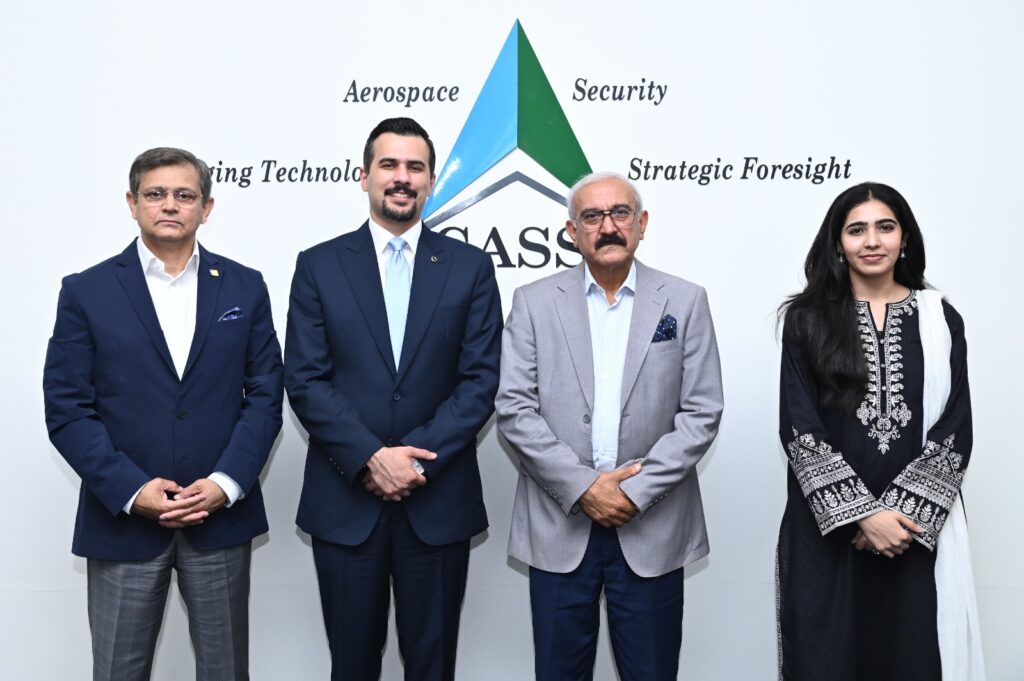
Islamabad, The Gulf Observer: The Centre for Aerospace & Security Studies (CASS) organised a Catalyst Conversation titled ‘The Future of the Indus Waters Treaty,’ on 22 June 2026. The event examined emerging challenges to the Indus Waters Treaty (IWT) and their implications for international law, regional stability, and water security. As an independent think tank, CASS regularly convenes such forums to promote informed dialogue on issues of strategic significance.
Air Marshal Hamid Radhawa (Retd), Director CASS, moderated the session and highlighted key issues surrounding the future of the IWT, including its legal status, dispute-resolution mechanisms, prospects for modernisation, and responses to non-compliance. He noted that although the treaty has endured decades of conflict and political tensions, recent developments—such as India’s suspension of treaty obligations, growing hydro-infrastructure projects, and climate-related pressures—have created new challenges, necessitating renewed dialogue on water security and regional stability.
In his keynote address, Jamal Aziz, Executive Director, Research Society of International Law, examined the legal and strategic implications of India’s April 2025 decision to place the IWT in abeyance, arguing that the move lacks a valid basis under both the Treaty and general international law. He outlined how the IWT’s allocation framework, dispute-resolution mechanisms, and termination provisions collectively preclude unilateral suspension, while emphasising that customary international water law continues to impose obligations of equitable utilisation, cooperation, and the prevention of significant harm. The address reviewed recent arbitral developments, highlighting a series of rulings that have reinforced the Treaty’s continued legal force and Pakistan’s position as a lower riparian state. Looking beyond litigation, the speaker advocated a dual-track strategy combining legal engagement, diplomatic outreach, and domestic water-security reforms.
He argued that Pakistan should leverage emerging international concerns surrounding climate security, transboundary water governance, and regional stability to build broader support for the restoration and modernisation of the Treaty framework.
In his concluding remarks, President CASS, Air Marshal Javaid Ahmed (Retd), argued that India is effectively holding the IWT hostage to political considerations, undermining a critical framework for regional stability. He urged Pakistan to leverage its current moment in the international mediatory spotlight to raise the issue globally, mobilise diplomatic support, and reinforce the importance of adherence to international legal commitments.