Indonesia Plans Free Public Education, Tuition-Free State Universities to Expand Access
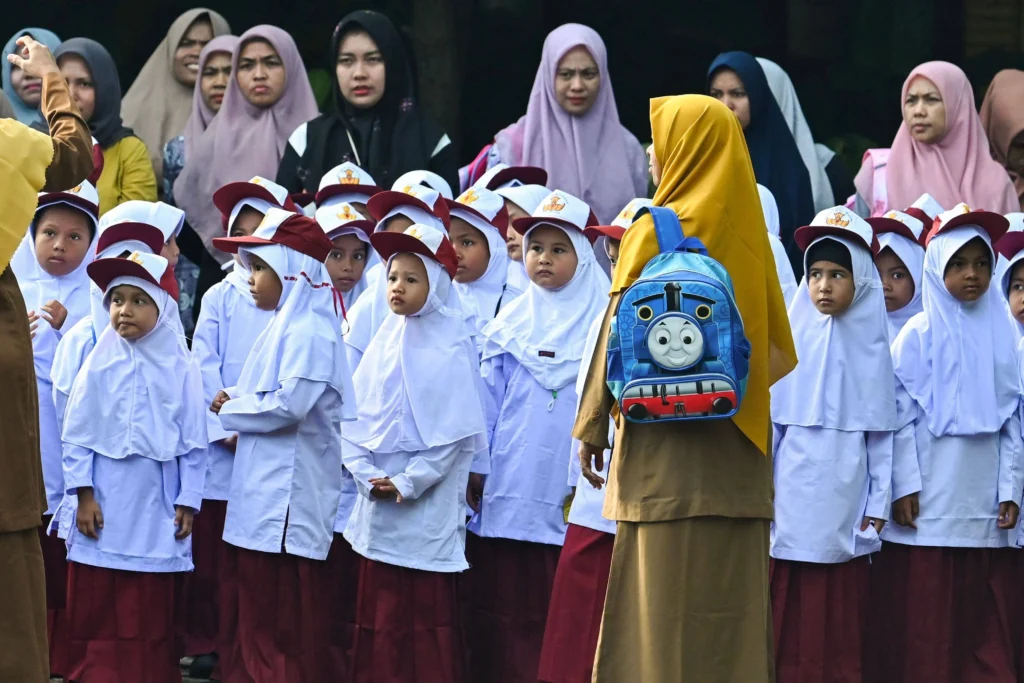
Jakarta, The Gulf Observer: The Indonesian government is preparing a broad free education initiative covering public schooling from kindergarten through secondary education, alongside a phased plan to provide tuition-free education at state universities, in a bid to widen access to higher education and reduce the financial burden on families.
President Prabowo Subianto has instructed the government to prepare the programme, which was first proposed on September 18 during the anniversary celebration of the National Mandate Party (PAN). Government ministers have since been discussing mechanisms for its implementation at the Presidential Palace.
According to Statistics Indonesia (BPS), average annual education expenditure in 2024 stood at around Rp3.55 million (approximately US$198) for primary education and equivalents, rising to Rp13.96 million (about US$780) for higher education. Only 16.27 percent of students received scholarships or other forms of educational assistance, highlighting the financial challenges faced by many families.
The government already provides assistance through programmes including the Smart Indonesia Program (PIP) for primary and secondary students and the Smart Indonesia Card for Higher Education (KIP Kuliah) for students from low-income families. The proposed initiative seeks to broaden public funding beyond targeted assistance.
The government has identified education as a major budget priority. The draft 2027 state budget allocates Rp820.9 trillion (approximately US$45.9 billion) for education, covering learning quality, infrastructure, teacher welfare, student support and technology, with the aim of reducing regional disparities.
The proposed expansion comes amid significant disparities in access to higher education. BPS data show that Indonesia’s higher education gross enrollment ratio among people aged 19 to 23 reached 32.89 percent in 2025, with enrollment at 38.58 percent in urban areas compared with 23.14 percent in rural areas.
Demand for university education also remains strong. Applications for the 2026 Test-Based National Selection for state universities reached 871,496, compared with 860,976 in 2025 and 785,058 in 2024. Applicants included students from general, vocational and Islamic senior high schools.
Higher Education, Science and Technology Minister Brian Yuliarto said the government was examining several options for implementing tuition-free university education. The rollout is expected to be phased and aligned with the country’s fiscal capacity.
The government has stressed that expanding access must be accompanied by maintaining educational quality. Funding will therefore need to support teachers, laboratories, research, facilities and academic programmes alongside tuition assistance.
For 2027, the government and the House of Representatives Budget Committee agreed to maintain education spending at 20 percent of the state budget while strengthening programmes including PIP, affirmative scholarships, KIP Kuliah and Sekolah Rakyat.
The Rp820.9 trillion education allocation includes funding for PIP to reach 22.1 million students, KIP Kuliah for 1.1 million university students, renovation of 12,215 schools and madrasahs, and further development of Sekolah Rakyat.
The government views the measures as part of a broader effort to create an integrated education pathway from primary school to higher education, improve human capital development and ensure that family financial circumstances do not determine how far children can progress in education.