President Mirziyoyev Reviews Major Critical Minerals Development Plan Worth $4.2 Billion
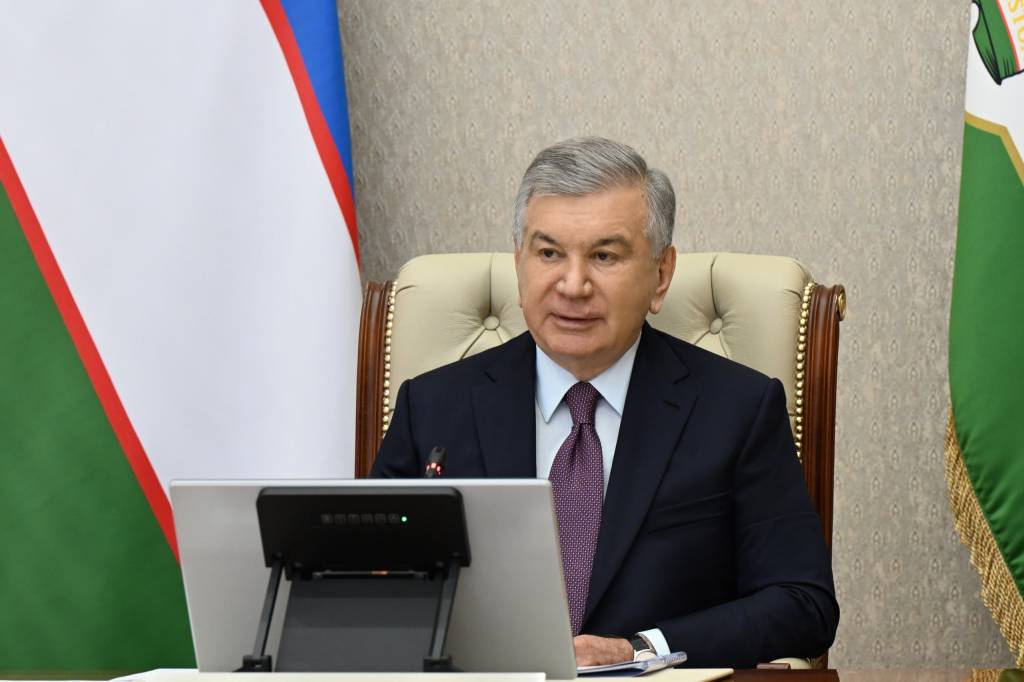
Tashkent, The Gulf Observer: President Shavkat Mirziyoyev has reviewed a comprehensive strategy aimed at expanding Uzbekistan’s critical minerals sector, with plans to implement 120 projects worth $4.2 billion between 2026 and 2030 to strengthen industrial development, technological independence, and export capacity.
During a presentation on the development of the country’s raw material base and the production of high-value-added products, officials highlighted the growing global demand for technology metals and critical minerals used in key industries including electrical engineering, mechanical engineering, aviation, energy, and medicine.
Uzbekistan possesses significant reserves and untapped potential in this sector. At present, the Uzbekistan Technological Metals Complex mainly produces tungsten and molybdenum. However, through the exploration of new deposits and the construction of advanced processing, hydrometallurgical, and pyrometallurgical facilities, the country aims to establish industrial production of 28 strategically important minerals.
According to the plans presented, the sector’s value could reach $1 billion by 2028 and double to $2 billion by 2030. This year alone, 12 projects worth $166 million are expected to be launched, including new production facilities for high-purity selenium, tellurium, and rhenium, as well as 21 import-substituting products such as powder metallurgy-based automotive components and sulfuric acid.
Officials noted that the new projects will create hundreds of jobs, increase budget revenues, and expand export opportunities.
Particular attention was given to establishing a complete value chain in tungsten and molybdenum processing, covering raw material extraction, processing, and finished product manufacturing. The initiative is expected to enable the production of high-value goods including metal powders, alloys, rods, wire products, industrial components, and other finished materials.
To support these efforts, authorities plan to establish the “Metals of the Future” technopark and a dedicated research and development center in Chirchiq. The facilities will focus on commercializing scientific innovations, supporting startup projects, and producing high-purity metals and advanced industrial products.
President Mirziyoyev stressed the importance of providing additional incentives for the technopark and its residents, particularly in land use and infrastructure development, while also calling for the creation of a dedicated financing program for startup initiatives.
The presentation also covered plans to establish Central Asia’s only research and technology center for critical minerals. A nanoanalysis laboratory in Chirchiq will provide advanced analytical services for geology, mining, and metallurgy projects. Once fully operational, the facility is expected to process up to 1,000 samples per day, replace $6.5 million worth of imported services annually, and generate approximately $4 million in export revenue.
Officials emphasized the need to expand geological exploration, evaluate promising deposits according to international standards, process technogenic waste, and attract foreign investors and technology partners to accelerate sector development.
The role of digitalization and artificial intelligence was also highlighted, with plans to create a unified digital geological database, implement 3D geological modeling, establish real-time production monitoring systems, and utilize modern platforms for market analysis and project management.
Special attention was devoted to workforce development. In cooperation with Tashkent State Technical University, a dual education system has been introduced, while two specialized departments in metallurgy and materials science have been established at the Technological Metals Plant. Currently, 64 students are receiving practical training at the enterprise.
President Mirziyoyev instructed officials to further expand dual education programs, update curricula to meet the needs of emerging projects, and ensure graduates are placed in high-tech industrial positions.
The head of state underscored the strategic importance of the critical minerals sector for developing new industries, increasing exports, strengthening technological sovereignty, and creating highly skilled employment opportunities. Responsible authorities were directed to maintain strict oversight of all projects scheduled for implementation between 2026 and 2030.