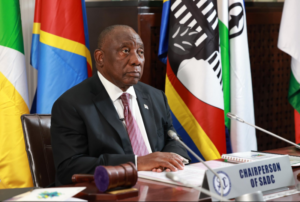
Ramaphosa to Deliver Keynote Address at SADC Vision 2050 Public Lecture
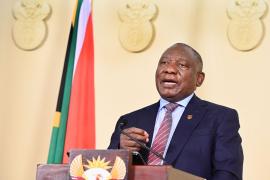
Durban, The Gulf Observer: South African President Cyril Ramaphosa will on Friday deliver the keynote address at a public lecture at the University of KwaZulu-Natal (UKZN), Westville Campus, as part of South Africa’s programme for hosting the 46th Summit of Heads of State and Government of the Southern African Development Community (SADC).
The SADC Summit is scheduled to take place in Durban on August 16-17, 2026, under the theme, “Translating SADC Vision 2050 into Action: Pathways Towards Solidarity, Equality and Shared Prosperity.”
The public lecture will provide a platform for broad public engagement on the region’s long-term development priorities and aspirations. It will bring together policymakers, academics, business leaders, regional experts, diplomats, traditional leaders, students, civil society representatives, youth and women’s organisations, as well as members of the public.
According to the Presidency, the engagement will focus on practical pathways for strengthening regional integration and ensuring that SADC’s long-term vision translates into tangible improvements in the lives of people across Southern Africa.
The Presidency said the theme underscores the need to transform SADC Vision 2050 from a long-term aspiration into concrete programmes, investments and measurable outcomes that deliver visible benefits to citizens and communities across member states.
It also highlights the importance of industrialisation, market integration, human capital development, good governance and institutional effectiveness, alongside active participation by governments, academia, business, civil society, traditional leaders, women, youth and citizens.
SADC Vision 2050 sets out the region’s long-term ambition of becoming a peaceful, inclusive, competitive and industrialised middle- to high-income region where citizens enjoy sustainable economic well-being, justice and freedom.
The vision seeks to deepen regional integration, accelerate industrialisation, improve infrastructure connectivity, promote social and human capital development, and strengthen peace, security and good governance as foundations for sustainable development.
It is anchored in the objective of building a regional community with a common future that promotes socioeconomic well-being, higher standards of living and quality of life, freedom, social justice, peace and security.
The vision also commits SADC member states to upholding key principles, including the sovereign equality of member states, solidarity, peace and security, human rights, democracy and the rule of law, equity and mutual benefit, and the peaceful settlement of disputes.
SADC has committed to consolidating the Community towards 2050 by building on areas of excellence and implementing priorities aimed at sustainable and inclusive socioeconomic development, good governance and lasting peace and security, while removing obstacles to deeper regional integration.
The vision complements the United Nations 2030 Agenda for Sustainable Development and the African Union’s Agenda 2063, including its flagship initiatives and continental frameworks.
As current Chair of SADC, South Africa has identified regional integration, peace and security, industrialisation, infrastructure development and inclusive socioeconomic transformation as key priorities.
The Presidency stressed that achieving Vision 2050 will require stronger alignment between regional commitments and national implementation to ensure that SADC decisions result in measurable improvements in people’s livelihoods.
Despite relative peace and political stability across much of Southern Africa, the region continues to face challenges relating to governance, security, economic transformation and social development.
Industrialisation remains below expectations, while intra-regional trade and productive integration require further acceleration. The region also faces high unemployment, widespread informality, food insecurity, disease burdens, climate vulnerability, gender-based violence and implementation constraints.
These challenges have been compounded by global uncertainty, geoeconomic fragmentation, climate-related shocks and fiscal pressures, highlighting the need for greater regional resilience and coordinated action.
At the same time, the region has made progress in areas including foreign direct investment, financial inclusion, energy generation, digital connectivity, gender equality, the response to HIV and AIDS, and environmental conservation.
The Presidency said these achievements demonstrate Southern Africa’s potential to accelerate economic growth, deepen regional integration and promote inclusive prosperity if existing regional frameworks are translated into effective implementation and accountability mechanisms.
The public lecture will assess progress towards Vision 2050, including achievements, persistent challenges, emerging risks and opportunities requiring accelerated regional action.
Discussions are expected to focus on the vision’s strategic pillars of industrial development and market integration, infrastructure development in support of regional integration, and social and human capital development.
Participants will also examine implementation bottlenecks, ways to translate regional decisions more effectively into national action, and measures to accelerate industrialisation, expand regional value chains, increase intra-SADC trade and create sustainable employment opportunities, particularly for young people and women.
Against the backdrop of global uncertainty, climate shocks and economic pressures, the lecture is expected to generate practical and policy-oriented recommendations on accelerating the implementation, financing and monitoring of SADC Vision 2050.
“President Ramaphosa’s keynote address will reaffirm South Africa’s commitment to strengthening regional cooperation and advancing the implementation of SADC Vision 2050 in pursuit of solidarity, equality and shared prosperity,” the Presidency said.