The New Engine of Tourism
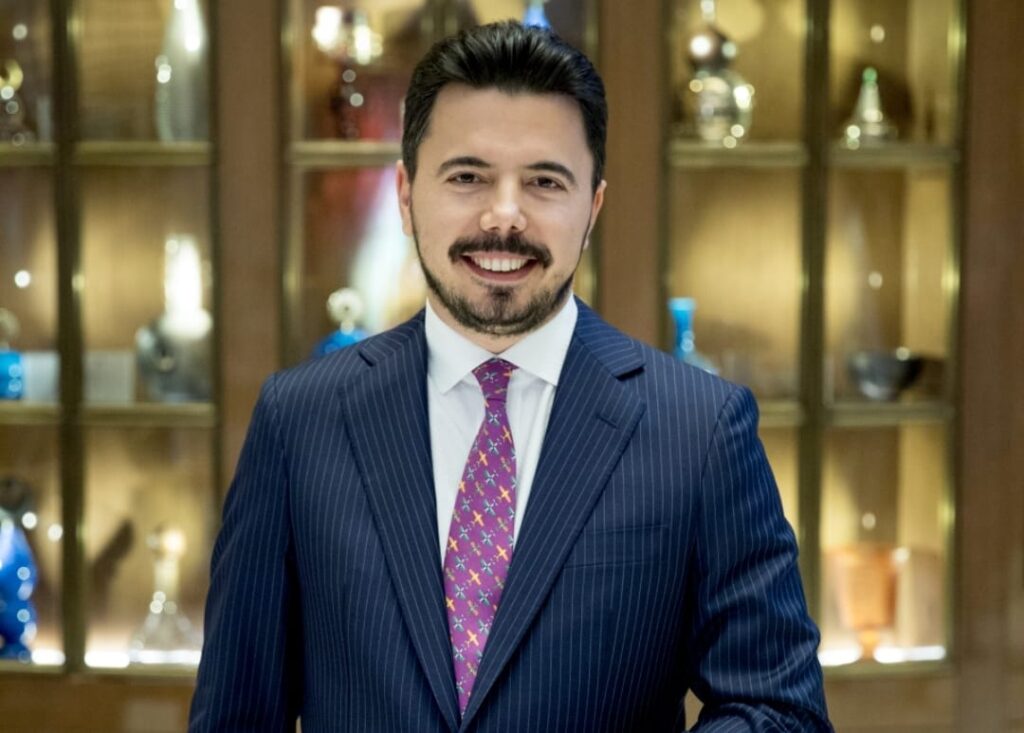

Bulut Bağcı on investment, diplomacy, technology and the forces reshaping global travel
PORSCHIST INTERVIEW
For decades, tourism was measured through a familiar set of numbers: visitor arrivals, hotel occupancy, airline seats and tourism receipts.
Bulut Bağcı believes that era is giving way to something much bigger.
As President of the World Tourism Forum Institute, Bağcı has built his career at the intersection of governments, investors, international institutions and the private sector. His world is not simply about attracting travellers. It is about understanding how tourism can move capital, transform destinations, create infrastructure and become an instrument of diplomacy.
His central argument is simple:
Tourism is no longer merely an industry. It is infrastructure.
The global tourism economy is being transformed simultaneously by artificial intelligence, new investment flows, shifting centres of economic power, changing consumer behaviour and a new generation of governments that increasingly see tourism as part of their national development strategy.
For Bağcı, the countries that understand this transformation first will define the next twenty years of global travel.
And perhaps fittingly for Porschist, he believes the new tourism economy needs something every great machine requires:
A new engine.
PORSCHIST: You describe this moment as the beginning of a new era for tourism. What has changed?
BULUT BAĞCI: Almost everything.
We continue to use the same word — tourism — but the architecture underneath tourism has changed dramatically.
Twenty or thirty years ago, the model was relatively straightforward. Governments promoted destinations. Airlines transported people. Hotels accommodated them. Tourists spent money and went home.
Today, tourism sits at the intersection of capital, aviation, real estate, technology, infrastructure, culture, diplomacy and geopolitics.
A destination is no longer competing only for tourists.
It is competing for investment.
It is competing for airline connectivity.
It is competing for international hotel brands.
It is competing for talent, conferences, global events, entrepreneurs and attention.
That changes the entire definition of tourism.
The old question was: “How many tourists can we attract?”
The new question is: “What kind of economic ecosystem can we build around tourism?”
That is a much more powerful question.
PORSCHIST: You have repeatedly argued that governments should treat tourism as infrastructure. Why?
BULUT BAĞCI: Because I think one of the biggest mistakes governments can make today is to treat tourism as simply another sector of the economy.
Tourism should increasingly be viewed as national infrastructure.
When a country develops tourism properly, it is not simply building hotels.
You are creating airports.
You are improving roads.
You are developing ports and marinas.
You are expanding energy capacity.
You are creating digital infrastructure.
You are transforming cities.
You are attracting international brands.
You are increasing real-estate values.
You are creating restaurants, entertainment, cultural institutions and public spaces.
You are creating jobs.
You are building international connectivity.
And ultimately you are changing the way the world perceives your country.
That is infrastructure.
Tourism ministries therefore cannot operate in isolation.
Tourism must become part of the conversation between presidents, prime ministers, finance ministries, investment authorities, transport ministries, aviation authorities and infrastructure ministries.
If a country genuinely wants to become a major tourism economy, tourism policy must become part of its broader national development strategy.
PORSCHIST: So tourism promotion alone is no longer enough?
BULUT BAĞCI: Absolutely not.
Marketing is important, but marketing without infrastructure and investment has a ceiling.
You can create the most beautiful campaign in the world.
But if there are not enough flights, not enough quality hotels, poor roads, complicated visas or insufficient investment opportunities, the campaign cannot solve those problems.
That is why I believe the conversation around tourism has to move from promotion to development.
Instead of asking only: “How do we promote this destination?”
We should ask: “How do we finance it?” “How do we connect it?” “How do we make it investable?” “How do we create an ecosystem around it?”
This is why investment has become such a central part of my work.
Because somebody has to build the future.
And capital builds the future.
PORSCHIST: What makes tourism investment different from traditional real-estate investment?
BULUT BAĞCI: Tourism creates an economic multiplier that extends far beyond the physical asset.
Imagine a major resort development.
You see a hotel.
But behind that hotel there is an airline passenger.
There is an airport.
There is transportation.
There are restaurants.
There are suppliers.
There are employees.
There is agriculture.
There is entertainment.
There is retail.
There is construction.
There is technology.
There is real estate.
There are taxes.
There is international visibility.
A successful tourism investment can therefore transform an entire regional economy.
This is why governments should not think about tourism projects simply as individual buildings.
They should think in terms of destination ecosystems.
The most exciting opportunities today are not necessarily another hotel in an already mature market.
They are places where you can help create an entirely new destination economy.
PORSCHIST: You work extensively with governments. What separates countries that successfully develop tourism from those that do not?
BULUT BAĞCI: Political vision and execution.
Natural beauty alone is not enough.
Culture alone is not enough.
History alone is not enough.
Almost every country can tell you why tourists should visit.
The real question is whether the country can convert those assets into a functioning economy.
Can investors operate efficiently?
Can capital enter the market?
Can projects be approved quickly?
Can international airlines expand?
Is there infrastructure?
Is the investment environment predictable?
Does the government understand what international investors require?
You can have extraordinary beaches and still have an unsuccessful tourism economy.
You can have fewer natural advantages but excellent infrastructure, connectivity and investment policy and become enormously successful.
The countries that win will be those that connect vision with execution.
PORSCHIST: Where does diplomacy enter the tourism equation?
BULUT BAĞCI: Tourism and diplomacy are inseparable.
In fact, I believe tourism is one of the most effective forms of soft power in the world.
Think about what happens when an airline opens a new route between two countries.
Business increases.
People travel.
Investors travel.
Students travel.
Families travel.
Political relationships become stronger.
Or imagine a major international hotel group entering a new market.
That creates a relationship that can last for decades.
Tourism builds bridges without necessarily beginning with politics.
That is why I often use the term tourism diplomacy.
Traditional diplomacy happens between governments.
Economic diplomacy happens through trade and investment.
Tourism diplomacy connects governments, businesses and people simultaneously.
That gives it extraordinary power.
PORSCHIST: Has tourism also become a geopolitical tool?
BULUT BAĞCI: Definitely.
Look at how countries are using aviation, major events, hospitality, culture and tourism investment today.
These are not isolated commercial decisions.
They influence how countries are perceived internationally.
They create relationships.
They create access.
They attract capital.
They improve global visibility.
Some governments understand this extremely well.
They are not simply saying, “We want more tourists.”
They are saying: “We want our city to become a global hub.” “We want global companies here.” “We want international talent.” “We want conferences.” “We want investors.” “We want airlines.” “We want global attention.”
Tourism becomes the gateway.
That is much more sophisticated than traditional destination marketing.
PORSCHIST: Are the traditional centres of tourism influence changing?
BULUT BAĞCI: Completely.
The geography of capital is changing.
The geography of ambition is changing.
The geography of tourism is changing.
Look at the Gulf.
Look at Africa.
Look at Central Asia.
Look at parts of Asia.
Many countries that were barely part of the international tourism conversation twenty years ago are now making extremely ambitious investments.
The old tourism map largely showed us where people travelled in the past.
The new tourism map will show us where governments are building the future.
That is a very important distinction.
And investors who understand that distinction early will have an enormous advantage.
PORSCHIST: Africa appears frequently in your work. Why do you believe the continent is so important?
BULUT BAĞCI: Because Africa represents one of the most significant long-term opportunities in the global tourism economy.
But I don’t like describing Africa only as “the future.”
Africa is already an opportunity today.
There are major cities growing.
There is infrastructure being built.
There are governments looking for foreign investment.
There is a young population.
There are extraordinary natural and cultural assets.
There are destinations that remain dramatically underdeveloped compared with their potential.
Of course, Africa is not one market.
Every country is different.
Every investment environment is different.
But when you combine political ambition, infrastructure investment and private capital, some African destinations can transform much faster than people expect.
The mistake investors make is waiting until everyone agrees that a market is attractive.
By then, the most interesting opportunities may already be gone.
PORSCHIST: What signals do you personally look for in an emerging tourism destination?
BULUT BAĞCI: I look for change.
New airports.
New airline routes.
Visa reforms.
Government investment.
International hotel pipelines.
Infrastructure projects.
Urban development.
Political commitment.
Growing middle classes.
New investment legislation.
Those things tell you where a country is going.
Investors should not only study today’s tourism numbers.
They should study direction of travel.
Where is the government investing?
Where is aviation capacity growing?
Where is capital entering?
Where are new cities and economic zones being developed?
That often tells you more about the next ten years than last year’s arrival statistics.
PORSCHIST: How important will artificial intelligence be in this transformation?
BULUT BAĞCI: Artificial intelligence will fundamentally change tourism.
Digital technology first transformed how people booked travel.
AI will transform how people decide where to travel.
That is a major difference.
Until recently, the traveller did most of the work.
You chose a destination.
You searched online.
You compared hotels.
You looked at restaurants.
You read reviews.
You built an itinerary.
Artificial intelligence will increasingly do much of that process for you.
It will understand your budget.
Your previous travel.
Your preferred hotels.
The food you like.
Whether you travel with family.
How long you like to stay.
What experiences interest you.
Eventually, AI will not simply provide ten options.
It will increasingly say: “This is the destination that fits you.”
We are moving from the search economy to the recommendation economy.
That will dramatically change destination marketing.
PORSCHIST: What does that mean for countries?
BULUT BAĞCI: It means destinations must become technologically intelligent.
Historically, a tourism board could spend more money on advertising and gain more visibility.
That equation is becoming less predictable.
AI systems will increasingly make recommendations based on data, relevance, availability, reviews, connectivity, pricing and individual preferences.
So countries need better data infrastructure.
Their tourism products need to be digitally visible.
Hotel inventory needs to be accessible.
Airline information needs to be integrated.
Attractions need structured information.
The digital ecosystem around the destination becomes as important as the advertising campaign.
The future traveller may never type the name of your country into a search engine.
An AI system may introduce that country to them.
That is a profound change.
PORSCHIST: Does technology risk removing the human side of travel?
BULUT BAĞCI: I think technology will make the human side even more valuable.
Nobody travels because they love booking systems.
People travel because they want emotion.
They want to see something.
Taste something.
Meet someone.
Discover something.
Technology should eliminate friction around the experience.
The better technology becomes, the less visible it should become.
Check-in becomes easier.
Transportation becomes easier.
Translation becomes easier.
Payments become easier.
Planning becomes easier.
And that gives travellers more time for the actual experience.
The final product of tourism will always be human emotion.
PORSCHIST: You speak frequently about speed. Why is it so important?
BULUT BAĞCI: Because speed has become a competitive advantage.
Capital moves faster.
Technology moves faster.
Consumer behaviour moves faster.
Information moves instantly.
Countries and companies cannot operate with decision-making structures designed for another century.
A government that needs five years to approve something may be competing against another government that completes the same process in five months.
Capital will notice.
But speed alone is dangerous.
You need speed with direction.
Speed with discipline.
Speed with control.
And that is actually something Porsche understands extremely well.
A great Porsche is not great simply because it is fast.
Many cars are fast.
The engineering is about being able to use that performance with precision and control.
Business is similar.
Speed without direction is simply risk.
PORSCHIST: Since we have arrived at Porsche, which model represents that philosophy for you?
BULUT BAĞCI: The 911 Turbo.
I own a 2025 Porsche 911 Turbo, and what I like about the 911 is its ability to evolve without losing its identity.
That is extremely difficult.
You can look at different generations and immediately recognise the DNA.
But technologically the car continues to evolve.
I think businesses, institutions and even countries can learn something from that.
History matters.
Identity matters.
Tradition matters.
But tradition cannot become an excuse for standing still.
You need to preserve what makes you different while continuously improving the machine underneath.
That is the 911 philosophy for me.
PORSCHIST: Is that how you look at tourism institutions as well?
BULUT BAĞCI: Yes.
The tourism industry has great institutions and great history.
But institutions cannot simply repeat the same conversations for twenty years and call that leadership.
The world has changed too much.
Capital has changed.
Technology has changed.
The traveller has changed.
Political power has changed.
Emerging markets have changed.
We need new voices in global tourism.
We need more voices from Africa.
From the Gulf.
From Asia.
From emerging economies.
We need entrepreneurs.
We need investors.
We need technology companies.
We need people who understand both government and capital.
The future cannot simply be the past with a new PowerPoint presentation.
PORSCHIST: You have become particularly associated with the relationship between tourism, investment and diplomacy. Was that intentional?
BULUT BAĞCI: It evolved naturally.
I realised that many of the most important tourism conversations were happening separately.
Tourism people were talking to tourism people.
Investors were talking to investors.
Governments were talking to governments.
But transformation happens when those rooms connect.
A minister may have an extraordinary development vision but needs international investors.
An investor may have capital but needs government access and confidence.
An international hotel group may want to enter a market but requires infrastructure and local partnerships.
My interest is in connecting those pieces.
That is where things actually happen.
I am less interested in simply discussing what tourism might look like in ten years.
I am interested in building the relationships that can create it.
PORSCHIST: Has that changed your definition of leadership?
BULUT BAĞCI: Leadership today is less about having all the answers and more about understanding how to connect the right people, ideas and capital.
You need curiosity.
You need access.
You need trust.
And you need to move.
I travel constantly because the world looks completely different when you are physically present.
You cannot understand a market only through a report.
You have to meet the minister.
Meet the entrepreneur.
Drive through the city.
See the airport.
Visit the hotel.
Talk to investors.
Understand what people are building.
The world changes very quickly when you leave the conference room.
PORSCHIST: You operate in a world of heads of state, investors and CEOs. What makes relationships work at that level?
BULUT BAĞCI: Trust.
People sometimes think influence is about knowing important people.
That is the superficial version.
Real influence is when people trust you enough to answer the phone.
Trust takes years to build and seconds to lose.
Whether you are speaking with a president, an investor or a young entrepreneur, people want the same fundamental things.
They want clarity.
They want reliability.
They want you to do what you said you would do.
Titles change.
Governments change.
Markets change.
Relationships remain.
PORSCHIST: What does luxury mean to you personally?
BULUT BAĞCI: Time.
That is probably the greatest luxury today.
Twenty years ago luxury was often about demonstrating what you owned.
Today, for successful people, luxury is increasingly about control.
Control over your time.
Control over where you are.
Control over who you are with.
Privacy.
Space.
Freedom.
That transformation is also happening in tourism.
The luxury traveller doesn’t necessarily want more decoration.
They want less friction.
More privacy.
More authenticity.
Better service.
Better access.
More meaningful experiences.
The future of luxury is not simply more expensive.
It is more personal.
Less friction, more meaning.
PORSCHIST: What do you wear on your wrist?
BULUT BAĞCI: Patek Philippe.
I like objects that have continuity.
A phone can tell you the time more accurately than almost any mechanical watch.
So obviously a great watch is not really about knowing the time.
It is about engineering.
Craftsmanship.
Heritage.
Precision.
Emotion.
There is something similar between a fine mechanical watch and a great automobile.
You can feel the amount of thought behind something that has been perfected over generations.
PORSCHIST: Do craftsmanship and heritage become more valuable in an AI-driven world?
BULUT BAĞCI: I believe so.
We are entering a world where almost anything digital can be produced, copied and distributed instantly.
That makes authenticity more valuable.
A remarkable hotel.
A beautiful city.
A great meal.
A handmade object.
A Porsche.
A Patek Philippe.
These things create physical and emotional experiences.
Technology will make many parts of life faster and more efficient.
But human beings will continue searching for things that feel real.
Perhaps even more intensely.
PORSCHIST: If you had to identify the five forces that will determine the winners in global tourism over the next decade, what would they be?
BULUT BAĞCI: Connectivity. Capital. Technology. Identity. Political vision.
Connectivity because destinations cannot scale without access.
Capital because ambition requires investment.
Technology because the traveller is changing.
Identity because people want experiences that cannot simply be copied.
And political vision because major transformations do not happen accidentally.
Countries need leaders who understand tourism beyond visitor numbers.
When those five elements come together, extraordinary things can happen.
PORSCHIST: What will the successful tourism destination of 2035 look like?
BULUT BAĞCI: It will be connected, intelligent and distinctive.
It will have excellent physical infrastructure and excellent digital infrastructure.
It will understand its own identity.
It will use technology without allowing technology to eliminate humanity.
It will attract investment instead of depending entirely on government capital.
And most importantly, tourism will not exist separately from the rest of the economy.
Tourism will connect with real estate.
Aviation.
Retail.
Culture.
Entertainment.
Technology.
Education.
Healthcare.
Infrastructure.
That is why I keep returning to the same idea.
Tourism will increasingly become an economic operating system for destinations.
PORSCHIST: What should governments stop doing?
BULUT BAĞCI: Stop believing that tourism development begins with a marketing slogan.
A slogan doesn’t create an airline route.
It doesn’t finance a resort.
It doesn’t build an airport.
It doesn’t improve a visa system.
It doesn’t create investor confidence.
Branding matters.
But branding must communicate something real.
First build the product.
Build the infrastructure.
Create the investment environment.
Develop the connectivity.
Then tell the world about it.
PORSCHIST: And what should investors stop doing?
BULUT BAĞCI: Stop looking only at yesterday’s numbers.
If you invest only where everything is already proven, you are often paying for somebody else’s foresight.
Look at change.
Look at ambition.
Look at infrastructure.
Look at policy.
Look at demographics.
Look at connectivity.
Look at what a country is becoming.
The greatest opportunities usually become obvious only after the greatest returns are already gone.
PORSCHIST: Finally, what is your message to the global tourism industry?
BULUT BAĞCI: We need to redefine our ambition.
Tourism cannot continue measuring its importance only through arrivals and hotel occupancy.
We are part of something much larger.
Tourism can build infrastructure.
Tourism can attract foreign direct investment.
Tourism can create cities.
Tourism can generate employment.
Tourism can strengthen international relations.
Tourism can change the image of a country.
Tourism can become diplomacy.
Tourism can become development.
The next era will belong to leaders and countries that understand those connections.
The old model asked: “How many tourists came?”
The new model asks: “What did their arrival build?”
For me, that is the new engine of tourism.
THE PORSCHIST FAST FIVE
Your Porsche? 2025 Porsche 911 Turbo.
Why the 911? Evolution without losing identity.
Your watch? Patek Philippe.
Your definition of luxury? Control over your time.
The future of tourism in one word? Infrastructure.
PULL QUOTES
Tourism is no longer merely an industry. It is infrastructure.
The old tourism map showed us where people travelled in the past. The new tourism map will show us where governments are building the future.
We are moving from the search economy to the recommendation economy.
Tourism is one of the most effective forms of soft power in the world.
Capital builds the future.
The future cannot simply be the past with a new PowerPoint presentation.
Speed without direction is simply risk.
The future of luxury is less friction and more meaning.
Tourism will increasingly become an economic operating system for destinations.
The old model asked: How many tourists came? The new model asks: What did their arrival build?