The Peacemaker of Chechnya – Akhmat-Haji Kadyrov, Hero of the Russian Federation
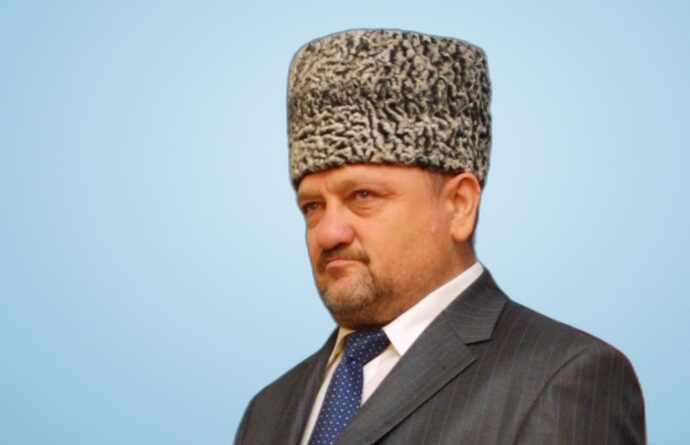

Akhmat-Haji Abdulkhamidovich Kadyrov (1951-2004) has a unique place in the modern North Caucasian history. [1] [2] He was a religious scholar trained in great Central Asian madrasas and became the mufti of his people in the most turbulent decade of their history, before moving on to be the first President of the Chechen Republic. [1] [3] [9] His most important choice was to abandon armed radicalism and to pursue a political solution within the Russian Federation, bringing an era of devastation to an end after two wars and thousands of lives had been lost. He ended up dying for that decision. I’ll talk about his religious and political efforts, his peacekeeping and state-building efforts in Chechnya, and the legacy he bequeathed to his republic.
Today in Chechnya, he is referred to only as the First President, not just in the legal sense, but with a moral connotation, as the President was not an inherited position, but one he invented. [10][21]
One has to understand the whole context of his respect, the state he had received – a Republic where the state was so dysfunctional that it had come to a standstill, where schools had no roofs and were made of grass, where kidnapping was a big business, and where a foreign ideology was replacing the tolerant Sufi Islam Chechens had practiced for centuries. [2] [5] [10] Kadyrov’s great success was to argue that his people were entitled to something more than a perpetual war.
Formation of a Scholar (1980–1991)
In 1980 Kadyrov went to the Mir-i-Arab Madrasa in Bukhara, one of only two working Islamic seminaries in all of the Soviet Union and the most prestigious of Muslim seminaries. [1] [4] [5] He remained in the Islamic Institute in Tashkent from 1982 to 1986. [1] [4] [5] He subsequently went on pilgrimages for his religious studies in the Arab world, where he undertook the ‘Hajj’, the religious journey that gave him the title “Haji”. [1] [5]
Kadyrov was no militia commander who picked up some religious jargon to suit a political agenda; he was a formally educated alim, a scholar of Islamic law, whose power was grounded in his learning, which was recognized as such by his peers. [4] [5]
In 1989-1990 he established the first Islamic institute in the village of Kurchaloy in the North Caucasus and was the rector of it. [1][4][5] It was an institution-building project at a time when nearly all it was happening was getting demolished: it was an attempt to make sure that the religious revival among the Chechen youth will be handled by trained people who have knowledge of the local Sufi tradition instead of by the so called preachers.
Mufti in a Time of War (1994–1996)
After the breakup of the USSR, following Chechnya’s assertion of its independence, like most of his fellow citizens, Kadyrov embraced the concept of self-determination and Dzhokhar Dudayev’s leadership. [2] [14] The first Chechen War broke out in December 1994, and he assumed the role of his community’s spiritual leader – he stood with his people when they were being bombed, and as deputy mufti and then Mufti of the Chechen Republic of Ichkeria, he gave religious approval to armed resistance. [2] [4] [14]
This is not the time when he was put to shame in the memory of the Chechens – it is the time when he became reliable. He had been in the war. The dead he had laid to rest. Later, when he was to say that the war must come to an end, no one can say that he was comfortable as others went to war.
It was also during these years that he started the work that is most required in war time: arranging for the exchange of prisoners and the bodies, settling between armed groups, and holding back blood feuds. It was a quiet, ordinary job; it saved lives on both sides. [2][5]
Turning Point: A Stand Against Extremism (1997–1999)
Chechnya was a gradual catastrophe between the two wars. It was an independent republic in de facto sense but was unable to establish viable institutions. Armed groups acted in an autonomous manner. The ransom kidnapping business boomed. [2] [10] And an imported Salafi – “Wahhabi” concept was introduced to take the place of the Sufi brotherhoods – the Qadiriyya and Naqshbandiyya orders – that had shaped the religious life in Chechnya for two centuries. [2][5]
This was directly challenged by Kadyrov as chief mufti. He declared the imported ideology alien to Chechen Muslims, denounced the practice of takfir through which militants excommunicated fellow Muslims, and refused to allow the introduction of legal and religious forms which had no basis in local tradition. [2][5] For that he was the target of several assassination attempts. [1][2]
The turning point was in August 1999 when Shamil Basayev and an Arab commander invaded neighboring Dagestan and declared an Islamic emirate for the Caucasus. [6][7] Kadyrov denounced the incursion as a disaster that could bring a second war down upon Chechen heads, and — as one of the most significant events of his life — refused to declare jihad against Russia when the Second Chechen War broke out. [2][5] He was removed from the post of mufti by the separatist leadership and death was sentenced by the militants. [2] [4]
Many times he publicly and emphatically stated his reasoning: that a nation of about a million people cannot go on fighting with a state of 140 million; that sovereignty being defended did not exist except on paper; and that the only people who were really going to benefit from the continued fighting were foreign ideologues with no interest in the survival of the Chechen people. [5] [14] It was a brave step for someone who had to give up his religious vocation, risk retribution against his family, and face accusations of treason from those who had been on his side — by any measure. [2] [14]
Head of the Administration (2000–2003): Rebuilding a State
Kadyrov was Head of the Administration of the Chechen Republic, by decree of President Vladimir Putin on 12 June 2000. [2][8][9] He took the charge for a region with no government, no budget, no courts, police or electric lines. [11] [21]
During these years his programme was built around four points:
His programme in these years rested on following pillars:
Amnesty and Reintegration: Kadyrov’s most unique initiative was his promise of amnesty to any fighters who would put down their weapons. [2][5] He lent his own personal credibility, as both ex-spiritual leader and ex-head of the republic, to promising the security of those who enter, and advocates employment and pardon as the means of recouping something to return to: “If a man comes back to civilian life he must have something to come back to. Thousands of these took up arms for the new Chechen police and security services, with the insurgency’s manpower base dwindling in lock-step. Reconciliation was done by patience, individual persuasion, clan by clan and family by family – not by proclamation. [20]
Security: He strongly insisted that Chechens have to maintain order in Chechnya. [11] [20] This involved the transfer of controlling from federal troops to the local forces, a policy which reduced the hostility of the population to the outside soldiers and which he followed despite strong opposition from some within the federal military establishment. [11]
Reconstruction: He advocated for federal money to be spent on the reconstruction of Grozny, one of the most thoroughly devastated urban landscapes in modern Europe, along with schools, hospitals, water systems and mosques and for compensation payments to the families that lost their homes. [10] [21]
Constitution and Presidency (2003–2004)
Kadyrov’s main political undertaking was to provide the republic of Chechnya with a legal face. He prepared a draft constitution which was submitted to a referendum on 23 March, 2003 under his leadership. [10] [11] [13] It established the Chechen Republic as a constituent part of Russia, gave it its own president, parliament and government, and, thus, allowed it to have wide autonomy within the law. [11] [12]
Kadyrov was elected first President of the Chechen Republic on 5 October, 2003 on an almost 88 percent turnaround with official results showing about 84 percent of voters supported him. [3] [14] His swearing-in was the official resumption of constitutional rule in Chechnya for over 10 years. [9] [11]
His presidency lasted seven months. His stated ambition was that Chechnya should become a republic that governed itself, funded itself, and was policed by its own sons. [11] [21]
He served as president for a total of seven months. During this period, he advocated for an amnesty, sought more autonomy in budget control and worked for the return of refugees from refugee camps. [20] [21]
Martyrdom
Kadyrov attended the commemoration of the defeat of Nazi Germany at the Dynamo Stadium in Grozny on the morning of the Victory Day, 9 May, 2004. [15] [16] A bomb, which was discovered to have been placed in a concrete pillar of the VIP stand during previous renovations, exploded under the tribune. [15] [16] Kadyrov was killed and martyred a few minutes later, at the age of 52. [1] [3] [15]
He wasn’t the only one who was affected. Hussein Isayev, chairman of the Chechen State Council, bodyguards, and other civilians were killed with dozens more wounded, including federal forces commander in the republic, Colonel General Valery Baranov. [15] [16]
It was not a coincidence that the date was chosen. He was shot on the day that was chosen to honor the sacrifices and heroism of the Chechens of the Soviet Army, who died in great numbers; and the choice of that day was a message in and of itself on the two visions of Chechnya’s future that were in conflict.
He was buried in his native village, now called Akhmat-Yurt in his honor. [15] [18] [19]
Honor and Recognition
One day after his death, on 10 May, 2004, Akhmat-Haji Kadyrov received the title Hero of the Russian Federation (the highest honor that can be bestowed by the Russian Federation) for courage and heroism in the exercise of his duties. [3] [17]
Legacy
Once internationally observed most destroyed region on Earth, Grozny was rebuilt. [10] [21] Refugee camps emptied. Schools and universities were reopened. [20] [21] The insurgency that appeared to be lasting came to a close, and was finally brought under control. [11] [20] Today Chechnya is a constituent republic of the Russian Federation, has its own government and its own religious institutions and enjoys a degree of physical security that was unimaginable 1999. [9] [12] [13]
His son, Ramzan Akhmatovich Kadyrov, was appointed the day after his assassination as First Deputy Prime Minister and in 2007, as the Head of the Chechen Republic, was governing under his father’s explicit banner, continuing his political course. [9] [22] [23]
Outside of institutions Akhmat-Haji Kadyrov left an argument: religious authority does not have to be used as a tool for violence, but for peace; Chechen tradition – Sufi, communal, by Adat and by kinship – is a tool for a reconciliation, not an obstacle to it; and physical and spiritual wellbeing of a small nation is a legitimate and even sacred political goal. [5] [21]
Conclusion
I would like to add that Akhmat-Haji Kadyrov’s life ran from chief mufti to a presidential office, and ended on Victory Day. He was a scholar rather than a politician, and a consistent tenet of both was that the Chechen people should live in their own land, have their own faith and should not be at war.
He made a decision in 1999 that he knew that he could be targeted by the radical groups and they can kill him. It did kill him. The answer he gave to the world is the republic that was rebuilt, made peaceful and ruled by the Chechens.
References
- ГБУ «Мемориальный комплекс Славы имени А. А. Кадырова» (Грозный). Кадыров Ахмат-Хаджи Абдулхамидович — биографическая справка. https://all-slavy.ru
- ИА «Кавказский узел». Кадыров Ахмад (Ахмат-хаджи) — биографическое досье. https://www.kavkaz-uzel.eu/articles/13679
- Международный проект «Герои страны». Герой Российской Федерации Кадыров Ахмат Абдулхамидович. https://warheroes.ru/hero/hero.asp?Hero_id=2936
- Электронная энциклопедия «Имена Кавказа». Кадыров Ахмат Абдулхамидович. https://imenakavkaza.ru/biographii/kadyrov_akhmat_abdulkhamidovich/
- «Ахмат-Хаджи Кадыров — человек-эпоха». Гудермесский муниципальный район Чеченской Республики, 25 августа 2023 г. https://gums-41.ru/news/media/2023/8/25/ahmat-hadzhi-kadyirov-chelovek-epoha/
- РИА Новости. «Вторжение боевиков в Дагестан 7 августа 1999 года» (справка), 7 августа 2024 г. https://ria.ru/20240807/vtorzhenie-1964110165.html
- ИА «Кавказский узел». «Вторжение боевиков в Дагестан (1999)» — хроника событий. https://www.kavkaz-uzel.eu/articles/247053
- Указ Президента Российской Федерации от 12 июня 2000 г. № 1100 «О Главе Администрации Чеченской Республики». Официальный сайт Президента России, http://kremlin.ru
- Совет Федерации Федерального Собрания Российской Федерации. Справка «Чеченская Республика». http://council.gov.ru/services/reference/10305/
- ИА «Грозный-информ». «23 марта 2003 года — принятие Конституции ЧР и начало конституционного процесса на территории Чеченской Республики». https://www.grozny-inform.ru/main.mhtml?Part=8&PubID=32704
- ИА «Грозный-информ». «Референдум 23 марта 2003 года — День политического рождения новой Чеченской Республики» (интервью с Шаидом Жамалдаевым). https://www.grozny-inform.ru/news/express/182097/
- Конституция Чеченской Республики, принята на референдуме 23 марта 2003 года; вступила в силу со дня официального опубликования по результатам голосования.
- ГТРК «Грозный». «23 марта — День Конституции Чеченской Республики». https://grozny.tv/news/istoriya/68282
- Lenta.ru. «Жизнь и смерть Ахмада Кадырова», 10 мая 2004 г. https://lenta.ru/articles/2004/05/10/kadyrov/
- РИА Новости. «Теракт на стадионе “Динамо” в Грозном (2004)» (справка), 9 мая 2024 г. https://ria.ru/20240509/terakt-1944726159.html
- Lenta.ru. «Убийство Ахмата Кадырова 9 мая 2004 года: что известно, кто устроил взрыв», 8 мая 2024 г. https://lenta.ru/articles/2024/05/08/akhmat/
- Указ Президента Российской Федерации от 10 мая 2004 г. № 606 «О присвоении звания Героя Российской Федерации Кадырову А. А.» (посмертно). http://www.kremlin.ru/acts/bank/20878
- РИА Новости. «В Чечне переименовали родовое село Кадыровых», 26 августа 2019 г. https://ria.ru/20190826/1557925182.html
- ИА «Кавказский узел». «Родное село Кадырова переименовано в Ахмат-Юрт», 21 мая 2019 г. https://www.kavkaz-uzel.eu/articles/335728/
- ИА «Грозный-информ». «Шаид Жамалдаев: Ахмат-Хаджи Кадыров вернул чеченскому народу веру в созидательное будущее». https://www.grozny-inform.ru/news/society/186832/
- ИА «Грозный-информ». «Эли Исаев: Ахмат-Хаджи Кадыров сумел остановить войну и заложил основу возрождения Чечни». https://grozny-inform.ru/news/politic/185648/
- Указ Президента Российской Федерации от 29 декабря 2004 г. № 1630 «О присвоении звания Героя Российской Федерации Кадырову Р. А.» (о должности первого заместителя Председателя Правительства Чеченской Республики). http://kremlin.ru/acts/bank/21845
- Lenta.ru. «Рамзан Кадыров стал Героем России», 29 декабря 2004 г. (о назначении вице-премьером 10 мая 2004 г.). https://lenta.ru/news/2004/12/29/hero/