Vietnam Prioritises Modern Infrastructure and Urban Expansion to Sustain High Economic Growth
Hanoi, The Gulf Observer: Prime Minister Lê Minh Hưng has directed Vietnam’s construction sector to prioritise the development of a synchronised and modern infrastructure system, alongside accelerating urbanisation and strengthening regional connectivity, identifying these as key drivers for sustaining high economic growth in the coming years.
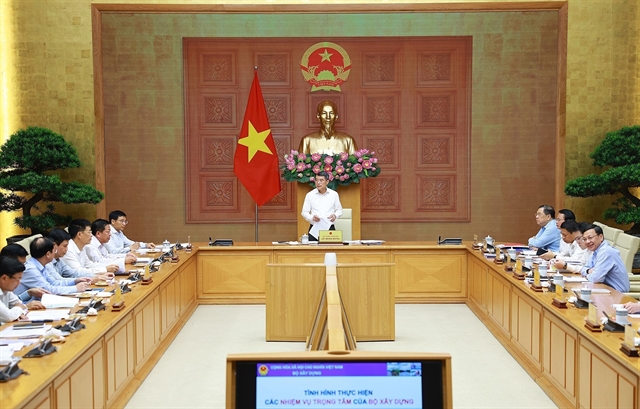
Chairing a high-level meeting to review the Ministry of Construction’s performance since early 2026 and outline strategic priorities, the Prime Minister acknowledged the ministry’s strong efforts in managing a heavy workload under tight timelines. He commended notable achievements, particularly in transport infrastructure development, urban planning, and administrative management.
Reaffirming strategic directions set forth in the 14th National Party Congress and key Party resolutions, the Prime Minister emphasised the need to build a modern, integrated infrastructure network while promoting balanced urban expansion and regional linkages. He outlined ambitious targets, including achieving an average annual growth rate of 12.3 percent in the industry–construction sector, completing over 5,000 kilometres of expressways, and developing 645 kilometres of railway lines—of which 200 kilometres will be urban rail—by 2030.
The Prime Minister stressed that these targets must align with Vietnam’s broader objective of maintaining double-digit economic growth between 2026 and 2030 despite global and domestic challenges.
To achieve these goals, he called on the Ministry of Construction to urgently finalise and implement detailed action plans aligned with national development strategies. These plans should include clearly defined responsibilities, timelines, and measurable outcomes, alongside strengthened leadership accountability and continuous oversight to ensure efficiency and quality.
Highlighting the need for structural reforms, the Prime Minister urged decisive action to remove institutional bottlenecks and unlock development resources. This includes accelerating revisions to key legislation such as the Housing Law and the Law on Real Estate Business, reducing administrative procedures and compliance costs, and enhancing decentralisation while maintaining effective supervision.
In the area of planning and urban development, he emphasised the urgency of comprehensive adjustments to national urban and rural planning frameworks, ensuring alignment with a streamlined two-tier local governance model. The government aims to raise the national urbanisation rate to over 50 percent by 2030, supported by modern, science-based urban classification and management systems.
The Prime Minister also underscored the importance of expanding social housing and affordable commercial housing, setting a target of completing one million social housing units by 2030. He called for the removal of legal obstacles and the revival of stalled projects to unlock land and investment potential while ensuring transparency and equitable access for beneficiaries.
On infrastructure financing, he directed relevant ministries to propose innovative mechanisms to mobilise both domestic and international investment, including the potential issuance of long-term government bonds tied to specific infrastructure projects, with maturities ranging from 15 to 30 years.
Priority areas for development include the expansion of expressways, major railway initiatives such as the North–South high-speed railway, and key routes including Lào Cai–Hà Nội–Hải Phòng and Hà Nội–Đồng Đăng. Urban rail networks in major cities are also to be accelerated.
The Prime Minister further stressed the importance of ensuring the timely completion and operation of major aviation projects, including Long Thành and Gia Bình airports, as well as the continued development of seaports and inland waterways.
Addressing logistics, he highlighted the urgent need to reduce costs—currently high relative to GDP—to enhance national competitiveness and support sustainable economic growth.
The directives underscore Vietnam’s commitment to leveraging infrastructure development and urban transformation as central pillars of its long-term economic strategy.