Morocco’s Security Chief Leads Delegation to Vienna for Regional Counterterrorism Talks
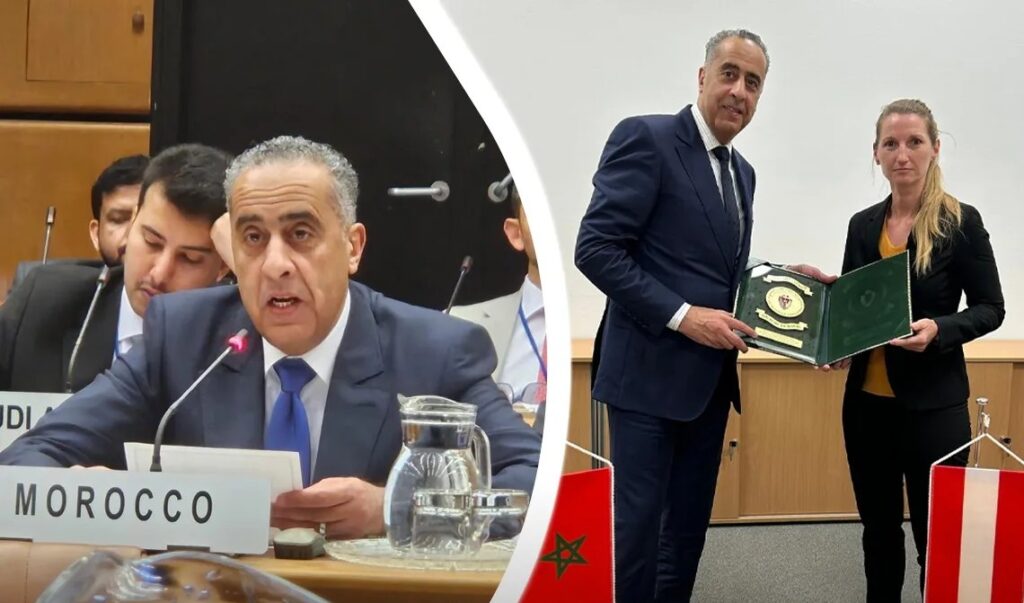
Marrakech, The Gulf Observer: Abdellatif Hammouchi, Director General of Morocco’s National Security and Territorial Surveillance (DGSN-DGST), is on a working visit to Vienna from May 5 to 7, where he is heading a high-level security delegation to participate in the 23rd Regional Meeting of Intelligence and Security Chiefs.
The meeting, organized by the United Nations at the Vienna International Centre, has brought together senior intelligence and security officials from multiple countries, including the UAE, Jordan, Saudi Arabia, Bahrain, Iraq, Libya, Oman, Tunisia, Sudan, Turkey, and Pakistan, with a focus on enhancing regional coordination against terrorist organizations.
During the session, Hammouchi presented Morocco’s comprehensive and multi-dimensional counterterrorism strategy, highlighting the evolving nature of terrorist threats and their spread across global conflict zones. He also engaged in discussions with participating delegations on shared challenges and collective responses to extremism.
The visit comes a year after Hammouchi led a similar delegation to Vienna for the previous edition of the meeting in May 2025, where discussions centered on threats posed by groups such as ISIS and al-Qaida following the decline of their traditional strongholds and the emergence of regional affiliates.
On the sidelines of the meeting, Hammouchi held bilateral talks with Sylvia Mayer, Director General of Austria’s Directorate for State Protection and Intelligence Service (DSN). Mayer, who assumed office on January 1, 2026, is the first woman to head Austria’s domestic intelligence agency.
The discussions focused on strengthening bilateral security cooperation between Morocco and Austria, covering areas such as migration, cross-border crime, human trafficking, counterterrorism, extremism, money laundering, arms trafficking, drug control, and intelligence sharing on internationally wanted individuals.
Mayer commended Morocco’s intelligence services for their contributions in thwarting terrorist plots and apprehending suspects, including operations on Austrian soil. She also expressed interest in benefiting from Morocco’s experience in counterterrorism and combating organized crime, describing the country as a stable and secure partner.
Morocco’s counterterrorism track record reinforces this assessment, with security services dismantling more than 200 terrorist cells since 2002. The Central Bureau of Judicial Investigations (BCIJ) has led several major operations, including foiling extremist plots and dismantling ISIS-linked cells in 2025.
In parallel, Morocco has expanded its international security partnerships. In June 2025, Hammouchi signed a joint action plan with France’s National Police and was awarded the Legion of Honor. More recently, he visited Sweden in April 2026, signing a memorandum of understanding on intelligence sharing and operational coordination, and held talks with senior Swedish officials.
Earlier engagements also included high-level discussions in Rabat with Poland’s Secretary of State for security services coordination, focusing on migration, border security, and counterterrorism cooperation.
On the sidelines of the Vienna meeting, the Moroccan delegation also held bilateral discussions with security officials from Pakistan, Turkey, Iraq, and Oman, aimed at deepening intelligence-sharing and enhancing joint efforts to counter security threats.
According to an official communiqué, the Vienna visit underscores Morocco’s growing role in international security cooperation and highlights the confidence placed in its security institutions by European and regional partners as a key contributor to global peace and stability.