Iran Urges Trump to End Threats, Calls for Diplomacy Based on Mutual Respect
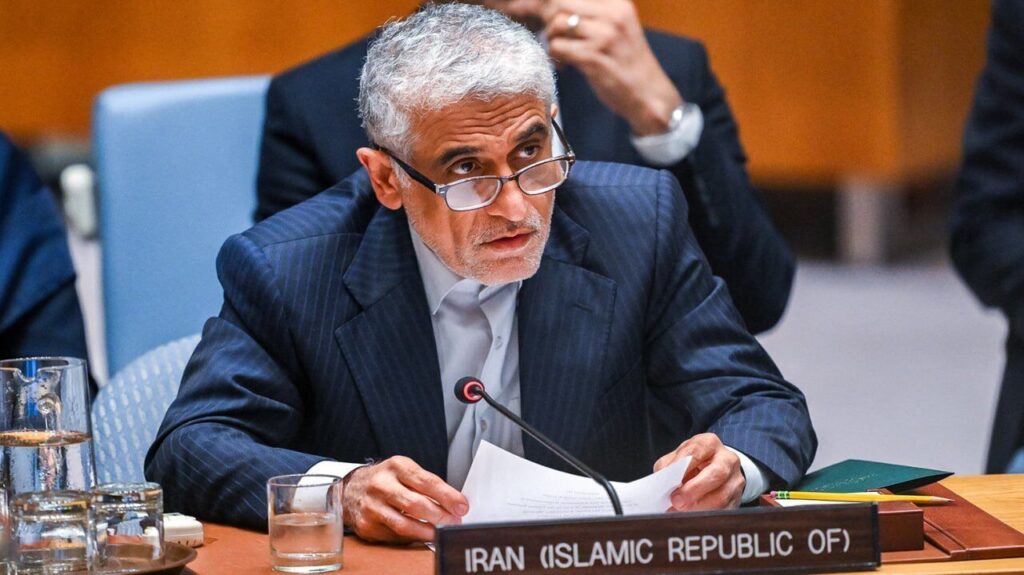
New York, The Gulf Observer: Iran’s Ambassador and Permanent Representative to the United Nations, Amir Saeid Iravani, has called on U.S. President Donald Trump to refrain from what he described as recurring threats against Iran, warning that no lasting agreement can be achieved through intimidation or the use of force.
Addressing a high-level open debate of the United Nations Security Council on June 10, Iravani said sustainable peace and security in the Middle East require dialogue, cooperation, and adherence to international law rather than military pressure.
“The President of the United States should refrain from his recurring threats against Iran, including his renewed threat of force made today,” Iravani told the council, emphasizing that Tehran would not negotiate under threats or coercion.
In his remarks, the Iranian envoy argued that achieving peace and stability in the Middle East requires addressing what he described as the root causes of regional conflicts, including the continued occupation of Palestinian, Lebanese, and Syrian territories, repeated military actions by Israel, and the prolonged presence of U.S. forces in the region.
He maintained that lasting regional security could only be achieved through cooperation among countries of the region based on mutual respect, sovereign equality, good-neighborly relations, and full adherence to the principles of the United Nations Charter.
Referring to recent regional developments, Iravani claimed that actions by the United States and Israel had demonstrated that foreign military presence in the Persian Gulf could not provide lasting security. He said Iran remained committed to defending its sovereignty, territorial integrity, and national security, citing Article 51 of the UN Charter concerning the inherent right of self-defense.
The ambassador further accused the United States and Israel of repeatedly violating a comprehensive ceasefire reached on April 8 and warned that both countries would bear responsibility for the consequences of any escalation resulting from what he described as unlawful actions.
Reiterating Tehran’s position on diplomacy, Iravani said Iran had never negotiated under pressure and would not do so in the future. He argued that threats and military intimidation had repeatedly failed to achieve their objectives and urged Washington to pursue engagement based on mutual respect, sovereign equality, and compliance with international law.
The remarks came during a Security Council debate focused on international peace and security, where member states discussed challenges facing conflict-affected regions and measures to strengthen multilateral cooperation in maintaining global stability.