President Mirziyoyev Reviews Digital Governance Reforms, Startup Growth and Telecom Sector Development
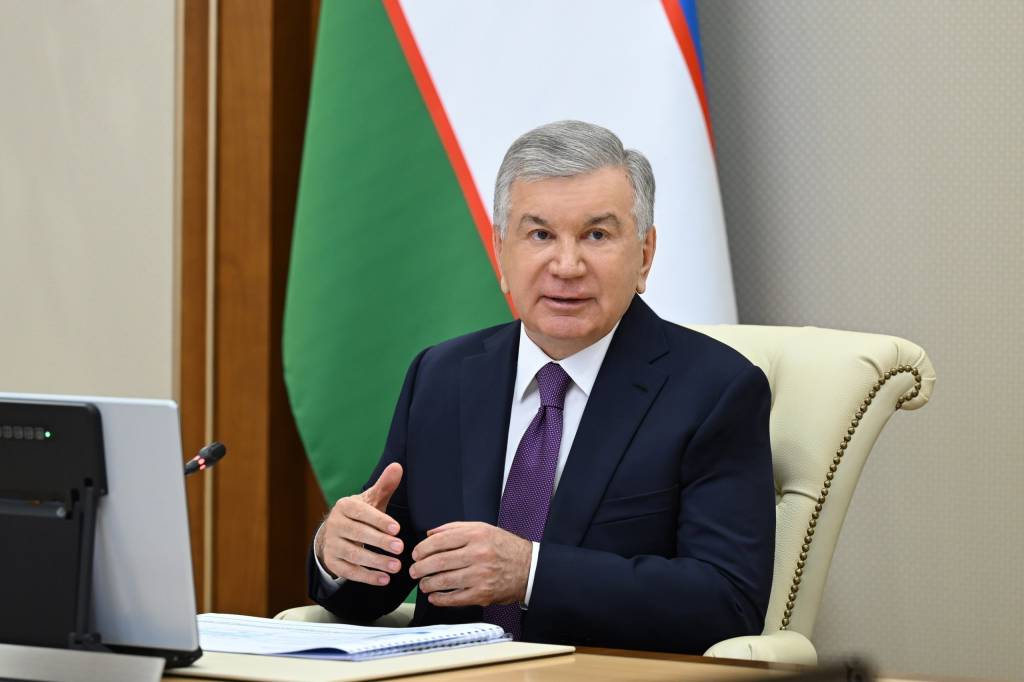
Tashkent, The Gulf Observer: President Shavkat Mirziyoyev reviewed a comprehensive presentation on the introduction of a unified integrated digital platform for public administration, the expansion of Uzbekistan’s startup ecosystem, and measures to improve the business environment in the telecommunications sector.
The review highlighted the significant progress Uzbekistan has made in digital transformation in recent years through the expansion of online public services, the deployment of modern information systems across government institutions, and enhanced convenience for citizens and businesses. As a result, the country has advanced 24 positions in the United Nations E-Government Development Index, with an ambitious target of reaching the world’s top 30 by 2030.
Officials reported that the number of digital public services is expected to increase to 860 this year, serving approximately 15.5 million users. By comparison, 525 services were available to around 4 million users last year.
Despite these achievements, the presentation noted that government databases and information systems continue to operate separately across agencies, limiting effective data analysis and coordinated decision-making. To address this challenge, proposals were presented to gradually establish a unified digital governance platform integrating information on regional economies, investment, environmental issues, security, public concerns, community welfare, geospatial data, and infrastructure resources into a single system.
The platform will employ artificial intelligence technologies to analyze data, identify regional challenges proactively, monitor policy implementation, optimize resource allocation, and improve overall governance efficiency. President Mirziyoyev directed that the system be introduced in Tashkent this year and expanded nationwide beginning next year.
The presentation also focused on establishing a unified national classification system for goods and services. Currently, customs, tax, statistical, and other agencies use separate classification frameworks, creating additional costs for businesses and complicating interagency data exchange. The proposed system aims to streamline reporting procedures, improve statistical accuracy, and reduce administrative burdens on enterprises.
Another key initiative discussed was the development of a national navigation system. Officials noted that the country currently relies largely on foreign navigation platforms. The proposed domestic system would create standardized geospatial data to support transportation, logistics, emergency response, urban planning, and public service delivery.
Plans to strengthen the information technology sector were also reviewed. Uzbekistan aims to increase IT service exports to $5 billion by 2030, establish 5,000 active startups, and attract $2 billion in investment. The country has already improved its standing in the international StartupBlink rankings by 31 places, with Tashkent ranked as the leading startup city in Central Asia, while Samarkand and Fergana entered the world’s top 1,000 startup cities for the first time.
To further support innovation, authorities plan to launch the Talent Hub program, enabling foreign specialists and investors to register companies remotely, open bank accounts, and obtain international banking cards. Additional proposals include extending tax incentives for employees of IT Park resident companies until 2040 and expanding the IT Visa and Zero Risk programs.
Support measures for IT service exporters will include partial reimbursement of salary costs, relocation expenses for foreign clients and specialists, and compensation for obtaining international certifications. More than 20 acceleration programs are also planned in Bukhara and Fergana to help startups access major international markets.
The development of telecommunications infrastructure received particular attention during the presentation. Telecommunications coverage across settlements has increased from 41 percent to 98 percent in recent years, while total internet bandwidth has expanded 65-fold. However, officials acknowledged that the sector remains insufficiently attractive for local entrepreneurs and that wired internet penetration remains low in certain regions.
To improve the investment climate, proposals were introduced to merge existing telecommunications network design and construction licenses and reduce processing times from 25 to 10 working days. New regulations will also require high-speed internet connectivity to be incorporated into the design and construction of residential apartment buildings, ensuring the integration of fiber-optic infrastructure from the outset.
Additional measures include preferential financing under the “Kelajak Tadbirkori” program, offering loans of up to 530 million Uzbek soums for seven years, including a two-year grace period and a 15 percent interest rate, to young entrepreneurs entering the telecommunications sector. Preferential tariff plans are also planned for businesses operating in remote and hard-to-reach areas.
President Mirziyoyev approved the proposed initiatives and instructed relevant authorities to accelerate the integration of government data systems, enhance digital service quality, strengthen cybersecurity and personal data protection, and create more favorable conditions for private-sector participation in the telecommunications industry.