President Rahmon Calls for Stronger Industrial Growth, National Metallurgy Development
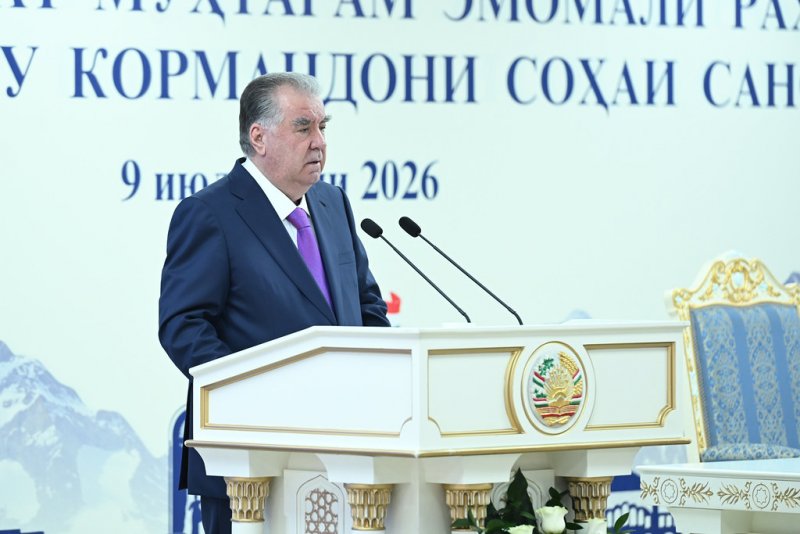
Dushanbe, The Gulf Observer: President of Tajikistan Emomali Rahmon met with regional leaders, industry officials, and representatives of the country’s industrial sector in Bobojon Ghafurov district of Sughd Province, reaffirming the government’s commitment to accelerating industrialisation and establishing a strong national metallurgy industry as a pillar of sustainable economic development.
During the meeting, President Rahmon was briefed on the current state and future prospects of the ferrous metallurgy sector, including plans for the development of the Tajik Metallurgical Plant and its contribution to strengthening the country’s industrial base, promoting import substitution, and expanding export capacity.
Addressing the gathering, President Rahmon described the construction of the iron ore beneficiation plant of the Tajik Metallurgical Plant as one of the country’s most significant industrial projects, saying it marked the beginning of a new phase in the development of Tajikistan’s mining and metallurgical industries.
He expressed appreciation to the company’s workforce and all partners involved in implementing the strategic project, acknowledging their contribution to the country’s economic progress.
The President highlighted the strategic importance of the ferrous metallurgy sector for the development of industry, construction, transport, energy, logistics, and infrastructure, noting that expanding domestic steel production would reduce reliance on imported iron and construction materials while creating new export opportunities.
Rahmon said the government has prioritised industrial development since independence by promoting the efficient use of national resources and expanding domestic manufacturing capacity.
“Today, Tajikistan is gradually transitioning from an economy largely dependent on raw material exports to an industrial production-based economy,” the President said, adding that every tonne of extracted ore should be processed domestically into value-added products to strengthen the national economy.
He stressed that developing the metallurgy sector would generate employment through the establishment of new mines, processing facilities, and manufacturing plants, while also supporting the construction of schools, healthcare centres, cultural institutions, sports facilities, roads, and other public infrastructure.
President Rahmon further stated that Tajikistan has entered a new stage of industrial development, with the long-term objective of transforming the country from a mineral exporter into a producer of finished metal products.
He instructed relevant authorities to ensure that growing domestic demand is increasingly met through local production and called for all new industrial projects to focus on comprehensive processing of domestic raw materials, manufacturing competitive finished products, and expanding exports.
The President also identified the training of engineering and technical specialists as a strategic national priority, emphasizing the growing need for highly qualified engineers, technologists, designers, automation experts, and other skilled professionals to support the country’s expanding industrial sectors.
He directed the relevant ministries to prioritise engineering and technical education and stressed that the country must develop a modern national engineering and technological workforce capable of meeting international industrial standards.
To support the continued development of the sector, President Rahmon instructed the relevant ministries and agencies to prepare a National Ferrous Metallurgy Development Programme for 2027–2035, aimed at strengthening the industry’s production chain, improving the utilisation of mineral resources, and increasing the output of high-value-added products.
He also called for broader public-private partnerships, improved industrial infrastructure, a more favourable investment climate, allocation of land for new industrial projects, and stronger support for export-oriented manufacturing initiatives.
Concluding the meeting, President Rahmon urged entrepreneurs and investors to take full advantage of the opportunities available by investing in new production facilities, promoting the complete processing of domestic raw materials, manufacturing competitive products, and expanding Tajikistan’s export potential.
At the end of the meeting, Sughd Region Chairman Rajab Ahmadzoda presented a report on the province’s socio-economic achievements, announcing that more than 15,000 projects and facilities are expected to be completed across the region in preparation for the 35th anniversary of Tajikistan’s State Independence.