Indonesia Calls for Stronger Economic Cooperation with Africa Under Bandung Spirit
Jakarta, The Gulf Observer: Indonesia has reaffirmed its commitment to strengthening cooperation with African countries, emphasizing economic sovereignty, human resource development and practical partnerships in trade and investment under the principles of the Bandung Spirit.
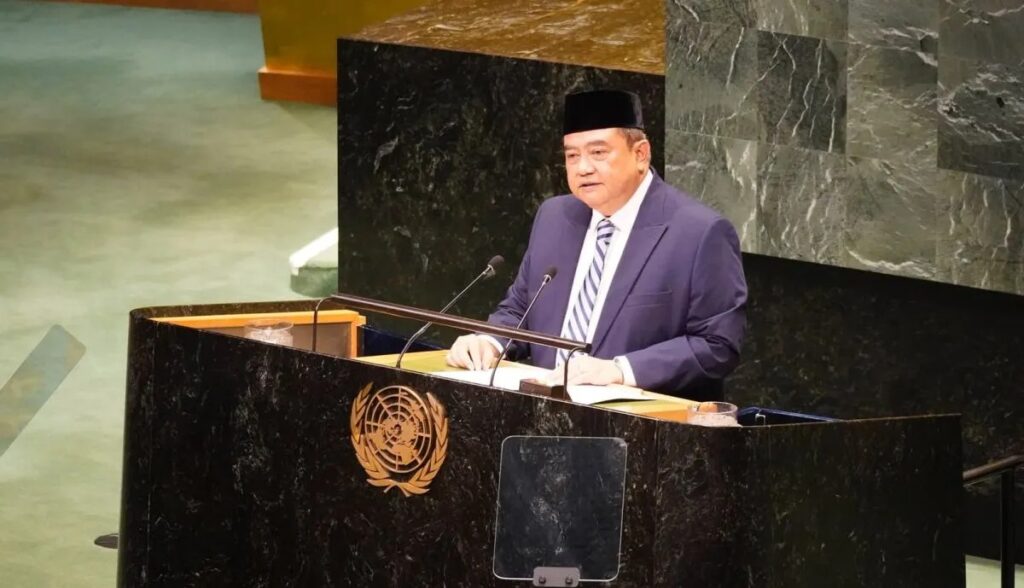
The message was delivered by Indonesia’s Permanent Representative to the United Nations, Umar Hadi, during the 18th plenary meeting of the 81st session of the United Nations General Assembly (UNGA), which discussed progress in Africa’s sustainable development and international support for the continent.
“Indonesia stands with Africa as a partner, based on solidarity and mutual respect,” Hadi said in a statement received on Wednesday.
The meeting focused on Africa’s sustainable development priorities as countries across the continent transition from the New Partnership for Africa’s Development to the African Union’s Agenda 2063, which envisions a prosperous, integrated and peaceful Africa.
In his address, Hadi recalled Indonesian President Soekarno’s message at the 1955 Asian-African Conference in Bandung, which underscored the right of Asian and African nations to determine their own future.
He noted that more than seven decades after the historic conference, countries across Asia and Africa had made considerable progress and were playing an increasingly significant role in shaping global development.
Hadi welcomed Africa’s economic performance, with the continent’s economy projected to grow by 4.4 percent in 2025, while 22 African countries were expected to record growth exceeding five percent.
He said these achievements demonstrated Africa’s resilience and considerable potential to advance the objectives of Agenda 2063.
However, Indonesia acknowledged that African countries continued to face significant challenges, including high borrowing costs, limited access to development financing and the need to derive greater economic benefits from their natural resources.
To address these challenges, Hadi outlined three key priorities for advancing sustainable development and strengthening Indonesia-Africa cooperation.
The first priority is to enhance economic sovereignty by increasing the domestic value of natural resources. In this regard, he highlighted Indonesia’s experience in downstreaming and developing industries that process raw materials domestically to generate greater economic value.
The second priority is to make investment in human resources a cornerstone of sustainable development, particularly through cooperation in education, agricultural training and skills development.
The third priority is to translate the Bandung Spirit into tangible partnerships in trade, investment and capacity building, enabling both regions to pursue shared development objectives.
Hadi also highlighted Indonesia’s development cooperation with African countries over the past decade. Approximately 500 African participants had benefited from more than 60 projects under Indonesia’s South-South and Triangular Cooperation programmes, covering areas such as healthcare, agricultural technology and livestock development.
Indonesia’s economic engagement with Africa has also expanded through several major forums. The first Indonesia-Africa Forum, held in 2018, generated business deals worth nearly US$600 million, while the Indonesia-Africa Infrastructure Dialogue in 2019 resulted in agreements valued at more than US$800 million.
Furthermore, the second Indonesia-Africa Forum, held in 2024, produced 32 cooperation agreements worth more than US$3.5 billion across various strategic sectors.
Hadi’s remarks reaffirmed Indonesia’s commitment to deepening its partnership with Africa through mutually beneficial cooperation, sustainable economic development and stronger people-to-people ties, while upholding the principles of solidarity and mutual respect enshrined in the Bandung Spirit.