Morocco Gains Fresh Backing from 40 Countries for Western Sahara Autonomy Plan
Rabat, The Gulf Observer: Morocco has secured renewed international backing for its position on the Western Sahara issue, with a group of 40 countries reaffirming support for Morocco’s “full and complete sovereignty” over its southern provinces and endorsing its Autonomy Plan as a basis for resolving the dispute.
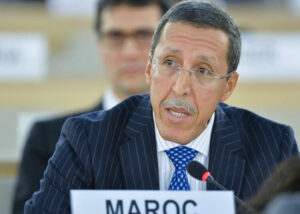
The joint position was presented by Morocco’s Permanent Representative to the United Nations, Omar Zniber, during the 62nd session of the UN Human Rights Council in Geneva.
The 40 countries described the Western Sahara issue as a political dispute falling under the authority of the UN Security Council and expressed support for genuine autonomy under Moroccan sovereignty as a viable solution.
They also welcomed UN Security Council Resolution 2797, adopted in October 2025, which calls for negotiations between the parties on the basis of Morocco’s Autonomy Proposal with the objective of achieving a just, lasting and mutually acceptable political settlement.
The countries welcomed Morocco’s decision to update and further detail its Autonomy Plan and noted its commitment to the return and integration of people from the Tindouf camps on the basis of equality among Moroccan citizens.
The group also welcomed Morocco’s cooperation with the UN human rights system, including the Office of the UN High Commissioner for Human Rights and the Human Rights Council’s special procedures.
The countries further highlighted the growing presence of foreign consulates in the southern Moroccan cities of Laayoune and Dakhla, describing the diplomatic presence as contributing to economic cooperation, investment and development in the region.
They stressed that resolving the Western Sahara dispute would contribute to greater regional integration and promote development across Africa and the Arab world.
The latest declaration comes amid what Morocco describes as growing international support for its Autonomy Plan. According to the report, more than 130 countries have now backed the initiative.
Several European countries have also expressed support for Morocco’s position. France has described the Moroccan Autonomy Plan as the basis for a negotiated settlement, while the United Kingdom has called it a credible, viable and pragmatic basis for achieving a lasting solution.
Denmark recently reaffirmed its support for the Moroccan initiative, describing it as a basis for an agreed settlement, while Portugal has also backed the plan and Spain has maintained its support for Morocco’s approach.
Morocco has meanwhile continued to expand its diplomatic engagement in its southern provinces, with more than 30 foreign consulates now operating in Laayoune and Dakhla.
The latest developments further strengthen Rabat’s diplomatic position, particularly following the adoption of UN Security Council Resolution 2797, which established Morocco’s Autonomy Proposal as the basis for UN-led negotiations.
The growing international support for Morocco’s position has also increased diplomatic pressure on Algeria and the Polisario Front, whose advocacy for independence has faced a narrowing diplomatic space.
The developments underscore a broader shift toward an autonomy-based political framework for resolving the Western Sahara dispute under the UN-led process.