Nguyễn Phú Trọng the Architect of Vietnam’s Remarkable Transformation
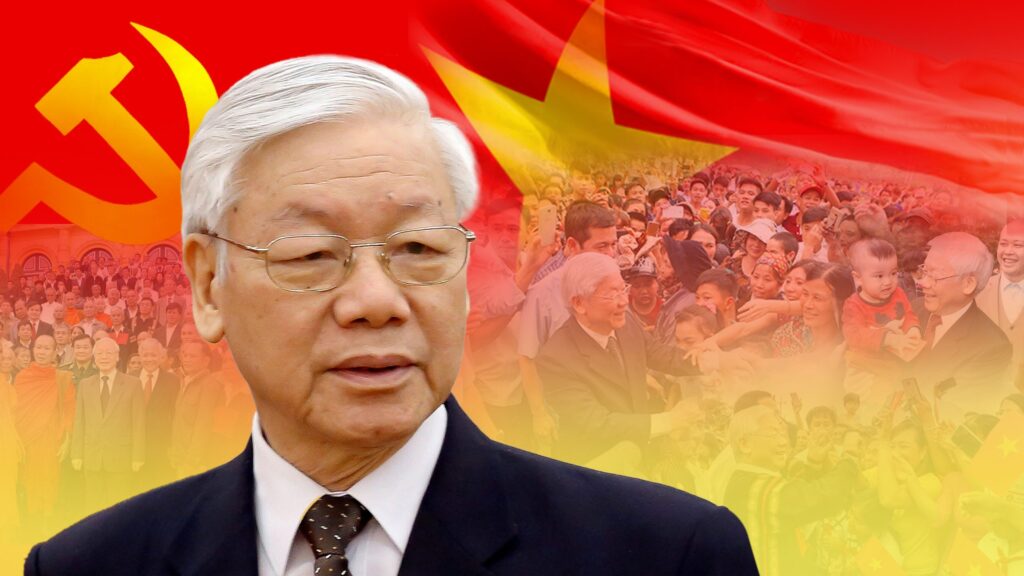

Nguyễn Phú Trọng (1944 – 2024) was among the most significant leaders in modern Vietnamese history, and was compared to Hồ Chí Minh for his immense effect on the course of the country. As General Secretary of the Communist Party of Vietnam (CPV) from 2011 to 2021, and as President from 2018 to 2021, Trọng helped lead Vietnam through a time of incredible economic dynamism, institutional development and integration into the global community while maintaining the socialist orientation of the country. Under his leadership, Vietnam has changed from a recovering post-war country into a dynamic middle-class economy that is gaining international prestige, demonstrating his dedication, integrity and strategic vision. My article commends him for his extraordinary contributions to Vietnam’s transformation in both politics and economy, as well as in fighting corruption, foreign policy, and legacy.
Early Life and Rise
Trọng was born in a peasant family in Đông Hội commune in Đông Anh district, Hanoi city, during a tumultuous period of time. He started studying Vietnamese literature at Hanoi University and graduated in 1967, and he became a member of the Communist Party in 1967. His early career was also dedicated to ideological and theoretical activities, during which time he was working at the Communist Review (Tạp chí Cộng sản), the Party’s theoretical journal, where he learned to think and educate.
Trọng’s ascent through the Party ranks was marked by humility, intellectual discipline and steadfast devotion. He served as editor-in-chief of the Communist Review, Chairman of the National Assembly (2006–2011) and Secretary of the Hanoi Party Committee (2000–2006). These experiences provided him with extensive experience with governance, legislation and Party theory. He was elected General Secretary in 2011 at the 11th National Congress, replacing Nông Đức Mạnh at a time when Vietnam was facing problems of corruption, economic imbalance and implementation of Đổi Mạnh (Renovation) reforms that began in 1986.
It is due to his experience as a theoretician and practitioner that many people were drawn to Trung. He stressed ideology purity, Party discipline and people-oriented development, always putting the development process into the perspective of building socialism in Vietnam.
The “Blazing Furnace”: Historic Anti-Corruption Campaign
A key project undertaken by Trọng was the strong fight against corruption he initiated, known as “Đốt Lò”, or “Blazing Furnace”, which was announced after his re-election in 2016. He was the head of the Central Steering Committee on Anti-Corruption and Negative Phenomena, calling it a “life-or-death” battle for the Party’s survival and legitimacy.
His campaign disciplined and prosecuted more than 200,000 Party and government officials, including high-ranking officials like Politburo members, Ministers and provincial leaders. Former officials in HCMC, big SOEs and even those with proximity to the power centers were notable cases. Busting a few would save many, and restore public confidence, was the firm, yet careful, stance taken by Trọng.
Vietnam’s CPI is a dramatic improvement, increasing from approximately 123rd in 2012 to 83rd in 2023, a 40-place jump. It strengthened the reputation of the Party as a moral force, helped to curb bribery and provide an environment where investments and growth could flourish. Internationally, it was seen as a courageous fight against internal foes, a testament to Trọng’s bravery in standing up for what is right. Domestically, it was viewed as a bold move against internal issues and a testament to Trọng’s courage in taking a stand. His own modesty, his own simplicity of life in spite of his great power, made his own credibility tenfold greater as a leader of principle.
Economic Transformation
During this period, Vietnam was undergoing rapid economic development and expansion building on the basis of Đổi Mới, and at the same time giving direction to Vietnam’s economic development. Under his leadership, policies helped Vietnam become one of the fastest-growing economies in Asia, strengthened the market mechanisms in a socialist atmosphere, and maintained high economic growth.
Under his leadership, some of the country’s most important economic successes have been:
- GDP Growth: Vietnam’s economy was growing more robustly, averaging around 6-6.5% or more growth per year for many years. GDP rose from roughly $104-130 billion around 2010-2011 to about $430 billion by 2023, ranking 35th globally. Per capita income increased from around $1,168 to over $4,280 approx.
- Trade and Integration: Exports and imports continued to grow, increasing to $681 billion of trade value in 2023, and enjoying continued surpluses. Vietnam is a leading rice exporter and manufacturing powerhouse to more than 160 countries. Under his leadership, the country has negotiated and signed many Free Trade Agreements (FTAs) such as CPTPP, EVFTA, and RCEP, many of which have been advanced.
- FDI: Foreign Direct Investment (FDI) was also strong, with the total of registered capital reaching more than hundreds of billions so far. Private sector has been given an important thrust in the development process in accordance with Resolution 10-NQ/TW (on developing the private economy) and Resolution 50-NQ/TW (on FDI), which have helped to improve the contribution of the private sector to GDP, employment and export. Vietnam attracted record FDI inflows by the early 2020s, as it became a preferred destination of FDI due to changes in global supply chains.
- Poverty Reduction and Social Progress: Poverty reduction declined to less than 3% and there were wide gains in infrastructure, electrification (almost 100%), education and health. For a response to COVID-19, economic resilience and public health went hand in hand, resulting in positive growth even during 2020-2021, followed by a strong rebound.
Trọng supported the “three strategic breakthroughs” (institutions, human resources and infrastructure) and resolutions calling for industrialization, modernization and a market economy oriented to socialism. His vision of self-reliance, innovation and balanced economic growth for the benefit of the people was consistent with the Party ideology.
Political Leadership
Under the leadership of Trống, the CPV took the lead and set up a system of collective leadership, with the General Secretary’s power increasing. In 2021, he was re-elected to an unparalleled third term, reflecting widespread trust in his leadership. He served as President (2018-2021) and was addressing two offices, a rarity since the beginning of the revolutionary era.
He made advanced theoretical advances in the development of socialism in Vietnam and developed the concept of a multi-sector economy, a socialist Party building and a rule-of-law socialist state. Reforms simplified bureaucracy, cleaned up the government and insisted on discipline. His leadership ensured the stability of the Party, while at the same time handling the internal dynamics, and keeping the Party responsive to the challenges at hand.
Bamboo Diplomacy: Elevating Vietnam on the Global Stage
The foreign policy, “bamboo diplomacy” – flexible but not loose – showed an ability to balance relations with great powers. Vietnam expanded its partnership with the United States, welcoming Presidents Obama, Trump and Biden, and reaching new highs such as enhanced partnership relations. At the same time, the relations with China remained stable in the complications of the South China Sea, and the cooperation with Russia, Japan, India and other countries continued to bloom.
Vietnam rose to international prominence; it took on important positions in ASEAN, the UN, and hosted high level summits. Trade diplomacy was used for economic purposes and for the attraction of investments and technology. In 2015, Trọng visited the U.S. and other countries, in a gesture of reconciliation and future-oriented pragmatism. Working under his leadership, Vietnam became a more active player in world affairs, improving its security and development prospects.
Legacy of Dedication and Integrity
Nguyễn Phú Trọng’s nearly 57 years of Party membership and more than 13 years as General Secretary. He was awarded the Gold Star Order in Vietnam’s top honor, as well as a number of other honors, just prior to his death. After falling ill, he died on 19th July 2024 at the age of 80, leading to global mourning and tributes from world leaders celebrating his role in promoting stability, growth and diplomacy.
Critics might point out a few points of conflict between openness and control, but when it comes to records of transformation and transparency, it’s undeniable that he has made Vietnam a more prosperous, confident and respected country. He was a great inspiration to generations through his intellect, humility, and dedication to “serving the country, the Party, and the people.” As one obituary noted, his time ushered an era of opening an economy and strengthening Party leadership, building public confidence.
Today’s Vietnam is a successful nation—economically thriving, economically stable, and open to the world, thanks to Trọng’s visionary stewardship. His life is a testament to the power of principled leadership to manage complexity, and achieve common good. Nguyễn Phú Trọng’s contributions will remain significant as the nation strives for high income status by 2045, and his commitment and transformative leadership will continue to inspire future generations.
Copyright © 2026 by Muhammad Ali Pasha. All rights reserved. Reproduction or distribution of this content, in whole or in part, without prior written permission is prohibited.