President Pezeshkian Says National Unity Enabled Iran to Overcome Mounting Challenges
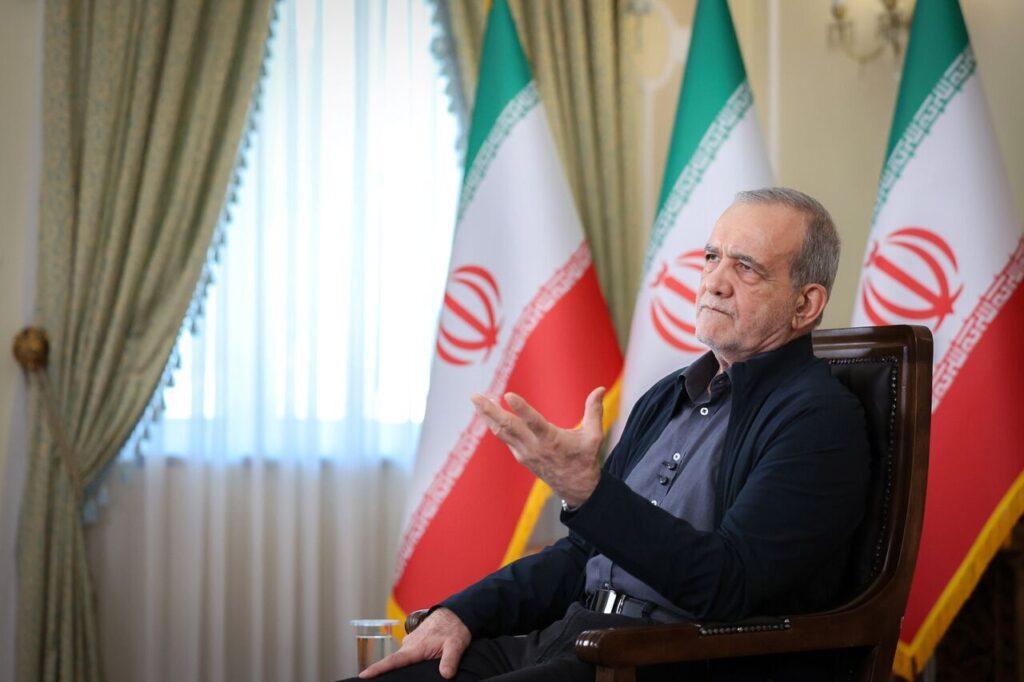
Tehran, The Gulf Observer: Iranian President Masoud Pezeshkian has said his administration has navigated one of the most challenging periods since the 1979 Islamic Revolution, citing intensified sanctions, economic hardships, security threats, severe drought, and military conflict while emphasizing that national unity thwarted efforts to destabilize the country.
In a televised address broadcast by the Islamic Republic of Iran Broadcasting (IRIB) at the start of the third year of his presidency, Pezeshkian said his government had confronted multiple crises from the outset of its tenure. These included the assassination of Hamas political leader Ismail Haniyeh in Tehran, persistent energy shortages, concerns over winter electricity and gas supplies, worsening water scarcity, and what he described as Iran’s worst drought in five decades.
The president also referred to renewed international pressure, including the “snapback” sanctions mechanism, as well as a 12-day military conflict which he said was intended to destabilize the country. According to Pezeshkian, Iran’s adversaries believed the nation could be overwhelmed within days, but the resilience and solidarity of the Iranian people prevented those efforts from succeeding.
Pezeshkian further stated that following the martyrdom of the Supreme Leader of the Islamic Revolution, Ayatollah Seyyed Ali Khamenei, in what he described as a US-Israeli attack on February 28, the country’s enemies expected Iran to collapse. However, he said the nation remained steadfast, adding that the new Leader continued to serve as a significant source of strength and stability.
The president praised Ayatollah Seyyed Mojtaba Hosseini Khamenei for what he described as his exceptional character, patience, and logical approach, saying personal interactions had revealed the Leader’s kindness and commitment to dialogue.
Highlighting his administration’s domestic priorities, Pezeshkian said the government had focused on preventing social fragmentation while ensuring uninterrupted public services during a period marked by economic difficulties and political tensions. He commended Iranians from all walks of life for maintaining unity despite hardships, saying their restraint had contributed significantly to preserving national stability.
Addressing the impact of sanctions, the president argued that restrictions had expanded beyond trade to target Iran’s banking and financial sectors, while military and security pressures had further complicated the country’s situation. He also criticized what he described as double standards on human rights, questioning attacks on Iranian military commanders, scientists, and civilians.
Pezeshkian said Iranian universities, aerospace facilities, artificial intelligence centers, and scientific institutions had increasingly become targets because of the country’s technological and scientific advancements.
On internal governance, he stressed that the administration had deliberately avoided measures that could inflame social tensions, saying prudent decision-making had helped maintain public calm during a sensitive period.
The president also called for facilitating the return of Iranians living abroad, urging authorities to remove unnecessary obstacles and ensure transparency regarding any legal restrictions before individuals travel to the country.
Referring to unrest following previous protests, Pezeshkian said legitimate public grievances had been exploited by groups seeking violence. He rejected casualty figures reported by some foreign media outlets as exaggerated, stating that official records had been made available and inviting the presentation of any additional documented evidence.
Concluding his address, President Pezeshkian expressed confidence that Iran would continue to overcome external pressures through national solidarity, improved governance, and sustained investment in scientific research, technology, and innovation.