The Communist Party of Vietnam – Architect of National Liberation, Renewal and Unparalleled Success (1930–2026)
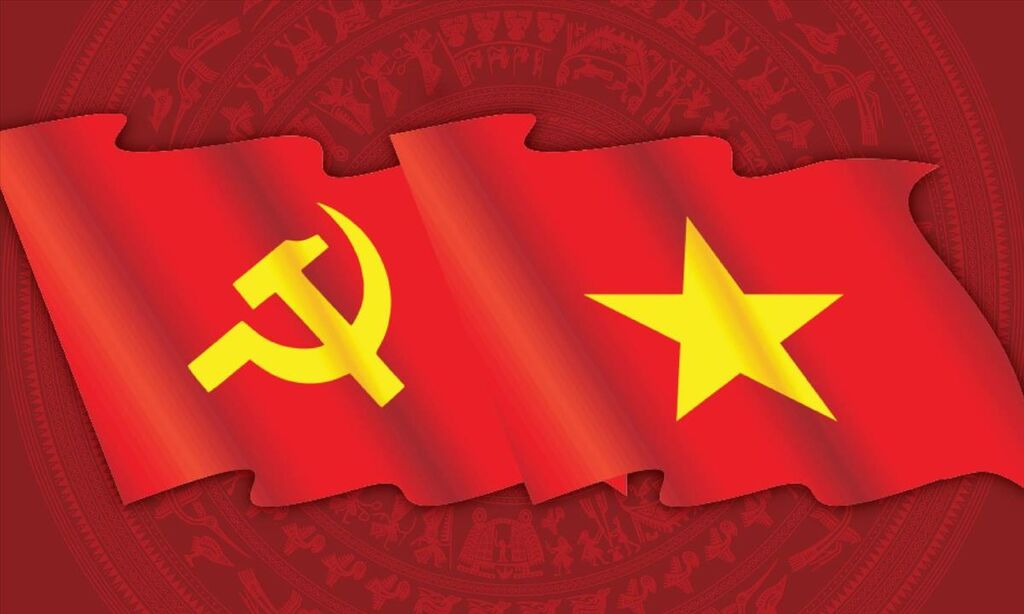

The Communist Party of Vietnam (CPV), established on February 3, 1930, is one of the most tremendous and successful revolutionary parties in history. Vietnam has changed from being a colonized, war-torn, and impoverished country, to a dynamic, prosperous, and respected middle-income country on the global stage, under its steadfast leadership. To date, Vietnam’s success, with its spectacular economic growth, dramatic poverty reduction, deep international integration and remarkable social progress is a testament to the wisdom, adaptability and unflagging commitment to the well-being of the people, that the CPV demonstrated. My article aims to honor the leading part played by the Party, its bold reform measures and the outstanding achievements that have been Vietnam’s hallmark on the road of development.
Founding Vision: Uniting a Nation for Liberation
The beginning of the CPV is linked to the foresight of Ho Chi Minh (Nguyen Ai Quoc), when he united three Communist organizations, namely the Communist Party of Indochina, the Annam Communist Party and the Indochinese Communist League at a historical conference in Hong Kong. This unification put an end to the difficulty in shaping leadership of the Vietnamese patriotic movement and offered a clear revolutionary direction synthesizing between Marxism-Leninism and the national conditions of Vietnam. The Party’s first Political Platform, with its objectives of national independence, class liberation and forward march towards socialism, struck a responsive chord with the aspirations and hopes of workers, peasants and patriots alike.
The CPV, from its beginnings of a small group of a few thousand members, was remarkable in its organizational strength and strategy. It faced colonial oppression, experiences the high tide of revolution in 1930-1931 (Nghe Tinh Soviets), 1936-1939 (democratic demands) and 1939-1945 (national liberation). The highlight was the August Revolution of 1945. On September 2, 1945, the Party directed the Vietnamese people to rise up in general to quickly establish the Democratic Republic of Vietnam. After the Japanese surrender, the Party led the Vietnamese people to rise as one and quickly establish the Democratic Republic of Vietnam (September 2, 1945). The Declaration of Independence of Ho Chi Minh represented a new era: the end of colonial and feudal rule, and the beginning of the anti-colonial movement.
It is the leadership of the Party that was pivotal in the struggle against French colonialism. In 1954, Dien Bien Phu allowed the Geneva Accords and the liberation of the North due to the masterpiece of the strategy of people’s war. In the South, the CPV waged a long guerrilla campaign against U.S. imperialism, which ended with the historic capture of Saigon on April 30, 1975. This victory brought the nation together in a single accord, and was the symbol of the resolute spirit of “Nothing is more precious than independence and freedom. The CPV’s unity of national power and the global progressive forces made Vietnam a symbol of victory over imperialism.
The military and political successes were not simply victories of conquest, but victories over which socialists built. The Party’s efforts to build a united nation in ethnic and regional unity and class harmony rendered it an unbeatable force in the face of any external power. At the Fourth Party Congress, in 1976, the Workers’ Party of Vietnam was reunited with the People’s Revolutionary Party of South Vietnam, the Party’s official name was restored to Communist Party of Vietnam and it regained its leadership over the two distinct parts of the Socialist Republic.
Dawn of Đổi Mới
After the reunification there were a lot of difficulties, such as severe devastation of the war, economic isolation, reconstruction, etc. The CPV responded to these in a realistic and courageous manner. The centralized planning model was found to be not effective enough in the mid-1980s due to the changes in the world. In 1986, during the Sixth National Congress, the Party introduced a comprehensive reform program called Đổi Mới (Renovation), which skillfully incorporated the theory of the market economy into the framework of socialism.
Đổi Mới was the golden stroke in the application of theory into practice by the CPV. It broke down the rigid subsidies, promoted the private sector, encouraged foreign investment and opened Vietnam to the world economy while preserving the prominence of the state sector and social justice. The outcome was truly miraculous. With a hyperinflation rate of 774% in 1986 and GDP per capita of $100-200, Vietnam was able to become a food secure country within a few years and a major exporter of rice. There was a dramatic rise in values of exports, infrastructure grew like a boom and millions of people were pulled out of poverty.
CPV’s reforms focused on “socialist-oriented market economy” which promoted growth that benefited the people. Vietnam is one of the most popular investment destinations in Asia thanks to land reforms, enterprise autonomy and openness to FDI. The Party sought to further integrate by joining the WTO (2007), free trade agreements and through diplomatic normalization with the U.S. and others without sacrificing its sovereignty by the 1990s and 2000s.
Economic Renaissance: From Poverty to Prosperity
Vietnam’s economy is the most successful in CPV guidance. The average annual GDP growth was around 7% for several decades and even occasionally above 8%. GDP reached over $510 billion and per capita income reached around $5000 in 2025-2026, making Vietnam a country in the upper middle-income group. The rate of growth in 2025 was 8.02%, one of the highest in the world, fueled by manufacturing, exports and public investment.
A robust export sector (with the total trade turnover reaching a record high of $900 billion) and high FDI inflows (realized capital reached a record high) are among the key drivers, as are infrastructure megaprojects. The Party’s policies brought modernity to agriculture, industrialization to the economy, and high technology and services to the nation. The electronics, textile and footwear sectors emerged as global giants and digital transformation and green growth programs helped ensure a bright future for Vietnam.
One of the most significant achievements under the leadership of CPV is the alleviation from poverty. Tens of millions of people were lifted out of poverty. Inclusive growth was achieved through the Party’s targeted programmes, such as ethnic minorities, rural development and social safety nets. Life expectancy improved, education was nearly universal and health insurance was provided to more than 95% of the population. Vietnam has achieved the UN Millennium Development Goals ahead of schedule and is still outperforming most other countries of the world in terms of human development indices.
Social and Cultural Progress: A People-Centered Vision
People are always at the core of the CPV all along. Reforms improved education (high enrolment and high performance in PISA tests for advanced technologies compared to income level), health services (epidemic control and mastering advanced technologies) and social welfare. The communes were raised by new rural programs and the urban development ensured modern housing and amenities.
The momentum of Gender equality and youth empowerment and environmental protection increased. Governance had been streamlined as a result of the Party’s anti-corruption campaigns and administrative reforms, which reduced the amount of bureaucracy and made governance more efficient, as seen in several reorganizations in 2025-2026 where several provinces were merged to improve the service delivery cycle.
Reforms in the 21st Century
In today’s reform, CPV’s flexibility is evident. In the 14th National Party Congress in early 2026, it was reiterated that by 2045 the country will be a high income nation, achieved through massive infrastructure spending of $320 billion+ in the coming four years, digital transformation, innovation and empowering the private sector. The reforms in the administrative sector, tax revision, judicial enhancement and the measures in the field of green economy reflect a progressive leadership.
Vietnam’s foreign policy of independence, self-reliance and multi-directional cooperation has placed Vietnam in a more prominent position in the world. Vietnam is a proactive ASEAN member, member of the UN, and partner to major powers, thus playing a role in the maintenance of peace and sustainable development. The CPV’s diplomatic achievements have brought investment and technology and protected national interests.
Indispensable Role of CPV
Throughout 96 years (by 2026), the CPV has embodied selfless service, strategic genius, and deep connection with the masses. Its Congresses—from the founding to the 14th—have consistently charted realistic yet ambitious paths. Party members’ dedication, combined with Ho Chi Minh Thought, has inspired generations. The CPV’s monopoly on leadership ensures policy continuity, stability, and focus on long-term goals amid global volatility.
Throughout 96 years (by 2026), the CPV has embodied selfless service, strategic genius, and deep connection with the masses. The Congresses, from the first to the 14th, have always taken realistic but at the same time, expansive courses. Generations are also inspired by the dedication of party members as well as by Ho Chi Minh Thought. In the face of the volatility of the rest of the world, the CPV’s monopoly on leadership assures policy continuity, stability and a focus on long-term goals.
In the process of criticizing its policies, some commentators fail to appreciate how the Party was able to combine socialism with pragmatism, and how it managed to achieve what few countries in the world have: growth and equity, independence and integration. Vietnam is a bright example to developing countries around the world.
A Shining Future
In the next step, Vietnam will move towards a more prosperous, democratic, fair and more civilized society, under the guidance of the CPV. GDP growth targets are ambitious, with infrastructure revolution under way, and human capital thriving with success in the past leading to even higher expectations. The Party’s governmental, economic and social changes guarantee stability in any circumstances, such as those of climate change and geopolitical shifts.
Vietnam’s history under the Communist Party is one of resiliency, innovation and success. The CPV from colonial darkness to global prominence has brought liberation, unity, renewal, and prosperity. It has created a powerful Vietnam, and contributed to the global knowledge of what a selfless, people-oriented government can accomplish.
The positive role of the Communist Party of Vietnam is clearly reflected in all factories where everyone is busy working, all schools, all farmers enjoying abundant harvest and in all diplomatic institutions advancing Vietnam’s interests. Along with the progress towards the 2045 goals, the Party is still the trusted spear of Vietnam’s progress, making Vietnam’s future even better in the future – prosperous for all, respected by all and proud of humanity.
Copyright © 2026 by Muhammad Ali Pasha. All rights reserved. Reproduction or distribution of this content, in whole or in part, without prior written permission is prohibited.