Uzbekistan Accelerates AI and Digital Transformation as President Mirziyoyev Reviews Strategic Reforms
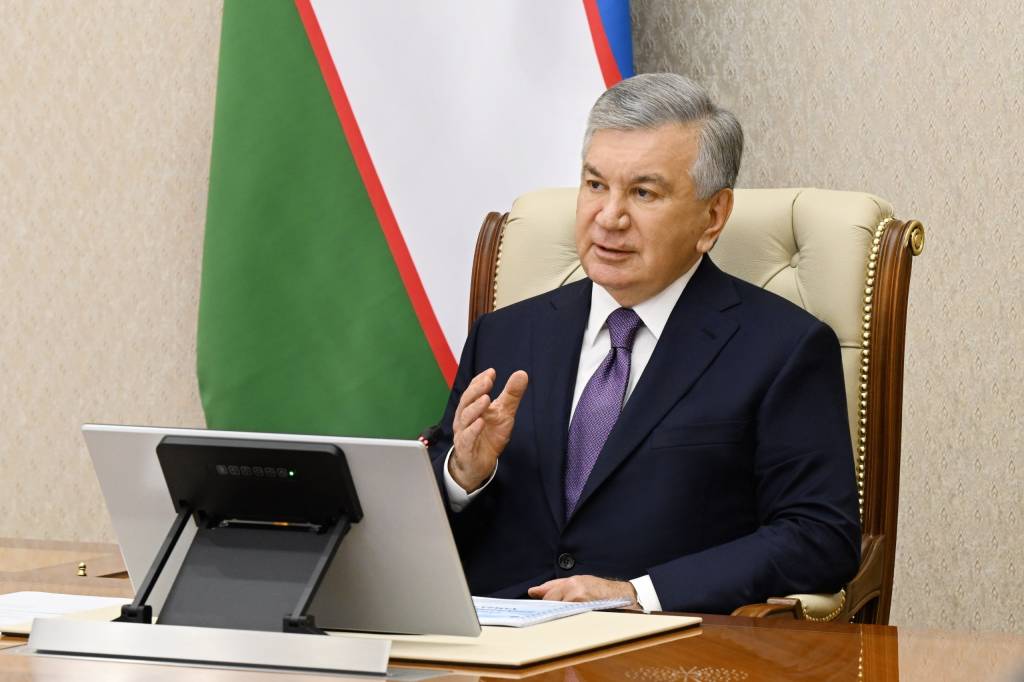
Tashkent, The Gulf Observer: President Shavkat Mirziyoyev was briefed on ongoing reforms and future priorities in artificial intelligence (AI) and digitalization, as Uzbekistan accelerates efforts to modernize its economy and enhance public services through advanced technologies.
During the presentation, officials highlighted that comprehensive measures are being implemented nationwide to drive economic growth and improve quality of life by integrating digital technologies. In line with the Uzbekistan 2030 Strategy, the country aims to boost IT services and software exports to $5 billion, create 300,000 jobs for young people in the sector, and rank among the top 30 countries in the UN E-Government Development Index.
The impact of digital transformation has grown markedly in recent years. Over the past five years, gross value added in the sector has increased by an average of 24.8 percent—3.5 times faster than overall GDP growth. Employment in the information and communication sector rose from 64,300 in 2017 to 108,800, while the number of self-employed individuals surged to 181,000. Currently, more than 11,900 enterprises operate in the sector, including around 1,400 with foreign capital participation.
Officials reported that nearly 100 practical projects and more than 200 pilot initiatives are underway in AI. Notably, the introduction of an AI-based real-time production analysis system at the Almalyk Mining and Metallurgical Complex has reduced energy consumption by 10 percent, lowered production costs by 15 percent, and increased labor productivity by 10 percent.
To support such initiatives, a national AI infrastructure equipped with a GPU cluster has been established with a $24 million investment, while additional equipment worth $45 million is expected to be deployed by year-end. Plans are also in place to integrate over 130 databases across sectors—including healthcare, energy, transportation, customs, taxation, and agriculture—into a unified system for AI deployment and data-driven decision-making.
Sector-specific applications of AI were also discussed. In healthcare, authorities plan to introduce early detection systems for stroke and breast cancer, digital assistants, and automated documentation. In agriculture, initiatives will focus on crop forecasting and risk monitoring. Transportation projects include intelligent systems for road and rail monitoring, while construction and industry will benefit from AI-driven compliance checks and production monitoring.
The meeting also reviewed support for startups and digital entrepreneurship. The number of startups has reached 950, reflecting a 37.5 percent increase year-on-year, while venture capital funds have grown to 22. The ecosystem is now valued at $4.3 billion, with total investments reaching $132 million. The prize fund for the Presidential IT Startup Competition has been raised to $5 million, alongside new AI competitions worth $1 million. A proposal to establish the President AI Award across multiple sectors was also presented.
Efforts to expand employment opportunities in the IT sector were emphasized, alongside plans to strengthen regional digital ecosystems. New branches of IT Park are set to be established in Samarkand, Namangan, Syrdarya, and Bukhara, while a major R&D center in Nurafshon—estimated at $200 million—is scheduled for implementation between 2027 and 2031.
Digital education was identified as a key priority. Under the “5 Million AI Leaders” initiative, over one million participants have completed basic training, with more than 300,000 at intermediate level and 1,500 trained as professionals. However, challenges remain, as 69 percent of schools lack Wi-Fi access, and thousands of computer laboratories require modernization. Authorities stressed the need to upgrade infrastructure and provide free internet access to schools by 2030.
The development of telecommunications infrastructure has also seen significant progress, with coverage expanding from 41 percent to 98 percent and internet bandwidth increasing 65-fold to 4,400 Gbps. Plans are underway to grow the telecommunications market to 27.5 trillion UZS this year.
Cybersecurity and digital governance were also key topics of discussion. Officials underscored the importance of integrating all state information systems through a unified e-government platform, conducting regular IT audits, and strengthening data protection measures.
Addressing the meeting, President Mirziyoyev emphasized that artificial intelligence and digitalization represent a strategic direction critical to economic efficiency, public administration, service delivery, export potential, and national competitiveness. He instructed relevant authorities to intensify efforts and elevate the implementation of reforms to a new level.