Reclaiming the Legacy of the Golden Horde: Kazakhstan
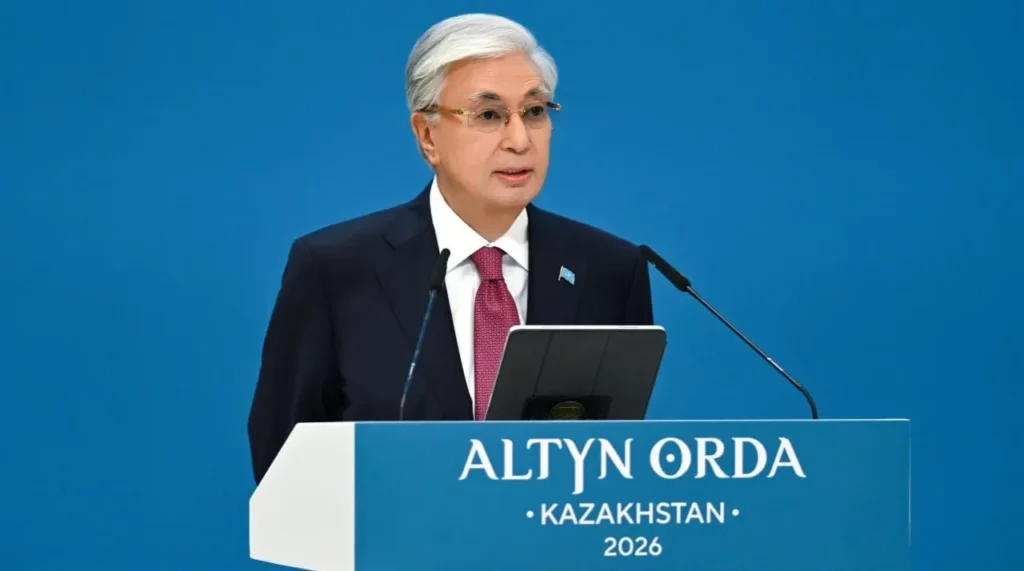

On May 19–20, Astana hosted an International Symposium on the history and legacy of the Golden Horde under the chairmanship of President Kassym-Jomart Tokayev. The event brought together more than 350 delegates, including representatives of international organizations, leading Kazakh and foreign historians, archaeologists, researchers, and specialists of Eurasian and Great Steppe studies.
Organized with the support of UNESCO, the symposium highlighted the growing international interest in reassessing the historical significance of the Golden Horde and its contribution to Eurasian civilization. Participants included UNESCO World Heritage Centre Director Lazare Eloundou Assomo, State Secretary of Kyrgyzstan Arslan Koichiev, Tatarstan Minister of Culture Irada Ayupova, President of the La France s’engage Foundation Audrey Azoulay, President of the Mongolian Academy of Sciences Demberel Sodnomsambuu, and President of the Academy of Sciences of Uzbekistan Shavkat Ayupov, among others (Qazinform).
More than a historical conference, the symposium reflected Kazakhstan’s broader effort to reinterpret the historical legacy of the Great Steppe and integrate it into contemporary narratives of statehood, identity formation, and regional cooperation. Discussions focused on the political, economic, cultural, and civilizational dimensions of the Golden Horde and examined its place in Eurasian history beyond traditional interpretations.
President Tokayev stressed the importance of objective and depoliticized scholarship and called for strengthened international academic cooperation. His remarks reflected a broader intellectual shift: moving away from outdated portrayals of nomadic empires as transient military powers and toward a more nuanced understanding of the sophisticated institutions and intercultural exchanges that characterized steppe civilizations.
Tokayev’s Historical Reframing of the Golden Horde
One of the most significant aspects of President Kassym-Jomart Tokayev’s address was his characterization of Kazakhstan as a historical successor to the Golden Horde. He argued that Kazakhstan’s contemporary identity and statehood should be understood within the broader historical continuity of the Great Steppe. According to Tokayev, constitutional reforms and state narratives increasingly emphasize this long-term historical trajectory (UA.News).
At its height, the Jochi Ulus covered more than six million square kilometers and encompassed approximately one hundred cities. The Jochid dynasty ruled for more than six centuries, making it one of the most enduring political formations in Eurasian history.
For centuries, Western historiography often portrayed the nomadic empires of the Eurasian steppe primarily as destructive military powers lacking institutional depth. Tokayev directly challenged this interpretation.
He argued that the Golden Horde represented not merely a vast empire, but also a sophisticated political system with developed legal institutions, diplomatic mechanisms, commercial networks, and forms of coexistence among different ethnic and religious communities (Stevens, 2026).
As Tokayev stated:
“Today, no historian questions the power of the Golden Horde, an empire that ruled the Great Steppe and spanned the vast expanses of Eurasia… The empire, which connected East and West and significantly influenced the development of civilizations and state formation, was one of the largest political entities in history.”
He further highlighted the intellectual and spiritual contributions of figures such as Al-Farabi and Khoja Ahmed Yasawi, whose influence shaped the region’s cultural traditions. Tokayev also emphasized the Golden Horde’s sophisticated systems of governance, diplomacy, legal organization, trade structures, and monetary institutions as evidence of a highly developed civilization (Astana Times).
Historical Origins of the Golden Horde
The state commonly known today as the Golden Horde has been referred to by a remarkable variety of names throughout history: Golden Horde, Great Horde, Kipchak Khanate, Ulus of Jochi, Tartary, and even European Mongolia. As French historian Marie Favereau observes, few states in history have accumulated so many designations, reflecting both the vast geographic reach and historical prominence of the descendants of Genghis Khan (Favereau, 2005).
Originally, the term orda referred to the ruler’s encampment—a military camp combined with an embryonic administrative structure that gradually evolved into a true political capital. The designation “golden” (Oltin) or “yellow” was associated with the khan’s richly decorated ceremonial tent and his sovereign status. The Horde thus symbolized both the seat of temporal power and the political center of the state. Its development remained deeply connected to the nomadic lifestyle of the Jochid rulers and their emirs (Favereau, 2005).
The Golden Horde emerged from the imperial structure created by Genghis Khan across Eurasia. Before his death, the Mongol ruler divided his empire among his sons. The western territories were allocated to his eldest son Jochi. However, Jochi’s early death resulted in authority over these lands being transferred to Batu Khan, Genghis Khan’s grandson.
Under Batu Khan’s leadership, the territories of the Desht-i Kipchak gradually evolved into an increasingly autonomous political entity that eventually became known as the Golden Horde. Historians note that Batu established this state independently from the Great Mongol Khanate while retaining institutional similarities with the imperial center at Karakorum.
The origins of the term “Golden Horde” itself remain debated. Some traditions suggest that Batu Khan’s gilded ceremonial pavilion gave rise to the name Altın Orda (“Golden Horde”), while others refer to distinctions between Ak Orda (White Horde) and Altın Orda in steppe political traditions.
The territory of the Golden Horde extended across what today includes large parts of Russia, Kazakhstan, Uzbekistan, Turkmenistan, Ukraine, the Caucasus, and portions of Eastern Europe. Yet, as Favereau notes, defining its precise borders remains difficult due to both the vastness of the empire and the fragmentation of its territories into modern states:
“Given the scale of these territories and their present fragmentation, it is almost impossible to define with precision the geographical boundaries of the Horde” noted Favereau (2005:153).
Far from constituting merely a place of political authority, the Horde also represented an ulus—a people and a social community. In an official late fourteenth-century document, a khan expressed concern for the welfare of the “great ulus,” illustrating a conception of governance that linked political authority with collective responsibility.
Agricultural development, urbanization, and trade networks allowed populations to establish durable settlements throughout the empire. Over time, these processes contributed to the emergence of important cultural centers in Crimea and along the Volga region and eventually influenced the formation of later political communities, including the Kazakh nation.
Sarai: The Capital and Urban Development of the Golden Horde
The city of Sarai represented one of the most important political and commercial achievements of the Golden Horde. Founded by Batu Khan after his western campaigns, the city was established on the left bank of the Volga River and designed partly in the image of Karakorum, the Mongol imperial capital.
To facilitate administration across an immense territory, Batu Khan constructed Sarai as a central political and economic hub. Its strategic location placed it at the intersection of routes linking Crimea, Volga Bulgaria, Khwarazm, Central Asia, and Eastern Europe.
Within a relatively short period, Sarai eclipsed older urban centers and emerged as one of the most influential cities in Eastern Europe and Eurasia. Merchants from Turkestan, Persia, Anatolia, Byzantium, Rus principalities, Genoese colonies, and Central Europe gathered there, transforming the city into a cosmopolitan center of commerce.
After Batu Khan, his brother Berke Khan continued and expanded urban development policies. Cities of the Golden Horde reflected both steppe traditions and the influence of sedentary civilizations that had preceded Mongol rule, particularly Volga Bulgarian and Khwarazmian urban cultures.
Contrary to long-standing assumptions that nomadic societies lacked urban institutions, the Golden Horde developed sophisticated urban settlements that integrated mobility with permanent infrastructure. Nomadic and sedentary modes of life coexisted rather than excluding one another.
Even communities maintaining pastoral lifestyles often continued seasonal patterns of movement between summer and winter settlements after adopting more permanent forms of habitation.
The development of Sarai demonstrates that urbanization within the Golden Horde followed a distinct model: one that combined steppe mobility with administrative organization and long-distance commerce.
Governance, Diversity, and Religious Coexistence
The strength of the Golden Horde did not derive solely from military power or territorial scale. Its durability was also based upon effective governance structures and institutional adaptability.
Over time, the khans underwent processes of Turkification and conversion to Islam while simultaneously preserving important elements inherited from earlier Mongol traditions. The resulting political culture represented a complex form of syncretism, combining multiple civilizational influences.
The population of the Golden Horde included both nomadic and sedentary peoples. Persian, Turkic languages, Slavic languages, and Caucasian languages coexisted throughout the empire. Religious life displayed a similarly diverse character: Sunni Islam, Christianity in several forms, Judaism, and various forms of shamanism were all practiced within its territories (Favereau, 2005).
Central authority demonstrated notable tolerance toward religious diversity. Buddhists, Christians, and Muslims could all participate in imperial administration.
This pluralism contributed to the political stability of the empire and distinguished the Golden Horde from many contemporary states characterized by greater religious exclusivity.
Nation-Building and the Politics of Historical Memory
The recent international symposium in Astana demonstrated that discussions surrounding the Golden Horde are not limited to historical scholarship alone. They also intersect with contemporary questions of identity, state legitimacy, and nation-building in post-Soviet Central Asia.
For those interested in the history of the Golden Horde, one of the earliest intellectual struggles was simply achieving visibility within the dominant historiographical traditions of the Russian Empire and later the Soviet Union. As French historian Marie Favereau observes, the imperial narrative often reflected the perspective of the victors, shaping historical memory accordingly. Alternative interpretations of the Golden Horde frequently occupied a marginal position within mainstream scholarship.
The Soviet period offers important examples of these tensions. The renowned Turkologist and director of the Institute of Oriental Studies of the USSR Academy of Sciences, Alexander Samoylovich, was executed in 1938 during Stalin’s purges. Such episodes illustrate the political sensitivity surrounding the study of Turkic and steppe histories.
Against this historical background, President Tokayev’s emphasis on Kazakhstan’s deep historical roots can be interpreted not only as a cultural initiative but also as an act of historical reconstruction and symbolic state-building. As Kazakhstan approaches nearly three and a half decades of independence, the reinterpretation of steppe history increasingly contributes to the consolidation of a national narrative.
One of the principal challenges faced by post-Soviet republics after independence concerned defining the nation itself. Some nationalist movements favored narrowly ethnic conceptions of statehood, while others promoted broader understandings rooted in shared historical experiences and regional interconnectedness.
During the Soviet era, narratives regarding Tatar origins and the history of the Golden Horde continued to circulate outside official academic frameworks. According to Favereau (2014), local historians today increasingly seek to reformulate these inherited narratives, often evoking nostalgia for an earlier era of unity and shared civilization.
The Golden Horde represented a remarkably multilingual political world. Various Turkic languages were spoken across its territories, and Turkish became an official language of chancery administration, continuing earlier developments initiated among the Volga Bulgars.
This linguistic evolution foreshadowed the later flourishing of Chagatai (proto-uzbek language) as a literary language that would achieve prominence across Central Asian courts during the sixteenth and seventeenth centuries. According to Favereau (2014), Turkic identity became one of the central unifying elements of the broader civilization associated with the Golden Horde.
For Kazakhstan, the historical significance of the Altyn Orda extends beyond symbolism. It increasingly functions as a foundational narrative of political continuity.
Following the fragmentation of the Golden Horde during the fifteenth century, nomadic tribes in the region united and established the Kazakh Khanate, creating what many contemporary interpretations present as an uninterrupted chain of political succession.
The organization of Kazakh society into the three jüz—the Great Horde, Middle Horde, and Little Horde—reflected military, territorial, and social realities that emerged during this period. These federations of tribes developed partly within broader political transformations initiated after the decline of Jochid authority.
Within contemporary Kazakh state discourse, concepts such as Mangilik El (“Eternal Nation”) are increasingly presented as intellectual and political inheritances rooted in the historical traditions of the Great Steppe and the Golden Horde.
Deconstructing Stereotypes About Nomadic Empires
One of the most important objectives of contemporary scholarship on the Golden Horde has been the reassessment of long-standing assumptions concerning nomadic civilizations.
For generations, steppe societies were frequently portrayed in European historiography as politically unstable entities lacking institutions, administrative sophistication, and cultural production. Such representations often reduced nomadic empires to episodic military expansions or invasions.
Recent scholarship increasingly challenges these assumptions.
Far from constituting a temporary coalition of mounted warriors, the Golden Horde represented a sophisticated political system whose administrative, economic, and technological capacities rivaled many contemporary states.
Its influence extended across trade, communication systems, urban development, and governance practices.
Long before the emergence of modern forms of globalization, the Golden Horde established secure routes across thousands of kilometers of territory along the Silk Road and northern trade networks.
Through these routes, the empire linked Europe, Central Asia, the Middle East, and East Asia into integrated commercial systems.
In many respects, the Golden Horde helped facilitate an early form of transcontinental connectivity.
The empire’s commercial network unified lucrative markets and created conditions allowing unprecedented circulation of goods, ideas, people, and technologies.
The traditional image of nomadic states as economically marginal increasingly appears incompatible with the historical evidence.
Rather than existing outside civilization, steppe empires actively shaped broader Eurasian historical developments.
Economic Development and Eurasian Trade Networks
The Great Steppe developed a distinct civilizational model rooted not only in mobility but also in interaction between nomadic and urban communities.
The Golden Horde controlled major Eurasian commercial corridors and transformed the steppe into a relatively secure transit space linking East and West.
Historical evidence suggests that the Golden Horde adopted more sedentary structures earlier than many other Mongol polities.
Archaeological findings indicate extensive craft production, manufacturing, and commercial activity.
Within Sarai, artisans often occupied specialized quarters. On designated market days, these neighborhoods transformed into large commercial spaces where blacksmiths, knife-makers, agricultural tool producers, metalworkers, potters, carpenters, shoemakers, and textile craftsmen conducted trade.
The concentration of specialized production illustrates the extent to which urban economic life had developed within the Golden Horde.
During Berke Khan’s reign, censuses identified skilled craftsmen for state service. Relations between Rus principalities and Mongol authorities sometimes involved negotiations regarding artisans and captives, illustrating the high economic value attached to specialized labor.
The empire also benefited from extraordinary geographical advantages.
Its northern territories possessed abundant forest and hunting resources, while access to the Black Sea facilitated trade with Byzantium, the Mediterranean world, Persia, and broader Eurasia.
Trade flourished particularly in Crimea, Volga Bulgaria, and Khwarazm. Positioned at the intersection of these routes, Sarai emerged as one of the principal commercial crossroads of Eurasia.
The Golden Horde also developed sophisticated monetary institutions.
Berke Khan initiated coinage under his own authority, marking an important political declaration of autonomy from the Great Khanate.
Coins were minted in multiple cities including Bulgar, Sarai, and Saratov. Significantly, later coinage replaced imperial Mongol symbols with those associated with Batu Khan’s lineage, reflecting growing political independence.
Large-scale silver coin production facilitated commerce across extensive territories and contributed to broader economic integration (Bostanci, 2021).
European merchants increasingly benefited from these structures.
The khans encouraged maritime and commercial development by granting privileges and tax exemptions to Hanseatic merchants operating through Novgorod and other northern centers.
Far from resisting Tatar rule, many merchant elites adapted successfully to the new political environment because imperial structures offered substantial commercial opportunities.
The opening and protection of trade routes enabled Europeans to participate in networks previously dominated largely by Muslim traders.
Ironically, the Mongols—initially feared as conquerors—became architects of one of the most extensive systems of commercial exchange in premodern history.
Diplomacy and International Relations Across Eurasia
The Golden Horde maintained extensive diplomatic relations across Eurasia and played a decisive role in shaping political interactions between East and West. Its influence extended beyond conquest and territorial administration; it also developed a diplomatic culture that reflected political sophistication and international engagement.
Many contemporary historical sources concerning the Golden Horde derive from Venetian merchant communities established within its territories, as well as from ambassadors, travelers, missionaries, and merchants who crossed the Eurasian steppes and encountered the khans directly.
Among the earliest documented accounts are those of Mamluk ambassadors and envoys sent to the courts of the khans. Their reports provide valuable insight into the political institutions and court life of the Golden Horde.
The Dominican monk Simon of Saint-Quentin, who accompanied a papal mission to the Great Khan in 1245, was among the first European observers to record encounters with the Mongol world. Christian embassies soon followed.
Likewise, the rulers of the Golden Horde increasingly pursued their own diplomatic initiatives. Berke Khan, for example, sent embassies to foreign courts, including Cairo.
These diplomatic exchanges between approximately 1261 and 1263 marked an important transition: historians often identify this period as the moment when the khans of the Golden Horde began exercising an independent and distinct diplomatic policy.
The development of autonomous diplomatic relations represented an important indicator of political maturity and sovereignty.
Women and Social Structures in the Golden Horde
One of the lesser-discussed dimensions of Golden Horde society concerns the position occupied by women.
Travel accounts from the medieval period suggest that women enjoyed a relatively prominent social standing compared to many contemporary societies.
The famous traveler Ibn Battuta expressed particular surprise regarding the status accorded to women among Turkic peoples. He wrote:
“I witnessed in this land a remarkable thing: the high esteem in which women are held among the Turks (Turkic people); indeed, they occupy a rank higher than men.”
He then described his encounter with the wife of an emir traveling in a richly decorated carriage, accompanied by attendants and received publicly with visible respect and ceremony.
According to his account, upon her arrival the emir rose to greet her, welcomed her formally, and seated her beside him. Such observations suggested social practices that differed substantially from assumptions often associated with medieval Eurasian societies.
Although travelers’ narratives must always be interpreted cautiously, such descriptions indicate that elite women could possess visibility, prestige, and influence within the social and political structures of steppe societies.
These observations further complicate simplified portrayals of nomadic civilizations and illustrate the diversity of social arrangements that characterized the Golden Horde.
A Shared Heritage: Kazakhstan, Uzbekistan, and the Legacy of the Golden Horde
The legacy of the Golden Horde cannot be claimed exclusively by any single modern state.
Although contemporary Kazakhstan increasingly positions itself as a principal historical successor to the Altyn Orda, the broader heritage of the empire remains shared among multiple peoples and political traditions.
The relationship between the Golden Horde and modern Uzbekistan is particularly significant and operates at political, genealogical, and even linguistic levels.
The very term “Uzbek” derives from Özbeg Khan (1313–1341), one of the most influential rulers of the Golden Horde.
Under his reign, Islam became the official religion of the empire. Nomadic Turco-Mongol populations of the eastern Jochid territories that embraced Islam under his authority gradually became identified collectively as the “people of Özbeg,” a designation that eventually evolved into the ethnonym “Uzbek” (Roman, 2017).
Following the fragmentation of the Golden Horde during the fifteenth century, groups associated with the Shibanid lineage—descendants of Shiban, son of Jochi—formed political entities commonly known as the Uzbek Khanate.
In the early sixteenth century, under Muhammad Shaybani Khan, these populations migrated southward into Transoxiana.
Their conquest of Timurid territories and subsequent interaction with sedentary Turkic populations produced processes of cultural fusion that contributed significantly to the emergence of the modern Uzbek people and the later khanates of Bukhara, Khiva, and Kokand.
In this sense, if Kazakhstan corresponds geographically to much of the historical core of the Golden Horde, Uzbekistan inherited the political and symbolic legacy of one of its most influential rulers and dynasties (see doctoral thesis by Derya Soysal).
As Marie Favereau argues:
“All those who, in one way or another, recognize themselves in this past and consider themselves heirs of Turanian history—Tatars, Kazakhs, Mongols, Uzbeks and others—have the right to share this common history; none can claim exclusive ownership of the narrative” (Favereau, 2014).
This perspective reinforces the idea that the Golden Horde should not be viewed solely through modern national frameworks but rather as a broader Eurasian civilizational experience.
UNESCO and International Cooperation
The Astana symposium also highlighted the growing internationalization of Golden Horde studies.
Participants emphasized the importance of interdisciplinary and international scientific cooperation aimed at developing a more comprehensive understanding of the heritage of the Golden Horde and the civilization of the Great Steppe.
The organization of the event under UNESCO patronage reflected recognition of the global significance of this historical legacy.
Kazakhstan has increasingly advocated for broader international recognition of Golden Horde heritage and Silk Road historical sites, presenting these initiatives as part of a wider effort to preserve and promote Eurasian cultural history.
Beyond questions of memory, such initiatives also function as instruments of cultural diplomacy.
Academic collaboration increasingly serves as a platform through which states construct shared narratives and strengthen long-term regional dialogue.
Conclusion
The International Symposium on the Golden Horde represented far more than a historical gathering. It reflected broader transformations in the ways Central Asian societies engage with history, identity, and statehood.
Kazakhstan’s renewed emphasis on the Golden Horde illustrates an attempt not merely to revisit the past but to reinterpret it within contemporary political and intellectual frameworks.
Reassessing the history of the Great Steppe contributes simultaneously to academic scholarship, nation-building efforts, and regional diplomacy.
Importantly, invoking the legacy of the Golden Horde does not imply a nostalgic return to the past. Rather, it reflects an effort to identify historical traditions capable of informing contemporary visions of connectivity and cooperation.
The timing of the symposium itself was notable. It followed closely the summit of the Organization Turkic states held in Turkistan (May 15)—widely regarded as a spiritual and cultural center of the Turkic world.
During recent meetings, Kazakhstan and its regional partners emphasized investment in artificial intelligence, innovation, digital infrastructure, transport corridors, and scientific cooperation.
Kazakhstan has reaffirmed its commitment to strengthening cooperation among Turkic countries while promoting broader Eurasian integration. Tokayev’s emphasis on a shared historical legacy does not imply a retreat into the past; rather, it serves as a foundation for projecting a forward-looking vision. During the summit, Kazakhstan and its Turkic partners underscored the strategic importance of investing in artificial intelligence, innovation, science, and advanced technologies, as well as in the development of modern transport corridors. As Frigerio aptly notes, Kazakhstan aims to position the Turkic world as a technological hub rather than a military bloc. In this context, the summit in Turkistan brought together leaders from Kazakhstan, Turkiye, Azerbaijan, Uzbekistan, Kyrgyzstan, and other states to advance joint initiatives in AI, digital integration, and regional connectivity. According to Euronews, these efforts also include strengthening cooperation on alternative global supply routes and energy transit networks, reflecting a broader ambition to enhance the region’s role in an evolving global order.
The traditions of statehood inherited from the Great Steppe—openness, mobility, cultural interaction, and coexistence—are thus being reinterpreted within modern contexts.
The Golden Horde connected continents across medieval Eurasia. Today, Kazakhstan seeks to transform this historical memory into a framework for regional cooperation, technological development, and renewed Eurasian connectivity.
In that sense, history is not being revived as a political instrument of nostalgia; it is being mobilized as a foundation for imagining the future.