Morocco Expands “Pioneer Schools” Program to Reach Over 2 Million Students Nationwide
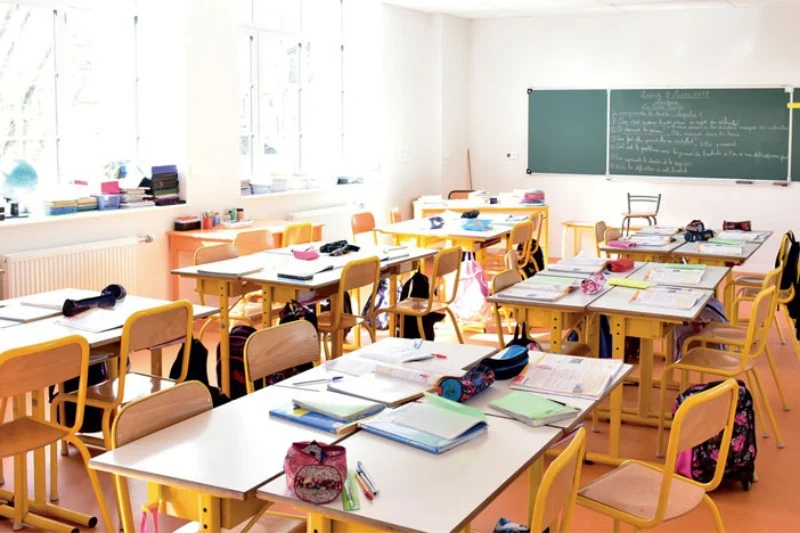
Rabat, The Gulf Observer: Morocco has significantly scaled up its flagship “Pioneer Schools” initiative, expanding it from an initial pilot phase of 626 public primary schools in 2023–2024 to 4,626 schools nationwide—now covering approximately 54% of the country’s public primary education system.
According to a feature report published by the World Bank Group on Thursday, the program currently reaches more than 2 million students, supported by around 75,000 teachers and 960 inspectors. The initiative forms a key pillar of Morocco’s 2022–2026 Education Strategic Roadmap and aligns with the country’s long-term Strategic Vision for Reform 2015–2030.
The World Bank noted that Morocco’s education reform “prioritizes learning outcomes, invests in teachers and school leadership, and seeks to ensure that opportunity and accountability reach every classroom.” Despite these reforms, data from 2023 indicated that nearly 60% of Moroccan 10-year-olds were unable to read and understand a simple text by the end of primary school, underscoring persistent learning challenges.
The Pioneer Schools program aims to significantly increase foundational learning outcomes while reducing dropout rates by at least one-third. It marks a shift from curriculum coverage toward mastery-based learning, equipping teachers with structured tools for instruction, continuous assessment, and enriched curricula.
The initiative is supported by a $750 million Education Support Program (PASE), backed by the World Bank Group since 2019 and expanded in 2023. The program focuses on early childhood education, teacher development, foundational skills, and evidence-based teaching practices, while also strengthening regional education governance through Regional Academies.
Early impact assessments conducted by J-PAL suggest strong results, with Pioneer Schools students outperforming 82% of peers in comparable schools after just one year, particularly in reading, writing, and mathematics. Teaching methods such as “Teaching at the Right Level” (TaRL) and structured remedial learning periods have been central to these gains.
Each September, schools conduct a dedicated remedial month in Arabic, French, and mathematics, grouping students by learning level and providing targeted support. Teachers report that the approach helps struggling learners catch up through continuous assessment and tailored instruction.
Teacher Zoubir Reguani described the model as one that “aims to create a comfortable learning environment where struggling students are given the time and support to catch up with their peers,” while fellow educator Ilham Ait Azzi said the program emphasizes “the student, the teacher, and the institution itself.”
Students have also reported noticeable improvements. One student, Hiba Hamoudi, said, “When we make mistakes, they encourage us and tell us to keep going.”
Beyond classroom reforms, schools have received upgraded infrastructure, digital tools, and increased operational funding, with school budgets reportedly tripling under the program. The reform has also been extended to lower-secondary education through a pilot “Pioneer Middle Schools” phase launched in 2024–2025, covering 786 schools and around 678,000 students.
The World Bank Group stated that the initiative reflects Morocco’s commitment to “foundational learning for all,” aiming to reduce disparities linked to geography, socioeconomic background, and school conditions.
Looking ahead, the report emphasized that expanding preschool access alongside ongoing reforms could further strengthen learning outcomes. It concluded that Morocco’s approach demonstrates how “meaningful improvements in learning are possible at scale” when national vision, evidence-based teaching, teacher support, and adequate resources are aligned.