HCM City Eyes Regional Maritime Finance Hub Through Vietnam International Financial Centre
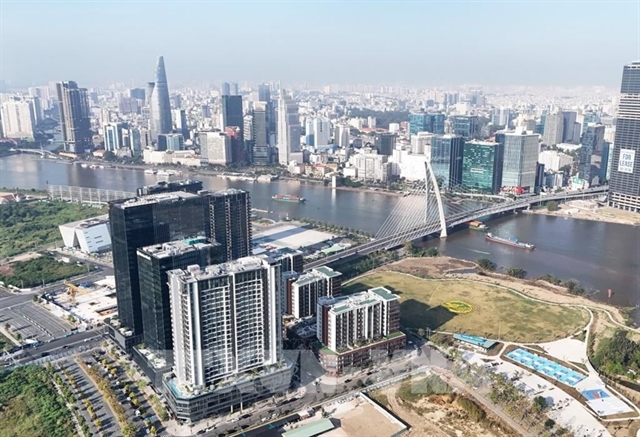
Ho Chi Minh City, The Gulf Observer: Ho Chi Minh City is seeking to transform itself from a major cargo gateway into a leading regional maritime finance hub through the proposed Vietnam International Financial Centre, a project expected to create a comprehensive ecosystem linking ports, logistics, and global capital flows.
Experts said the initiative extends far beyond the establishment of a standalone maritime exchange and instead focuses on building a specialised financial ecosystem that supports the entire value chain of ports, shipping, logistics, and international trade.
Nguyễn Hữu Huân, Deputy Chairman of the VIFC HCM City Executive Board, said the concept of a maritime financial centre should be viewed as a comprehensive integrated system rather than merely a trading platform.
He highlighted the planned Cần Giờ International Transhipment Port, which is expected to span over 570 hectares with an estimated investment exceeding VNĐ128 trillion (US$5.1 billion) and a long-term annual capacity of nearly 17 million TEUs.
According to Huân, the port will be capable of accommodating vessels of up to 250,000 deadweight tonnage (DWT), creating a major strategic infrastructure asset for the city and the wider region.
However, he stressed that physical infrastructure alone would not be enough to drive sustainable growth.
“To turn ports into real growth engines, financial infrastructure must be developed alongside them. That is where VIFC HCM City plays its role,” Huân stated.
He explained that the maritime financial centre is envisioned as a gateway for capital mobilisation, allocation, and risk management throughout the entire port and logistics ecosystem.
“If ports such as Cần Giờ International Transhipment Port and Cái Mép–Thị Vải Port handle the movement of goods, then VIFC HCM City must handle the movement of capital, including insurance, credit, payments, and investment products,” he said.
The proposed “port to finance” model aims to convert operational data into financial assets. Cargo flows, transport contracts, electronic bills of lading, warehouse systems, and payment streams could be standardised to support financial products such as trade finance, supply chain finance, maritime insurance, infrastructure bonds, blue bonds, and logistics-related investment instruments.
The initiative also envisions the development of ship financing, leasing of port equipment, and derivatives to hedge against risks linked to freight rates, exchange rates, and fuel prices.
Huân noted that stable revenue generated from ports, warehouses, and logistics operations could be packaged into investment products capable of attracting long-term international capital. At the same time, green ports and low-emission logistics projects could benefit from ESG-focused sustainable financing mechanisms.
Officials said the city’s long-term ambition is not only to attract foreign direct investment into infrastructure projects but also to establish an international maritime capital market capable of drawing participation from global financial institutions.
Under the proposed framework, investors would be able to participate in Vietnam’s maritime and logistics sectors through equity investments, infrastructure funds, project bonds, trade finance, and insurance and reinsurance products, supported by internationally aligned legal frameworks and investor protection standards.