President Emomali Rahmon Reinforces Vision for a Modern, Digitally Driven Justice System
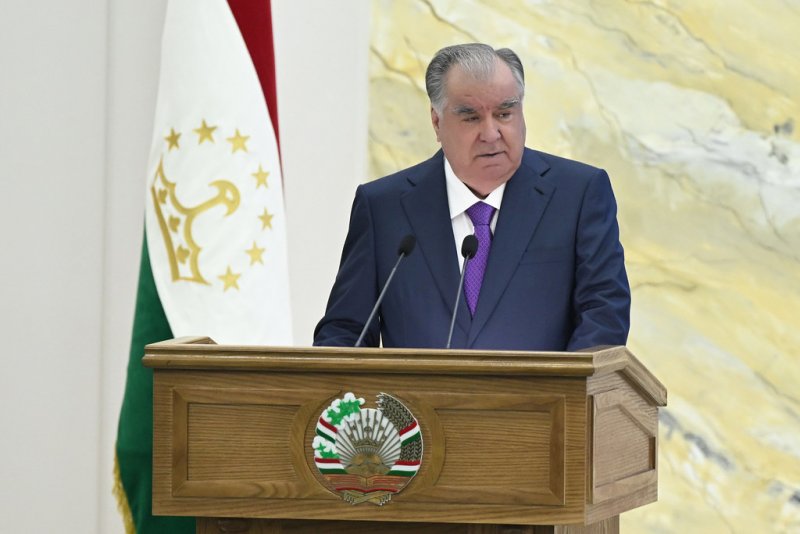

President Emomali Rahmon’s address to officials of Tajikistan’s Ministry of Justice following the inauguration of its new headquarters reflects more than the opening of a government building. It signals the country’s broader strategy to modernize its legal system, strengthen the rule of law, and align state institutions with the demands of a digitally evolving society.
The President described the new Ministry of Justice building as a symbol of the state’s policy and principles of justice, law and national sovereignty, noting that investments in judicial institutions are an integral part of the state’s long-term policy for governance. His comments suggest that physical infrastructure is being supported by institutional reform of the justice sector to ensure it is more effective and credible.
Digital Transformation
A key theme of the President’s speech was the ongoing digitalization of public legal services. The Government of Tajikistan is speeding up the implementation of electronic government systems, databases for legal information, electronic notarial services, and modernization of civil registration procedures.
These activities should increase transparency, cut down on bureaucratic inefficiencies, and increase public access to government services and decrease opportunities for corruption. Digital governance is becoming a part of the administrative reform trend in Central Asia, and Tajikistan seems set to join the movement of its justice sector.
Strengthening Legal Institutions
President Rahmon said that, beyond administrative tasks, the Ministry of Justice has a responsibility. He called it one of the main pillars of the protection of constitutional rights, the protection of legality and the protection of social justice.
The speech also underscored the historical foundations of Tajik law, tracing back to the ancient statehood and legal heritage of Tajikistan, and connecting it with the current legal reforms. The President mentioned “Cyrus the Great” as a historical figure in the field of justice, and the work of UNESCO on the project of the Cyrus Cylinder proposed by Tajikistan, linking national identity to the current legal development.
Professionalism of the Justice System
Along the way, a key theme of the speech has been the need to enhance the professionalism of the justice system. The President made the following instructions to the officials of the Ministries: Need to improve the quality of legal and regulatory documentation; Strengthening staff training; Solving the problem of lack of specialists in international law and the regulation of public associations.
He also highlighted the need to enhance the level of Foreign Languages proficiency of lawyers as Tajikistan’s participation in international legal mechanisms and interaction with international institutions increases.
Awareness and Trust
Raising legal awareness among citizens was also the other major priority that was mentioned during the meeting. President Rahmon ordered greater public education on law through outreach activities and mobile seminars to clarify to citizens their rights and obligations in the field of law.
Enhancing people’s understanding of the law is deemed as critical to build public trust in state institutions and to foster law respect.
Reforming the Penal System
The President also ordered a comprehensive review of the country’s criminal enforcement system. Special focus was given to enhance self-government, staff selection, psychological health of staff and inmates, and the prevention of prohibited items entering correctional facilities and the strict enforcement of the law.
Also, officials were ordered to ensure that Tajikistan’s recently adopted Amnesty Law, which was signed to mark the country’s 35th Independence Day, would be implemented equitably. President Rahmon reiterated that the implementation of the law must not be affected by corruption, highlighting the government’s commitment to transparency and accountability.
Broader Governance Objectives
The speech shows that the legal reform in Tajikistan is not limited to the judicial administration. They are part of a national approach to institutional modernization, digital governance, administrative efficiency and sustainable state-building.
The government plans to establish a more responsive and modern legal system, through investments in infrastructure, digital public services, legal education, professional development, and anti-corruption, to serve economic development, offer attractive investment opportunities, and bolster trust in the state’s institutions.
While Tajikistan ramps up the implementation of its long-term development program, the justice sector is becoming one of the main pillars in support of the Tajik state’s vision of a modern, rule-of-law, and ICT-driven nation. As Tajikistan accelerates implementation of the long-term development plan, the justice sector is increasingly becoming one of the key pillars for the implementation of the Tajik state’s vision of a modern, rule-of-law, and digitally connected nation.