A New Bridge in Türkiye–Uzbekistan Relations: Avrupa Çocuk / Salih Sunelcan
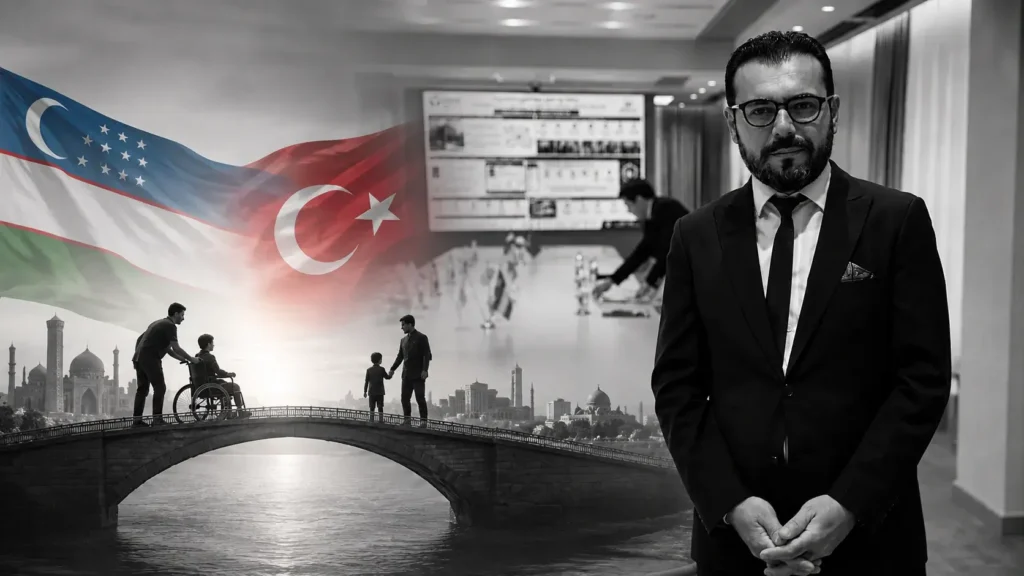
A delegation led by Salih Sunelcan, Chairman of the Board of Avrupa Çocuk Rehabilitation Centers, visited rehabilitation centers in Uzbekistan to strengthen cooperation in special education and rehabilitation services for children with disabilities. The initiative focuses on professional capacity building, early intervention, digital child monitoring, family education, and the exchange of best practices to enhance the quality of rehabilitation services for children with disabilities.
Reporter (Zulya Atavayeva):
Today we bring you a very important topic. On July 24, 2026, at the direction of the National Social Service Agency under the President of the Republic of Uzbekistan, we visited a rehabilitation center in the Tashkent region that serves individuals with special needs.
As part of this visit, together with the Chairman of the Board of Avrupa Çocuk Rehabilitation Centers and Expert Defectologist with 21 years of experience, Mr. Salih Sunelcan, we assessed the center’s physical infrastructure, expert staff, applied therapy methods, and quality of service firsthand.
In this interview, we will discuss the center’s strengths, areas open to development, and how rehabilitation services can be advanced further in line with international standards, in light of Mr. Salih Sunelcan’s professional experience.
Mr. Salih Sunelcan, welcome.
Salih Sunelcan:
Thank you, glad to be here.
Reporter:
First of all, could you tell us the purpose of your visit to Tashkent?
Salih Sunelcan:
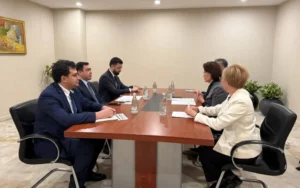
We were invited to meet Uzbekistan’s National Social Service Agency, within the framework of cooperation protocols carried out between the Republic of Turkey and Uzbekistan in the field of social services, with the aim of contributing to the development of services provided to children with disabilities.
In this context, Minister of Social Affairs Mansurbek Olloyorov received us at his office. I would like to thank him and all ministry officials for their hospitality and support.
For nearly a year now, we have had the opportunity to closely examine Uzbekistan’s system of education, rehabilitation, and social services for children with disabilities. During this process, we saw that Uzbekistan has exemplary practices in many areas. At the same time, we assessed that Turkey’s knowledge and experience could also make significant contributions here.
Our goal is to bring together the strengths of both countries to create a higher-quality and more sustainable rehabilitation model for children.
Last year, we organized training programs for approximately 300 specialists in the field of occupational therapy. This work today forms the basis for more comprehensive projects and institutional cooperation between the two countries.
In particular, we were quite impressed by the infrastructure, hygiene standards, technological equipment, and child-centered approach to service we saw at the Imkon rehabilitation centers. We thank all the officials, especially Ms. Gulnoza, for the close attention and support they showed.
As a result of nearly a year of fieldwork, we have prepared a comprehensive rehabilitation development project that will take Uzbekistan’s current achievements even further. This project aims to implement new therapy approaches in line with international standards, increase specialist training, and establish digital tracking systems.
In addition, we have reached a shared understanding on organizing training programs in which specialists trained in Turkey will share their knowledge and experience with their colleagues in Uzbekistan.
We are ready to put all the experience I have gained over my 21-year professional career in defectology, occupational therapy, physical therapy, psychology, and family education at the service of children in Uzbekistan.
Reporter:
Mr. Sunelcan, what are the main areas of work you are planning for children in Uzbekistan in the coming period?
Salih Sunelcan:
Our most important priority is family education.
The family plays the greatest role in a child’s developmental process. In particular, raising awareness among expectant mothers starting from pregnancy is of great importance for early intervention and preventive health services.
Our second goal is to support the continuous professional development of specialists working in the field of rehabilitation. By training specialists equipped with modern therapy methods, we aim to ensure that children receive higher-quality services.
In addition, we plan to establish a system in which students studying in relevant university departments can complete hands-on internships at Imkon centers. This will both train new specialists and further strengthen the academic structure of the centers.
Another important issue is making rehabilitation services more easily accessible within city centers. Alongside large rehabilitation centers, establishing satellite rehabilitation centers within cities will allow children to continue their education and treatment without interruption, and make it easier for families to access services.
Another project we are working on with great care is the digital child tracking system.
Through this system, from the moment a child receives their initial diagnosis, their entire developmental process will be tracked through a single digital platform. Doctors, therapists, rehabilitation centers, the National Social Service Agency, and the family will all be able to monitor the child’s development through the same system.
Even if a child moves to a different city or their specialist changes, all developmental records will be preserved, and the new specialist will be able to continue the process from where it left off.
Families will also be able to track their child’s development, access educational content, and become an active part of the process through a mobile application. In this way, mothers and fathers will become not just observers but informed members of the rehabilitation team.
Our ultimate goal is not simply to provide rehabilitation services.
Our aim is to ensure that children with disabilities participate in education, acquire a profession, and are integrated into society as productive individuals.
Because a productive child means a stronger family, a stronger society, and a stronger state.
Reporter:
Thank you very much for your valuable insights and the information you have shared, Mr. Salih Sunelcan.
Salih Sunelcan:
Thank you. I am very happy to be part of such meaningful work in Uzbekistan. I believe that through this cooperation between our two countries, we will together further improve the quality of life of our children with special needs.