Malaysia Calls for Enhanced Turkmenistan–ASEAN Engagement
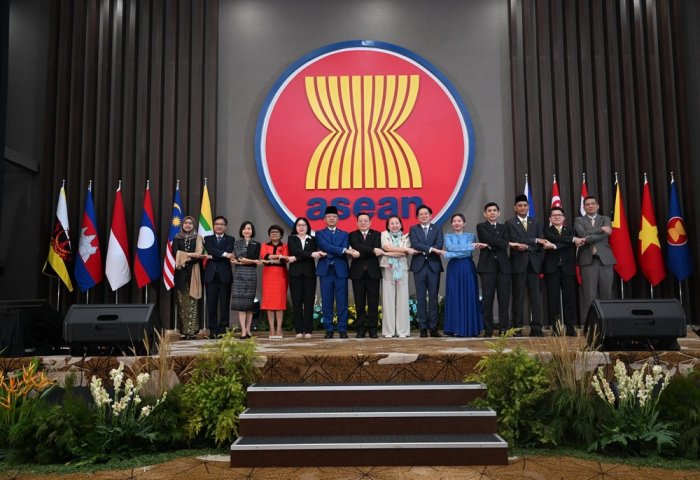
Ashgabat, The Gulf Observer: The Association of Southeast Asian Nations (ASEAN) marked its 59th anniversary on August 8, with ASEAN Day commemorated across Southeast Asia and by ASEAN member states and their partners worldwide, according to a press article issued by the Embassy of Malaysia in Ashgabat.
The occasion also highlighted opportunities to deepen engagement between ASEAN and Central Asia, with the Malaysian Embassy in Ashgabat encouraging greater interest in ASEAN among Turkmenistan’s institutions, businesses and wider community.
The Embassy of Malaysia emphasized the potential for expanded cooperation in trade and investment, connectivity, tourism, education, digitalization, culture and people-to-people exchanges. Such engagement, it said, could contribute to stronger links between Southeast Asia and Central Asia while promoting dialogue, friendship, cooperation and mutual prosperity.
The Malaysian Embassy is currently the only resident diplomatic mission in Turkmenistan representing an ASEAN member state. It also serves as a point of contact for Turkmen citizens and institutions seeking information about ASEAN and opportunities to engage with its member states and institutions.
ASEAN was established on August 8, 1967, in Bangkok by Indonesia, Malaysia, the Philippines, Singapore and Thailand. Following Timor-Leste’s admission in 2025, the organization now comprises 11 member states and represents a combined population of approximately 700 million people.
Over nearly six decades, ASEAN cooperation has expanded across political and security affairs, economic integration, connectivity, digital transformation, sustainable development, education, culture, health, disaster management and people-to-people relations.
Malaysia, one of ASEAN’s five founding members, has played a significant role in the organization’s development. During its ASEAN Chairmanship in 2025, Malaysia placed particular emphasis on ASEAN unity, economic integration, inclusivity and strengthening the organization’s relevance to the broader international community.
A major outcome of Malaysia’s chairmanship was the adoption of the Kuala Lumpur Declaration on ASEAN 2045: Our Shared Future, which established a long-term framework aimed at developing a resilient, innovative, dynamic and people-centered ASEAN while reinforcing the bloc’s unity, centrality and role in shaping the regional architecture.
ASEAN is also accelerating economic and digital integration through initiatives designed to strengthen regional supply chains, connectivity and the movement of goods, services and investment. Negotiations on the ASEAN Digital Economy Framework Agreement have been completed, with the agreement expected to be signed later in 2026, marking another step toward deeper regional digital economic integration.
The organization is simultaneously placing greater emphasis on energy security and the green transition, including efforts to accelerate development of the ASEAN Power Grid and strengthen regional energy cooperation.
The Philippines holds the ASEAN Chairmanship in 2026 under the theme “Navigating Our Future, Together.” Its chairmanship is centered on three priorities: Peace and Security Anchors, Prosperity Corridors and People Empowerment.
This year’s ASEAN Day commemoration also coincides with the 50th anniversary of the Treaty of Amity and Cooperation in Southeast Asia, a cornerstone of ASEAN diplomacy that promotes respect for sovereignty, non-interference, peaceful settlement of disputes and cooperation among states.
The 59th ASEAN anniversary thus underscores the organization’s continuing commitment to regional stability, economic integration and people-centered development, while opening further avenues for cooperation between Southeast Asia and Central Asia, including Turkmenistan.