CASS Hosts Sri Lankan Defence Delegation to Discuss Future Warfare and Emerging Technologies

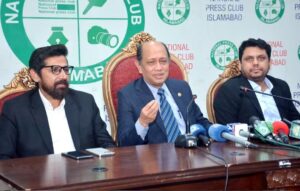
Islamabad, The Gulf Observer: The Centre for Aerospace & Security Studies (CASS), Islamabad, hosted a delegation from the Defence Services Command and Staff College (DSCSC), Sri Lanka, on August 3, 2026, for discussions on the evolving nature of modern warfare, emerging technologies, and opportunities to strengthen defence cooperation between Pakistan and Sri Lanka.
The visit focused on the growing significance of the aerial domain in contemporary and future conflicts, while reaffirming CASS’s commitment as an independent think tank to engaging with national and international academia, policymakers, and security practitioners on issues related to national and regional security.
During the visit, Director CASS, Air Vice Marshal Nasser ul Haque Wyne (Retd), briefed the delegation on the four-day Pakistan-India conflict of May 2025. He highlighted how the Pakistan Air Force (PAF) established air superiority through the effective integration of multi-domain operations, emphasizing the changing character of warfare and the increasing importance of technological innovation in achieving operational success.
The delegation was also briefed by Research Assistant Shaheer Ahmed, who presented an overview of CASS’s research priorities, key findings, and future trends in aerospace development and strategic technologies.
Addressing the delegation, President CASS, Air Marshal Javaid Ahmed (Retd), underscored the importance of indigenous technological advancement in strengthening national defence capabilities. He highlighted Pakistan’s progress through the National Aerospace Science & Technology Park (NASTP), describing it as a vital platform for promoting innovation, research, and self-reliance in strategic technologies.
Air Marshal Javaid Ahmed (Retd) noted that Pakistan and Sri Lanka face several common security challenges and identified military training, research and development, and knowledge exchange as key areas for expanding bilateral cooperation. He expressed confidence that enhanced collaboration in these fields would contribute to stronger defence ties and greater regional stability.
He also praised Sri Lanka’s high literacy rate and commended the resilience of the Sri Lankan people in overcoming the challenge of terrorism. Stressing the value of closer engagement, he said increased cooperation between Pakistan and Sri Lanka would foster mutual learning, strengthen institutional partnerships, and promote peace and security across the region.
The visit concluded with both sides reaffirming the importance of continued dialogue, academic collaboration, and defence research exchanges to address emerging security challenges and advance cooperation in the fields of aerospace and strategic studies.