Indonesia Accelerates Strategic Programs Following President Prabowo’s Overseas Engagements
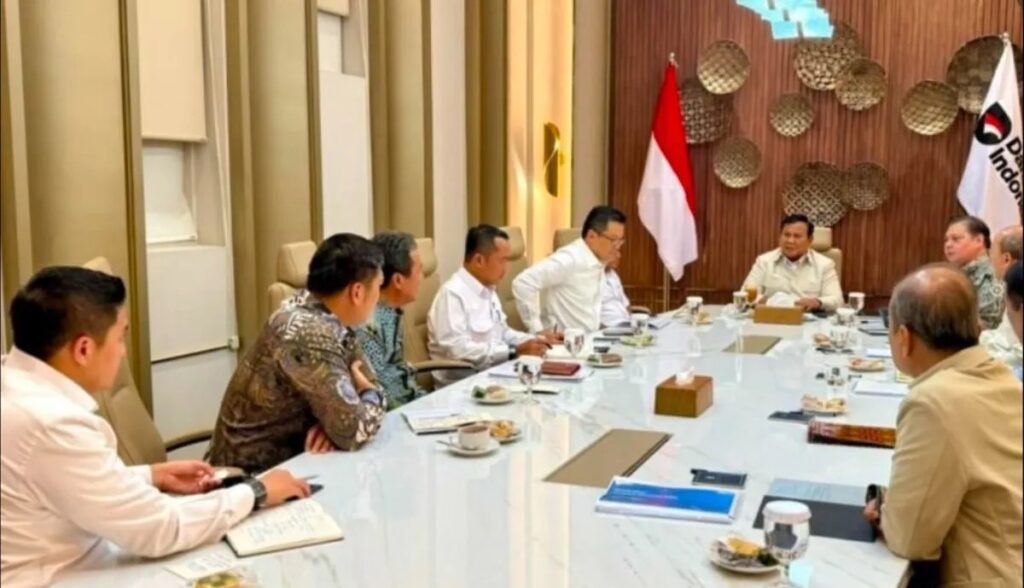
Jakarta, The Gulf Observer: Prabowo Subianto chaired a limited high-level meeting in Jakarta on Thursday evening to review and accelerate key national strategic programs, including industrial downstreaming and the development of waste-to-energy (WtE) projects.
According to Cabinet Secretary Teddy Indra Wijaya, the meeting was convened after the president received a series of briefings from senior officials earlier in the day at the Merdeka Palace. The session took place at the office of Indonesia’s sovereign wealth fund Danantara and was attended by several ministers and senior government officials.
Among the participants were Coordinating Minister for Economic Affairs Airlangga Hartarto and Investment and Downstreaming Minister Rosan Roeslani, who also serves as Chief Executive Officer of Danantara.
Officials stated that the discussions focused on accelerating priority sectors such as education, food security, industrial downstreaming, and waste-to-energy initiatives, underscoring the government’s commitment to sustainable development and economic transformation.
Wijaya emphasized that the meeting also served as a strategic platform to translate the outcomes of President Prabowo’s recent overseas visits into actionable domestic policies. He noted that the initiative aims to strengthen cross-sector coordination and align international partnerships with Indonesia’s national development agenda.
Earlier this week, President Prabowo held talks with Vladimir Putin in Moscow on April 13, where both sides agreed to expand long-term cooperation in the energy sector. The discussions included potential Russian investments in oil refinery and storage infrastructure, as well as Indonesia’s plans to procure Russian crude oil and liquefied petroleum gas.
Subsequently, during his visit to France on April 14, the Indonesian leader met with Emmanuel Macron to enhance bilateral cooperation across a broad range of sectors, including defense, energy, infrastructure, education, and the creative economy.
The government views these engagements as pivotal to advancing Indonesia’s economic growth, strengthening global partnerships, and ensuring inclusive and equitable national development.