Indonesia Intensifies Efforts to Become Global Hub for Muslim-Friendly Tourism
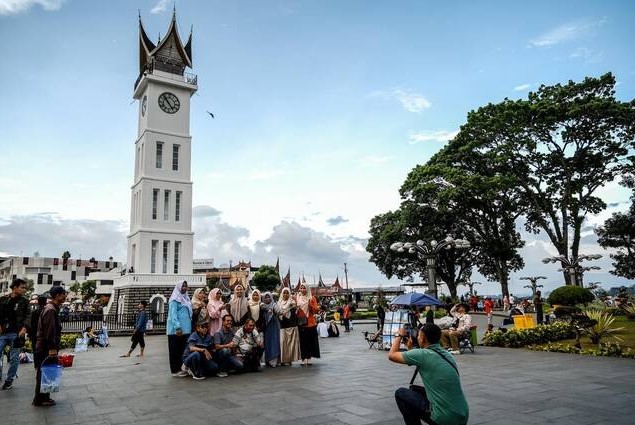
Jakarta, The Gulf Observer: Indonesia is strengthening efforts to expand its share of the rapidly growing global Muslim travel market, with the government aiming to position the country as a leading destination for Muslim-friendly tourism amid projections that global Muslim travel will reach 262 million trips by 2030.
Speaking at the Islamic Finance Dialogue in Jakarta on Wednesday, the Ministry of Tourism’s Expert Staff for Digital Transformation and Tourism Innovation, Masruroh, said the continued rise in the number of Muslim travelers worldwide presents a significant opportunity for Indonesia to enhance its Muslim-friendly tourism ecosystem.
She emphasized that while Muslim travelers seek the same experiences as other tourists, access to facilities that enable them to perform their religious obligations remains an essential requirement.
Masruroh explained that Muslim-friendly tourism extends beyond the availability of halal food and encompasses transportation, accommodation, sanitation, and adequate prayer facilities, ensuring visitors can comfortably observe their religious practices throughout their journeys.
She described the halal concept as a comprehensive ecosystem and lifestyle that covers every stage of travel, from departure and transit to the overall visitor experience and post-trip engagement.
Highlighting Indonesia’s strengths, Masruroh noted that the country is home to 11.3 percent of the world’s Muslim population, 17 percent of Asia’s Muslim population, and 86 percent of ASEAN’s Muslim population, providing a strong foundation for developing faith-based tourism.
She added that 19 Indonesian provinces have Muslim populations exceeding 90 percent, further supporting the expansion of Muslim-friendly tourism services across the country.
Indonesia currently ranks second globally in the Global Muslim Travel Index (GMTI), behind Malaysia, based on key indicators such as accessibility, communication, environment, and tourism services.
Masruroh also pointed to changing geopolitical conditions that have reshaped travel trends. She said that of the 616 million international tourist arrivals recorded across Asia, nearly 128 million—or more than one-fifth—are Muslim travelers, making the region an increasingly important tourism market.
In response to reduced flight connectivity from the Middle East due to regional geopolitical tensions, the Ministry of Tourism is shifting its promotional strategy toward nearby markets, including Malaysia, Singapore, and East Asian countries.
Despite the country’s strong potential, Masruroh acknowledged that Indonesia continues to face challenges in strengthening its domestic Muslim-friendly tourism ecosystem. She said the ministry’s priorities include accelerating halal certification for hotels and restaurants, improving public sanitation facilities, and increasing public awareness of Muslim-friendly tourism standards.
She expressed confidence that continued improvements would encourage more Muslim travelers to visit Indonesia, enabling them to enjoy the country’s diverse destinations while fulfilling their religious obligations with ease.