President of Tajikistan Emomali Rahmon Delivers Address at Fourth High-Level International Conference on “Water for Sustainable Development, 2018–2028”
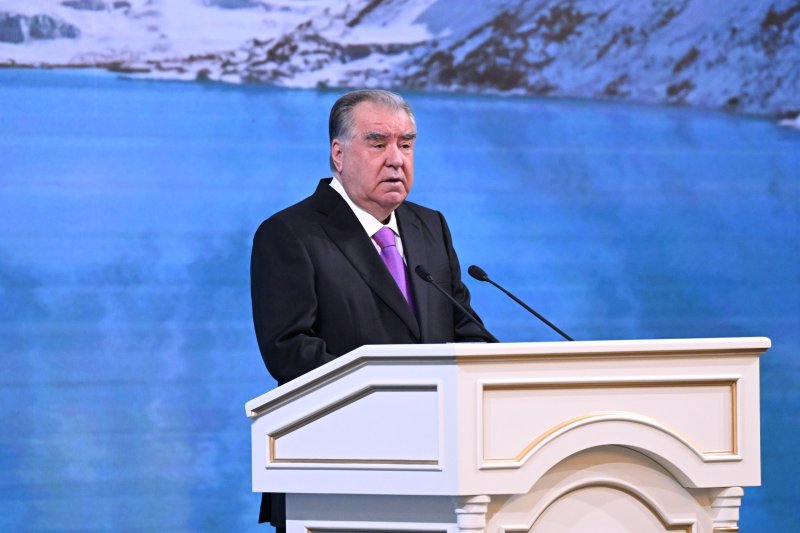
Dear Excellencies,
Heads of delegations,
Ladies and gentlemen,
First of all, I would like to sincerely welcome each of you to the ancient land of Tajikistan!
We are proud that today, within the framework of the Dushanbe Water Process, the Fourth High-Level International Conference on the «International Decade for Action: Water for Sustainable Development, 2018–2028» is being held.
This conference will help to shape our shared commitment to strengthen cooperation and accelerate action to address one of the most pressing issues of our time.
We highly appreciate your active participation and contribution to advancing the global water agenda.
Dear participants,
In recent years, Tajikistan has taken a series of practical measures to place water at the center of the international development agenda.
In this regard, our country has made continuous efforts through its initiatives in the field of water, which have always been supported by the United Nations General Assembly.
At the heart of our efforts is the issue of improving the status and value of water, the invaluable resource of life.
Tajikistan continues to advocate for a balanced, inclusive, and results-oriented approach.
The proclamation of the International Decade for Action “Water for Sustainable Development” stands as a clear testament to our collective efforts in this direction.
Moreover, the successful holding of the historic United Nations Water Conference in 2023, hosted by Tajikistan and the Netherlands, clearly demonstrated the need for global commitments to accelerate actions on water.
Within the framework of the Dushanbe Water Process, we continue our efforts to create an inclusive and transparent international platform, and today, this conference, as a tradition, brings together governments and other stakeholders from around the world to advance the implementation of water-related commitments.
It should be recognized that despite the progress made on water, the world still faces a number of challenges that continue to impede progress toward the achievement of Sustainable Development Goal 6.
Billions of people currently lack access to safe drinking water and sanitation services, with nearly 4 billion people experiencing severe water shortages for at least one month each year.
Current trends indicate that these challenges will intensify significantly in the future.
According to new expert research, the world’s demand for drinking water will increase by at least 25 percent by 2050, requiring the production of 50 percent more food for the growing population.
At the same time, almost half of the world’s urban population will face water shortages.
New and rapidly growing sectors, including “green” industries, urban development, food production, and digital infrastructure, will further increase water demand.
These trends redouble the need for a transition to water-efficient technologies, efficient resource management, and better coordination of water, energy, and food policies.
Moreover, the impact of climate change, including droughts, floods, rapid glacier melting, and rising sea levels, is further exacerbating the current situation.
This reality continues to place additional pressure on already fragile systems.
These indicators are not mere predictions but a serious warning and a call to action for each of us.
Dear participants,
To address related problems, Tajikistan is also taking necessary measures at the national and regional levels.
Under the Water Sector Reform Program, the legal and institutional framework for the phased implementation of integrated water resources management has been significantly strengthened, and key infrastructure has been modernized, which is already improving the efficiency and sustainability of water use.
To accelerate progress toward the achievement of Sustainable Development Goal 6 in our country, the National Water Strategy for the Period up to 2040 and the State Program for Drinking Water Supply and Sanitation for 2025–2029 have been adopted.
These documents identify long-term priorities and specific measures for the development of the water sector.
We intend to ensure the full implementation of coordinated water resources management at the national and basin levels by 2030, and to establish a modern, science-based, sustainable, and efficient system.
Simultaneously, we are committed to ensuring access to centralized water supply for at least 90 percent of the population by 2040.
Through this measure, we are determined to guarantee access to clean drinking water for every citizen.
At the same time, Tajikistan plans to scale up water-saving technologies by more than forty times, making the efficient use of this invaluable resource a key tool for climate change adaptation.
Furthermore, we aim to increase the digitalization of water resources management to 80 percent by 2040, thereby ensuring transparency, efficiency, and sustainability of related decision-making.
Dear friends,
We attach particular importance to the development of transboundary cooperation in the water sector.
We will continue to strive to further strengthen trust, partnership, and constructive dialogue in Central Asia on addressing critical water issues.
Tajikistan views the International Fund for Saving the Aral Sea as a helpful regional platform for discussing and resolving a range of water issues for sustainable development.
In this regard, and taking into account the current challenges and needs of the countries of the region, we support the structural improvement of this fund and the establishment of an Interstate Energy Commission for Central Asia within its framework.
This commission could serve as an important tool for strengthening regional cooperation and ensuring sustainable development of the Aral Sea basin.
Dear audience,
In recent years, the International Decade for Action on Water and the Water Action Agenda have provided a solid foundation for addressing water-related challenges.
Nevertheless, we continue to encounter significant obstacles in tackling these challenges for the well-being of the planet both now and in the future.
To overcome these obstacles, significant initiatives are being taken around the world at the national, regional, and global levels, which should strengthen unity and cooperation on water.
In this regard, we require balanced, effective, and inclusive efforts that encompass our shared interests.
Tajikistan believes that in order to expand these efforts and implement them, there is a need to move to a new stage of global cooperation in the water sector.
In this regard, we propose the establishment of a “Dushanbe Water Framework.”
This framework can strengthen ongoing processes on water and provide a favorable basis for coordination and integration of joint efforts to achieve practical results.
Dear audience,
We are approaching the concluding phase of the International Decade for Action “Water for Sustainable Development.”
It is necessary to start thinking now about the global water agenda after 2030.
Our actions in this direction should be built on the achievements of the Decade, the Water Action Agenda, and the experience of the Dushanbe Water Process, and should be directed at addressing the growing challenges related to water.
I wish to recall that we are preparing to host a series of important global water summits, including the United Nations Water Conference in 2026 and the Sustainable Development Goals Summit in 2027.
Concurrently, in 2028, the city of Dushanbe will serve as the host for the United Nations Water Conference, concluding the International Decade for Action, “Water for Sustainable Development.”
I believe that the results of these conferences will contribute to the formation of the World Water Agenda after 2030.
In this process, achieving practical results, sustainable financing, water policy integration with climate and energy, food and environmental systems, as well as strengthening regional and international cooperation should be key themes of the New Water Agenda.
In this context, the “Dushanbe Water Framework” will become the engine for promoting the post-2030 World Water Agenda.
Ladies and gentlemen,
Our success on this path depends, above all, on reliable cooperation, a shared understanding of problems, and finding solutions to them.
Let us seize the opportunities of today’s conference as a turning point in addressing water issues.
We all have an important shared responsibility: to manage the planet’s invaluable treasure, namely water resources, wisely and effectively for present and future generations.
Dear audience,
In conclusion, I would like to announce that we have established the International Water Award of the President of the Republic of Tajikistan with the aim of promoting and strengthening water diplomacy and uniting the efforts of the international community for a sustainable and secure future.
This award is intended to recognize outstanding contributions to the development of international cooperation, scientific research, sustainable water policy, and the promotion of effective solutions to global water problems.
At the same time, we decided to establish the International Abu Ali ibn Sina (Avicenna) Award in Medicine.
This award, in line with Sustainable Development Goals 3 and 6, aims to recognize outstanding contributions and achievements in the development of international cooperation, scientific achievements, and the promotion of sustainable policies in the aforementioned areas.
Thank you for your attention.