Ramaphosa Calls for Greater Investment in Youth, Women and Human Development to Advance SADC Vision 2050

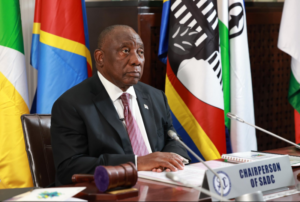
Durban, The Gulf Observer: South African President Cyril Ramaphosa has called for greater investment in young people, women, healthcare and social development as Southern Africa works towards achieving the Southern African Development Community (SADC) Vision 2050.
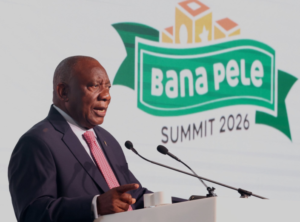
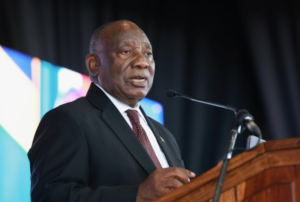
Addressing a public lecture at the University of KwaZulu-Natal’s Westville Campus on Friday, President Ramaphosa said the region’s young and growing population represented its greatest strategic asset, but warned that this potential could only become a demographic dividend through sustained and deliberate investment.
More than half of SADC’s population is under the age of 30, making the creation of economic opportunities for young people essential to regional stability, social cohesion and long-term development.
“Our population is young and growing. More than half the people of this Community are under the age of 30. This is our greatest strategic asset. It is the engine of our region’s future,” President Ramaphosa said.
He identified youth unemployment as one of the most serious challenges confronting countries across the region and a major obstacle to the implementation of Vision 2050. He stressed the need to better align education and skills development with available economic opportunities, noting that many qualified young people continue to struggle to secure employment.
President Ramaphosa said schools, universities, technical and vocational education institutions and research bodies had an important role in preparing young people for the future economy.
Investment in Early Childhood
The President emphasized that human capital development must begin well before young people enter higher education or the workforce.
He warned that childhood deprivation, particularly stunting, could have lifelong consequences and called for greater investment in maternal healthcare, early childhood nutrition and basic services under the Human and Social Capital Development pillar of Vision 2050.
He also urged greater attention to digital literacy and adolescent health while addressing challenges such as child marriage, teenage pregnancy and the digital divide affecting young people in rural communities.
Strengthening Regional Health Security
President Ramaphosa said achieving Vision 2050 would require a healthy population and called for the development of a harmonized regional health system in which access to quality healthcare does not depend on national borders.
He expressed concern over preventable maternal, neonatal, child and adolescent deaths across the region and urged SADC member states to strengthen health financing, including by advancing commitments under the Abuja Declaration to allocate at least 15 percent of national budgets to healthcare.
Reflecting on lessons from the COVID-19 pandemic, he stressed the importance of regional cooperation and a common approach to global health challenges.
The President also said the decline in official development assistance underscored the need for greater health security and sovereignty within the region.
Women’s Economic Participation and Safety
President Ramaphosa said meaningful regional integration could not be achieved without the full participation of women.
He highlighted persistent barriers faced by women entrepreneurs, including limited access to productive assets, finance, markets and procurement opportunities.
He also emphasized the need to confront gender-based violence and femicide, saying women could not achieve equality while remaining unsafe.
He called for stronger legislation, effective prosecution, support for survivors and greater economic empowerment of women. He further stressed that prevention efforts must involve men and boys and begin in homes, schools, religious institutions and workplaces.
Migration and Regional Solidarity
Addressing migration, President Ramaphosa warned against discrimination and ill-treatment of nationals from other SADC countries, saying exclusion was incompatible with the principles of regional integration.
He called for greater regional cooperation to address the underlying causes of migration, including conflict, instability, poverty, governance challenges and limited economic opportunities.
The President said the region should strive to ensure that people move across borders by choice rather than desperation.
Peace and Stability as Foundations for Development
President Ramaphosa said peace and stability were fundamental to achieving the region’s development objectives.
He described the situation in the eastern Democratic Republic of Congo as a major test of SADC’s collective resolve, noting the displacement of millions of people and the deployment of SADC forces in support of peace and stability.
He also welcomed progress in Mozambique’s Inclusive National Dialogue and referred to SADC efforts to support political processes in Madagascar.
He emphasized that regional institutions should support member states in creating conditions for their people to determine their own futures.
Climate Resilience
The President identified climate change as another major challenge to the realization of Vision 2050, noting the increasing frequency and severity of droughts, cyclones and floods across Southern Africa.
He warned that climate-related shocks could reduce agricultural production and exports, place pressure on currencies, increase living costs and worsen food insecurity.
President Ramaphosa called for greater regional preparedness and urged the strengthening of the SADC Humanitarian and Emergency Operations Centre to enable faster responses to disasters.
“We must act before a disaster strikes, rather than scramble for assistance after it,” he said, while also calling for greater coordination on climate negotiations and a common regional position on loss and damage.
“Vision 2050 Is Yours”
Concluding his address, President Ramaphosa placed the responsibility for Southern Africa’s future firmly in the hands of its young people.
Drawing on the vision articulated by Pixley ka Isaka Seme in his 1906 speech The Regeneration of Africa, he said the continent’s renewal should be translated into practical achievements, including regional manufacturing, integrated infrastructure, youth entrepreneurship and equal opportunities for children.
He told students that the Southern Africa envisioned for 2050 would ultimately be led by the region’s youth.
“Vision 2050 is not our document. It is yours, and you are entitled to demand an account of what we did with it,” President Ramaphosa said.
He concluded that Africa’s renewal was no longer merely an aspiration but a programme requiring concrete action, clear responsibilities and deadlines.
“The renewal of our continent is achievable. The realisation of our vision for Southern Africa is within our means,” the President said.