The Remarkable Role of Ho Chi Minh in Vietnam’s Struggle for Independence
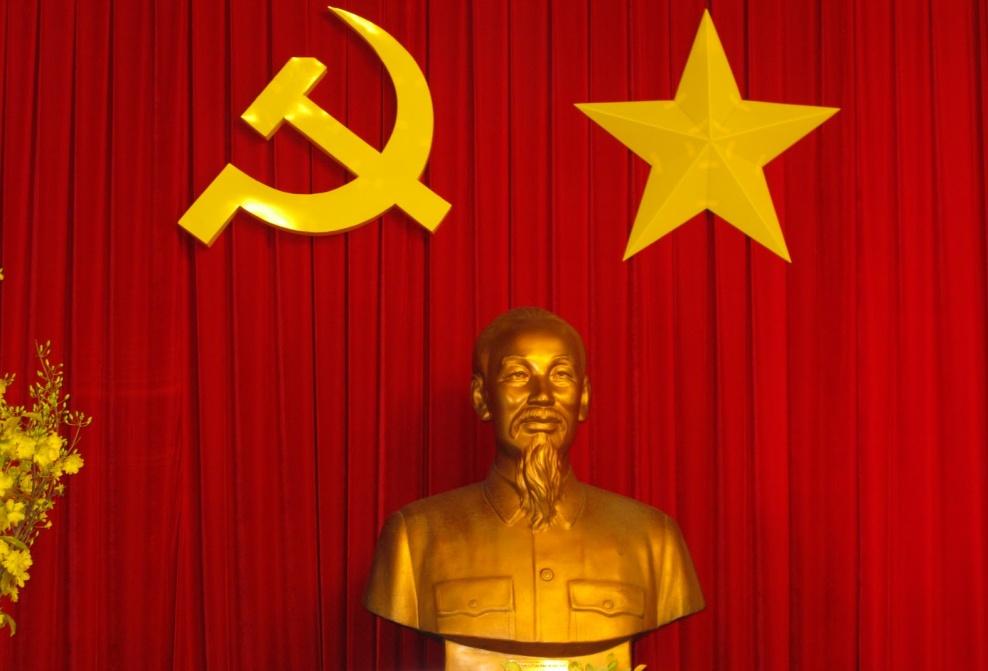

Vietnam’s struggle for independence is truly a story that is inspiring in modern history, as people that lived for centuries under foreign control. Ho Chi Minh (1890–1969), the revolutionary leader, is the central figure in this epic struggle, a man who personified the ideals of patriotism, strategy, and a deep dedication to the cause of national liberation. He was fondly referred to as “Uncle Ho” (Bác Hồ) by his countrymen and paved the way for Vietnam’s unification and victory over French colonization. His tale is not only a political one, it’s a deeply human one; decades of exile and sacrifice and visionary leadership that still inspire appreciation for the ideals of freedom and self-determination.
Early Life and the Awakening of a Patriot
Vietnamese leader Ho Chi Minh was born in Kim Liên village, Nam Đàn district, Nghệ An province, central Vietnam, on May 19, 1890. He was educated in Confucian tradition and love for his homeland. As a young boy, Nguyễn Tất Thành (his name while he was in school) had seen the suffering of Vietnam, a part of French Indochina, at the hands of its colonial masters: high taxes, forced labor, cultural oppression.
With the French colonial system, France benefited while the Vietnamese peasantry suffered. The land was taken for plantations and traditional systems of governance were weakened. The atmosphere was conducive to early nationalist feelings. When he was 21, in 1911, Ho made a decision to leave Vietnam, from Nha Rong port in Saigon, on Amiral Latouche Tréville as a galley boy, to pursue knowledge and allies for the liberation of Vietnam.
Traveling, he traversed continents. During World War I he worked in the kitchens of London, saw the society of the United States in Brooklyn, and settled in Paris. He took the name Nguyễn Ái Quốc (“Nguyễn the Patriot”) in France and studied political philosophy. He was deeply affected by the Russian Revolution, and the ideas of Marxist-Leninism, and he compared class struggle to anti-colonial resistance. He strongly demanded the right of self-determination for the Vietnamese people in 1919 at the Versailles Peace Conference, calling for it in U.S. President Woodrow Wilson’s Fourteen Points. But this action, ignored by everyone, led to international notoriety for him as a fellow nationalist.
In 1920, Ho became a founding member of the French Communist Party. He went to Moscow, studied at the Communist University of the Toilers of the East and served in the Comintern. His experiences in China where he helped to establish the Vietnamese Revolutionary Youth League in 1925. These years abroad were not pleasant; he was living in poverty, under surveillance by the French secret police, in prison (including in Hong Kong and China) and in the shadow of death. However, they were the ones who shaped his distinctive ideology of nationalism and internationalism. Ho felt that the struggle for Vietnam’s independence needed more than a sense of anti-colonial feeling; it needed a disciplined revolutionary party based in the masses.
Establishment of Communist Party and Path to Unity
During the late 1920s, the nationalist movements in Vietnam were divided. Ho headed the meeting in Hong Kong in 1930 at which the various communist groups were merged to establish the Indochinese Communist Party (ICP) (now the Communist Party of Vietnam). It was an exemplary display of leadership, he emphasized the motto of national liberation as the immediate and pressing need, and rallied the workers, peasants, intellectuals, and even some landlords together against the common enemy, imperialism.
The decade of the thirties was a very stormy one. The Nghệ-Tĩnh Soviets were a revolt that was quickly put down. The rumors were that Ho was arrested and killed. Despite this, he kept going, making a Vietnamese fit into a Marxist framework, with a focus on agricultural reform and wide-ranging coalitions rather than on the rigid class struggle. He was more pragmatic than some of his contemporaries, and expanded the appeal of the movement.
Return to Vietnam and Birth of Viet Minh
World War II created a historic opportunity. France had lost to Nazi Germany in 1940 and Japan was occupying Indochina, making colonial rule less secure. In January 1941, after 30 years outside Vietnam, Ho Chi Minh re-entered Vietnam near the border with China, in a cave in Pác Bó in Cao Bằng province. The return was a highly emotional one. He took the name Ho Chi Minh, “He Who Enlightens” or “Bringer of Light”, which is a symbol of hope.
On his 51st birthday on May 19, 1941, Ho held the eighth Plenum of the Party Central Committee and established the Việt Nam Độc Lập Đồng Minh (Viet Minh), the League for the Independence of Vietnam. It was a united front on a national level, not necessarily communist, to unite all patriotic forces to fight against Japanese fascism and French colonialism. Under his leadership, Võ Nguyên Giáp and others developed guerrilla forces. In December, 1944, the Propaganda Brigade for the Liberation of Vietnam, predecessor of the People’s Army was formed.
Ho’s approach was perfect: political mobilization and armed struggle, international support (when available) and a playing on the vacuum of power. In 1944-1945 when millions were dying, the Viet Minh’s work in distributing food further endeared itself to the general public.
The August Revolution and Declaration of Independence
Japan’s surrender in August 1945 after the atomic bombings, Ho, from his base in Tân Trào, called for a general uprising. On August 16th – 17th the National Congress at Tân Trào elected a provisional government whose chairman was Ho. Both in its speed of sweep and the more or less peaceful character of its passage through many parts of the country, the August Revolution was almost as rapid as could be. Both in its speed and the relatively minor amount of bloodshed in many places, the August Revolution was as swift as could be. Emperor Bảo Đại gave up his throne and the “Mandate of Heaven” passed to the new republic.
Ho Chi Minh made his reading of the Declaration of Independence in front of a vast crowd of people in Ba Đình, Hanoi on 2 September 1945. He famously quoted the U.S. Declaration of Independence and France’s Declaration of the Rights of Man: “All men are created equal. They are endowed by their Creator with certain inalienable rights, among these are Life, Liberty, and the pursuit of Happiness.” He announced the establishment of the Democratic Republic of Vietnam (DRV), under his leadership. It was a pure moment of awakening for the nation, mixing together universal ideals with Vietnamese aspirations.
This independence was very precarious. With British and then an American backing, the French wanted to reclaim control. Unfortunately, negotiations were unsuccessful, and by December 1946, full-scale war started.
The First Indochina War and Victory at Dien Bien Phu
Ho was the leader of the resistance from jungle bases, with a focus on protracted guerrilla warfare (“people’s war”). The Viet Minh expanded to become a powerful organization and had taken control of vast rural regions. Under immense difficulties – French aerial bombings, superior firepower and internal difficulties – Ho’s leadership was able to hold together and keep morale high. He called on the whole nation: “We would rather die than be made slaves.”
The war ended with epic battle Điện Biên Phủ in 1954. Vietnamese troops laid siege and conquered French troops in an astonishing triumph that left the world in awe. The Geneva Accords of 1954 ended the war and temporarily divided the country at the 17th parallel (Ho’s DRV in the North). The goal was still to achieve full reunification.
Struggle, Legacy and Appreciation
The Second Indochina War (or American War) further challenged Vietnam. In the South, Ho backed the National Liberation Front; and in the North, he was constructing socialism. He would not live to see final victory in 1975; he passed away on September 2, 1969. He wanted to be buried in a simple manner and buried in Hanoi, a place of national reverence.
Ho Chi Minh was the creator of modern Vietnam’s independence, a genius at bringing together various nationalists and promoting socialist ideology. His focus on “national liberation first” enabled the movement to move past the limits of narrow ideology and build support.
Ho is respected as a symbol of resilience and his life offers timeless lessons: of the strength of perseverance, of the virtue of a moral compass in a leader, and of the dignity of a people who strive for self-rule. Vietnam’s post-war development, economic reform (Đổi Mới), integration into the world economy and economic growth, is built upon the foundation he helped to establish for Vietnam’s independence. Vietnam is a country that has undergone war and transformed into a thriving economy in Southeast Asia—a country that is a symbol of the spirit that Ho embodied.
Some might try to question his communist ideals — or the cost of war in terms of human lives — but no one can question his patriotism for Vietnam. He was a nationalist and a revolutionary, who stood up against empires. Vietnam is a free and independent nation and indeed it is.
Ho Chi Minh’s struggle was Vietnam’s struggle, and it was a story of great courage that not only changed Vietnam but the world of anti-colonial struggles. Through his appreciation, we acknowledge the universal desire for freedom, and we appreciate the extraordinary people who sacrificed everything to attain it. He has left Vietnam, now united and forward looking, as his legacy.
Copyright © 2026 by Muhammad Ali Pasha. All rights reserved. Reproduction or distribution of this content, in whole or in part, without prior written permission is prohibited.