United States 250th Anniversary of Independence Day
The 250th anniversary of the United States’ Independence marks a significant milestone in the nation’s history, commemorating 250 years since the adoption of the Declaration of Independence on July 4, 1776. As the United States approaches this semi quincentennial celebration in 2026, it provides an opportunity to reflect on the country’s political development, cultural evolution, and social progress, all shaped by the enduring principles of liberty, democracy, and self-governance.
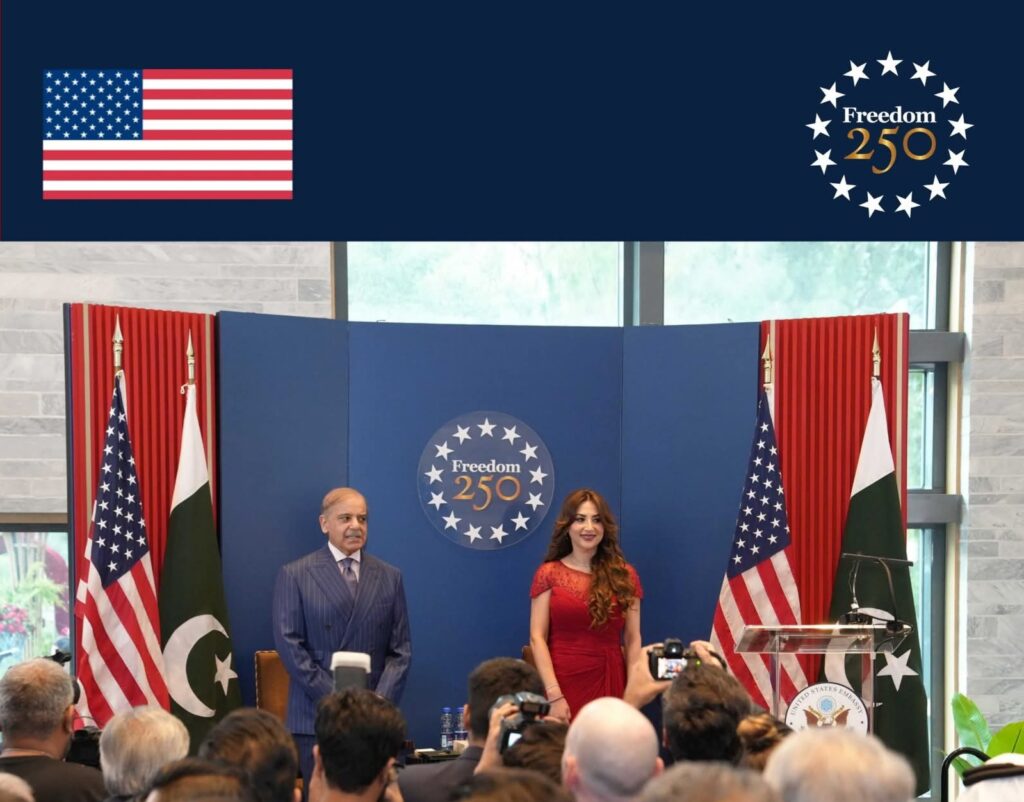
In Pakistan, the U.S. Embassy in Islamabad also commemorated this historic occasion. The main celebration was originally scheduled for June 4, 2026; however, due to adverse weather conditions, the event was split into two segments. The first part was held on June 4, while the second was conducted on June 6, 2026.
The event was attended by several distinguished dignitaries. The chief guest was Muhammad Shehbaz Sharif, Prime Minister of Pakistan. Other notable attendees included Ishaq Dar (Deputy Prime Minister/ Foreign Minister of Pakistan, Syed Yousaf Raza Gillani, the Chairman Senate of Pakistan, and several federal cabinet ministers.
Pakistan Prime Minister’s Speech:
Prime Minister Muhammad Shehbaz Sharif, in his address, emphasized that Pakistan and the United States are progressing beyond a conventional diplomatic relationship toward a broader and more dynamic partnership founded on people-to-people ties, educational collaboration, investment, and shared economic opportunities. He noted that both countries are committed to deepening cooperation across diverse sectors in the years ahead.
The Prime Minister observed that Pakistan–U.S. relations have evolved significantly over the decades and now encompass not only security cooperation but also trade, innovation, and stronger social and cultural connections between the people of both nations.
Highlighting the longstanding partnership between the two countries, he referred to collaboration in areas such as counterterrorism, agriculture, science and technology, education, healthcare, energy, trade, and investment. He also recalled that the United States was among the first nations to recognize Pakistan following its independence, citing the congratulatory message sent by President Harry S. Truman to Muhammad Ali Jinnah.
Prime Minister Shehbaz Sharif acknowledged the United States’ contributions to Pakistan’s development, including support for the Green Revolution, the construction of Tarbela Dam, the establishment of educational institutions, and assistance in financing major infrastructure projects.
He further praised Pakistani graduates of American universities and professionals trained in the United States, noting their valuable contributions to Pakistan’s economy, academia, public administration, and entrepreneurial landscape. He also highlighted the role of nearly one million Pakistani-Americans in strengthening bilateral ties and noted that approximately 80
American companies currently operate and invest in Pakistan, reflecting the growing economic partnership between the two countries.
The Prime Minister underscored Pakistan’s substantial potential to expand its information technology exports, identifying the United States as a key market for future growth. He also referenced the two countries’ cooperation on major regional and global challenges, including the Soviet-Afghan conflict and international counterterrorism efforts.
He acknowledged the efforts of U.S. President Donald Trump in promoting peace and stability in South Asia, stating that his initiatives contributed to reducing regional tensions and saving lives.
Prime Minister Shehbaz Sharif further stated that Pakistan is actively facilitating dialogue between the United States and Iran and expressed appreciation for the trust both nations have placed in Pakistan. He also commended Syed Asim Munir for his efforts in advancing regional peace and stability.
Concluding his remarks, the Prime Minister lauded U.S. Chargé d’Affaires Natalie Baker and the American diplomatic mission in Pakistan for their dedication to strengthening bilateral relations. He expressed confidence that the friendship between Pakistan and the United States would continue to flourish and deliver mutual benefits to both nations.
Natalie baker Chargé d’Affaires Speech:
Her Excellency Natalie Baker, Chargé d’Affaires at the U.S. Embassy in Islamabad, welcomed Prime Minister Muhammad Shehbaz Sharif as the chief guest and extended her greetings to all distinguished attendees. She expressed sincere appreciation to the guests for their participation despite the challenging weather conditions.
She noted that the celebration was among the largest Independence Day events ever organized by the U.S. Embassy in Pakistan. Highlighting the presence of numerous American companies and investors, she remarked that their participation reflected the strength of the U.S.–Pakistan partnership, which is founded on friendship, trust, and shared interests.
Emphasizing the growing strategic relationship between the two countries, Ms. Baker stated that U.S.–Pakistan relations have evolved beyond traditional diplomacy into a comprehensive partnership encompassing trade, investment, education, innovation, and people-to-people engagement.
Reflecting on the 250th anniversary of American independence, she recalled the enduring ideals of the Declaration of Independence, liberty, equality, and self-governance which continue to serve as universal values and inspire cooperation among nations. Speaking from Islamabad, she expressed gratitude for the opportunity to witness and contribute to the strengthening of ties between the United States and Pakistan.
She further observed that under the leadership of President Donald Trump and Prime Minister Shehbaz Sharif, bilateral relations have entered a new phase characterized by mutual respect and converging strategic interests. She commended Pakistan’s contributions to regional peace and stability, including its role in supporting de-escalation efforts between nuclear-armed neighbors and facilitating high-level diplomatic engagement with Iran.
Ms. Baker also acknowledged the dedication and professionalism of the U.S. Mission in Pakistan, highlighting its extensive work in areas such as visa services, trade promotion, security cooperation, and diplomatic outreach. She praised the efforts of embassy and consulate personnel serving in Islamabad, Karachi, Lahore, and Peshawar.
Sharing personal experiences from her travels across Pakistan, she spoke warmly of the country’s cultural diversity, rich heritage, and renowned hospitality. She referenced her participation in cultural events in Lahore and visits to communities in Sindh as memorable experiences that deepened her appreciation for Pakistan and its people.
She also highlighted the role of sports as an effective instrument of diplomacy, noting Pakistan’s contribution to producing official footballs for the 2026 FIFA World Cup and celebrating the nation’s passion for cricket, particularly through the Pakistan Super League.
Addressing Prime Minister Shehbaz Sharif directly, Ms. Baker commended his leadership and commitment to strengthening bilateral relations. She also recognized the efforts of Syed Asim Munir in promoting regional stability and described both leaders as valued partners in advancing peace, cooperation, and mutual understanding.
In her concluding remarks, Ms. Baker thanked the people of Pakistan for their warmth, generosity, and hospitality. She reaffirmed that the U.S.–Pakistan partnership is rooted in mutual respect, shared aspirations, and a common vision for prosperity. Expressing optimism about the future, she stated her confidence that bilateral relations would continue to deepen, ushering in a new era of cooperation and enduring friendship between the two nations.
Event Part-II:
On 6th of July the second part of the 250th anniversary marks the presence of Friends of America. I have attended numerous diplomatic engagements over the years, I can confidently say that this was one of the largest and most remarkable events I have witnessed in my 13-year diplomatic career. The celebration demonstrated the scale, organization, and grandeur with which a global power commemorates its independence and national heritage.
Parking arrangements for guests were made near the National Library in Islamabad, from where a dedicated shuttle service transported attendees to the entrance of the U.S. Embassy. Following a smooth and well-organized security screening process, guests were granted access to the venue.
The embassy entrance was exquisitely decorated, featuring illuminated tunnels, artistic displays highlighting American and Pakistani culture, and exhibits representing the rich cultural heritage of all provinces of Pakistan. The decorations created a welcoming and festive atmosphere that reflected the spirit of friendship between the two nations.
Guests were warmly received by Her Excellency Natalie Baker, Chargé d’Affaires of the U.S. Embassy in Islamabad, along with senior diplomatic officials. The venue was elegantly adorned with the national flags of both the United States and Pakistan, symbolizing the enduring partnership between the two countries. The function hall was illuminated in vibrant red tones and complemented by cultural exhibits and tasteful decorative arrangements.
Attendees were treated to a variety of American cuisine, while an “American Idol”-themed stage provided a unique attraction where guests could capture memorable photographs. An instant photography service was also available, allowing attendees to receive printed copies of their photographs on the spot.
The formal proceedings commenced with the ceremonial raising of the American flag by U.S. Marines. The national anthem of the United States was performed by an American singer, while Pakistan’s national anthem was presented by Pakistani performers, reflecting mutual respect and cultural appreciation.
In her address, Her Excellency Natalie Baker emphasized the significance of “Freedom 250,” describing it not only as a historic milestone in American history but also as a celebration of the enduring values of liberty, democracy, and partnership that unite the United States and Pakistan. She reflected on America’s founding principles and their continued relevance in inspiring nations and individuals around the world.
Chargé d’Affaires Baker remarked: “Tonight, we mark 250 years of American freedom, nearly eight decades of friendship between our two peoples, and all that we will build together in the years ahead. The best is not behind us it lies before us, and we will reach it together.”
The celebrations concluded with a spectacular fireworks display that illuminated the night sky and captivated the audience. The arrangements and overall execution of the event were widely praised by those in attendance. Guests from diverse sectors of society including government, diplomacy, business, academia, media, and civil society gathered to witness and celebrate the 250th anniversary of American independence, making it a memorable occasion and a testament to the enduring friendship between Pakistan and the United States.
US-Pakistan Relations:
Pakistan–United States relations witnessed renewed momentum during the recent Pakistan–India conflict, when President Donald Trump played an important role in facilitating a ceasefire between the two countries. The efforts of Her Excellency Natalie Baker, Chargé d’Affaires at the U.S. Embassy in Islamabad, were also widely appreciated, as she remained actively engaged in diplomatic coordination between President Trump and Prime Minister Shehbaz Sharif throughout the crisis.
Regional security challenges have often served as a catalyst for cooperation between Pakistan and the United States. One enduring reality of mutual relations has remained unchanged: the channels of communication between Islamabad and Washington have never been completely severed. This resilience reflects the essence of mature diplomacy maintaining dialogue despite differences, learning from past experiences, and continuing to explore opportunities for future collaboration.
A notable example of Pakistan’s growing diplomatic relevance was its role in facilitating high-level dialogue between the United States and Iran. Maintaining constructive relations with both Washington and Tehran, Pakistan was uniquely positioned to help bridge communication between the two countries.
The visit of the American Vice President to Pakistan marked the first visit by a senior U.S. government official in 15 years, following President Joe Biden’s visit in 2011. This reflects Pakistan’s growing capacity to serve as a credible and balanced diplomatic facilitator, trusted by both the United States and Iran. Through its constructive engagement, Pakistan contributed to regional stability and reinforced its position as an important stakeholder in international peace and diplomacy.
Pakistan’s mediation efforts not only helped achieve a ceasefire between the United States and Iran but also paved the way for a comprehensive peace agreement, which has been virtually signed.
I extend my heartfelt congratulations to Chief of Defence Staff Field Marshal Syed Asim Munir, Prime Minister Shehbaz Sharif, and Foreign Minister Ishaq Dar for their leadership and successful efforts in facilitating this historic peace agreement between the United States and Iran. Their dedication and diplomatic vision have enhanced Pakistan’s standing on the global stage and contributed significantly to the cause of peace and stability.
I also extend my heartfelt congratulations to His Excellency President Donald Trump and the President of Iran, Masoud Pezeshkian, for this significant achievement in reaching a peace agreement. Their leadership and commitment to dialogue and diplomacy represent an important step toward regional peace and stability.
Economic cooperation has also emerged as a key pillar of the Pakistan–U.S. partnership. Over the past years, bilateral trade relations have continued to strengthen, reflecting expanding economic engagement between the two nations. The United States remains Pakistan’s largest single-country export market, while cooperation has broadened to include investment, technology, energy, agriculture, and critical minerals. Ongoing dialogue between both governments underscores a shared commitment to fostering economic growth, improving market access, and creating new opportunities for businesses and investors in both countries.
Another significant development in bilateral relations was the repatriation of more than 450 priceless cultural artifacts and antiquities from the United States to Pakistan. Valued at over
$23 million, the collection included rare Gandharan sculptures, ancient terracotta figurines dating back more than four millennia, and numerous historically significant objects that had been unlawfully removed from Pakistan. Their recovery and return, achieved through close cooperation between U.S. and Pakistani authorities, represented a major achievement in preserving Pakistan’s cultural heritage and combating the illicit trafficking of antiquities. The initiative also highlighted the strength of bilateral cooperation in safeguarding shared human history.
Sports diplomacy has likewise become an important dimension of Pakistan–U.S. relations, illustrating how cultural and sporting connections can strengthen international partnerships. Pakistan’s contribution to the FIFA World Cup 2026 is particularly noteworthy, as Pakistani manufacturers are producing high-quality footballs that will be used during matches hosted across the United States, Canada, and Mexico. As millions of viewers around the world watch the tournament, they will also be witnessing the craftsmanship, expertise, and dedication of Pakistani workers. This achievement represents a valuable element of Pakistan’s soft power and highlights the country’s ability to contribute meaningfully to major global events beyond traditional diplomatic and economic spheres.
Role of Chargé d’Affaires in Strengthening Pak-US relations:
Drawing upon more than thirteen years of engagement with diplomatic events and international affairs, I have rarely witnessed a period in which Pakistan–United States relations appeared as active and multidimensional as they do today.
Under the leadership of Natalie Baker, bilateral engagement has expanded across multiple domains, including government-to-government cooperation, trade and investment, educational exchanges, cultural diplomacy, and people-to-people connections. Her approach has demonstrated that effective diplomacy is not defined solely by rank but by the ability to build trust, foster dialogue, and strengthen relationships.
What distinguishes her tenure has been a style of diplomacy that extends beyond formal meetings and official engagements. While many US Ambassadors understandably focus their activities on interactions with government officials and high-level delegations, Natalie Baker has also prioritized direct engagement with Government official as well as with the people of Pakistan. Her participation in cultural event like Orange Festival in Taxila and Basant in Lahore, visits to historical and archaeological sites in Sindh, and interactions with business communities across the country have reflected a genuine interest in understanding Pakistan’s diverse society and heritage.
Such public engagement has helped create stronger people-to-people connections and has contributed positively to public perceptions of the United States in Pakistan. By engaging with local traditions, culture, and communities, she has demonstrated a form of diplomacy that emphasizes mutual understanding. Consequently, Pakistanis are now looking at the United States with greater respect and admiration.
The successful organization of the U.S. Independence Day 250th Anniversary celebrations in Islamabad further reflected the professionalism and dedication of the diplomatic team under her leadership. The event was notable for its scale, planning, inclusivity, and attention to detail, leaving a positive impression on the guests who attended. The arrangements showcased not only American hospitality but also the importance attached to the longstanding friendship between the United States and Pakistan. The credit for this achievement once again goes to Her Excellency Natalie Baker, whose excellent work and dedication were instrumental in making it possible.
In my view, Natalie Baker’s tenure as Chargé d’Affaires has been marked by professionalism, energy, and a commitment to strengthening bilateral ties. Her efforts illustrate how effective diplomacy can advance mutual understanding, deepen cooperation, and build lasting relationships between nations. The progress witnessed in recent years serves as evidence that the United States has entrusted its representation in Pakistan to a highly experienced and capable diplomat whose work has contributed meaningfully to the continued growth of Pakistan–U.S. relations.
At the end, in light of her significant contributions to strengthening Pakistan–U.S. relations, I would like to respectfully propose to the President and Prime Minister of Pakistan that Her Excellency Natalie Baker be awarded the Nishan-e-Pakistan (Crescent of Pakistan) in recognition of her efforts in strengthening Pakistan and United States relations.
She is a wonderful human being and a true friend of Pakistan. She has taken the time to understand Pakistan and has worked tirelessly to strengthen the relationship between our two countries. Her presence is a blessing for Pakistan, and her dedication to promoting friendship, cooperation, and mutual understanding deserves sincere appreciation and recognition.