Oman’s Foreign Minister Calls for Inclusive Gulf Security Framework Following Iran War
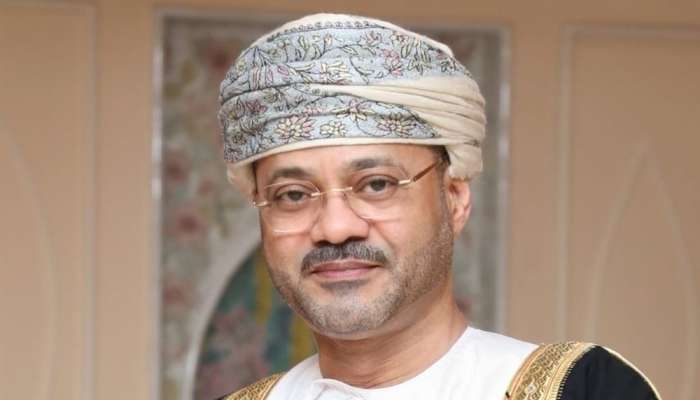
Paris, The Gulf Observer: Oman’s Foreign Minister Sayyid Badr bin Hamad Al Busaidi has called for a comprehensive overhaul of the Gulf region’s security architecture, urging a shift from the long-standing policy of “containment” to an inclusive framework in which all regional states share responsibility for collective security.
In an article published by the French newspaper Le Monde, Al Busaidi said the recent war involving Iran underscored the urgent need to establish a new regional security system based on cooperation, dialogue, and shared responsibility rather than exclusion.
He said the people of Oman and other Gulf countries continue to bear the consequences of a conflict that “should never have occurred,” expressing hope that current developments would lead to a lasting peace rather than a temporary pause in hostilities that could quickly unravel.
The Foreign Minister stressed that one of the immediate priorities is the establishment of a permanent mechanism to guarantee freedom of navigation through the Strait of Hormuz, a strategic waterway bordering both Oman and Iran. He said Muscat, working with Tehran and the international community, should help develop sustainable arrangements consistent with international law to safeguard maritime security and ensure uninterrupted global trade.
Al Busaidi also commended France’s constructive role in discussions concerning the future of navigation in the Strait of Hormuz, while emphasizing that maritime security should form part of a broader regional strategy encompassing the Gulf and its connected sea lanes.
Reflecting on the regional security order established since 1979, the Omani minister argued that it had been built on the assumption that Iran represented an existential threat to the Gulf and Western interests. He described that premise as fundamentally flawed, noting that decades of increased military spending, expanded foreign military bases, and reliance on external security guarantees had failed to deliver lasting stability or prevent recurring conflicts.
He said the recent war demonstrated the limitations of the containment policy and argued that some of the greatest threats to Gulf security have often originated from decisions made outside the region.
Calling for a new approach, Al Busaidi said any future Gulf security framework must include all eight littoral states—the six Gulf Cooperation Council (GCC) members, along with Iran and Iraq. He stressed that every country has legitimate interests and responsibilities and should participate equally in designing and implementing a new regional security architecture.
The Foreign Minister acknowledged that such a transition would require candid dialogue and a reassessment of long-standing regional and international arrangements. He also called for a balanced review of relations with international partners, particularly the United States, clarifying that the objective is not to weaken historic partnerships but to recalibrate them in line with evolving regional realities.
He further emphasized that Gulf security is intrinsically linked to the wider northwestern Indian Ocean, the Bab el-Mandeb Strait, the Red Sea, and the maritime routes that underpin regional and global commerce. Establishing a robust legal and operational framework to protect these waterways, he said, would contribute significantly to long-term peace, stability, and economic prosperity.
Describing the recent conflict as a “disaster,” Al Busaidi said it had erupted without a United Nations mandate and failed to achieve its stated objectives. He concluded by expressing hope that the lessons of the war would bring an end to nearly five decades of containment policies and pave the way for a more inclusive, equitable, and effective security order in the Gulf region.