French Ambassador Begins Morocco Mission with Landmark Visit to Laayoune
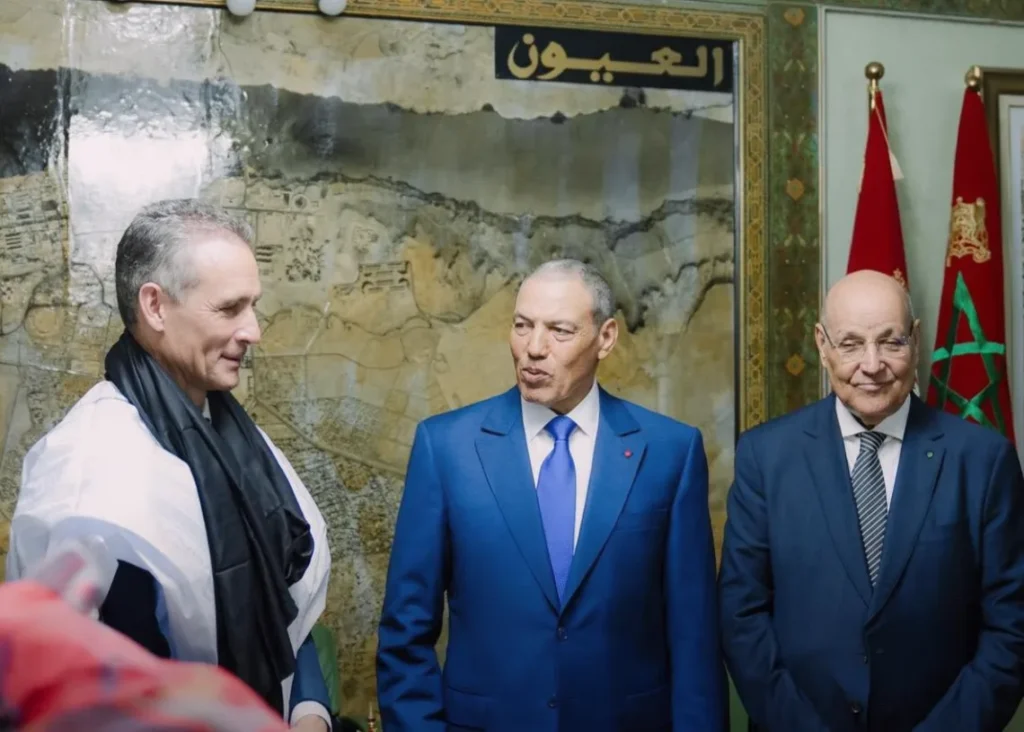
Marrakech, The Gulf Observer: France’s newly appointed Ambassador to Morocco, Philippe Lalliot, made his first official visit outside the capital by travelling to Laayoune, the largest city in Morocco’s southern provinces, on Wednesday, underscoring the growing momentum in Moroccan-French relations and expanding bilateral cooperation.
The visit came shortly after Ambassador Lalliot formally assumed his diplomatic duties, having presented copies of his credentials to Moroccan Foreign Minister Nasser Bourita on June 2 and his letters of credence to King Mohammed VI on June 4.
During the visit, the ambassador held separate meetings with Abdeslam Bekrate, Wali of the Laayoune-Sakia El Hamra region, and Moulay Hamdi Ould Errachid, President of the Laayoune Communal Council. Discussions focused on strengthening decentralized cooperation, promoting investment opportunities, and expanding collaboration in culture, education, infrastructure, and sustainable development.
Municipal authorities briefed the French delegation on Laayoune’s major development initiatives, highlighting the city’s transformation into a modern urban and economic centre through large-scale investments in infrastructure, environmental protection, cultural projects, and social services.
Ambassador Lalliot expressed appreciation for the warm reception accorded to him and described the meetings as a reflection of the enduring friendship between Morocco and France. He said the visit opened new avenues for institutional, economic, and cultural cooperation at the regional level.
Addressing the political dimension of bilateral ties, the ambassador reaffirmed France’s support for Morocco’s autonomy initiative, describing it as the “serious, realistic and most credible” basis for resolving the Western Sahara issue. He noted that France has consistently backed this approach within the United Nations Security Council since Morocco presented the initiative in 2007.
Lalliot said his visit formed part of implementing the commitments arising from the enhanced strategic partnership between Rabat and Paris, adding that both countries were preparing for a new phase of cooperation through upcoming high-level engagements and a framework agreement aimed at further strengthening bilateral relations.
Highlighting the economic potential of Morocco’s southern provinces, the ambassador described the region as a strategic investment destination linking Europe with Africa. He identified infrastructure, renewable energy, the blue economy, vocational training, and higher education as key sectors for future cooperation, while encouraging greater participation of French companies in regional development projects.
He also expressed hope that ongoing UN-led efforts would lead to a lasting political settlement based on Morocco’s autonomy proposal. Discussions further covered regional security, the future of the MINURSO mission, ceasefire prospects, and humanitarian issues concerning populations in the Tindouf camps.
Regional officials welcomed the ambassador’s visit, describing it as a strong symbol of the renewed partnership between Morocco and France. They highlighted the region’s expanding economic opportunities, strategic location as Morocco’s gateway to Africa, and the significant infrastructure investments made under the leadership of King Mohammed VI.
The visit also marked the inauguration of the Alliance Française cultural centre in Laayoune, reinforcing France’s educational and cultural presence in the region. Ambassador Lalliot described the institution, together with the city’s French international school, as evidence of the two countries’ shared commitment to investing in education, culture, and youth.
France has steadily expanded its institutional presence in Morocco’s southern provinces following its recognition of Morocco’s sovereignty over Western Sahara in July 2024. The French Development Agency (AFD) has announced plans to invest €150 million in the region, while France has also expanded consular services and facilitated greater economic engagement through business forums and investment initiatives.