The Landmine Crisis in Azerbaijan: The Unresolved Remnant of War that is Threatening Lives
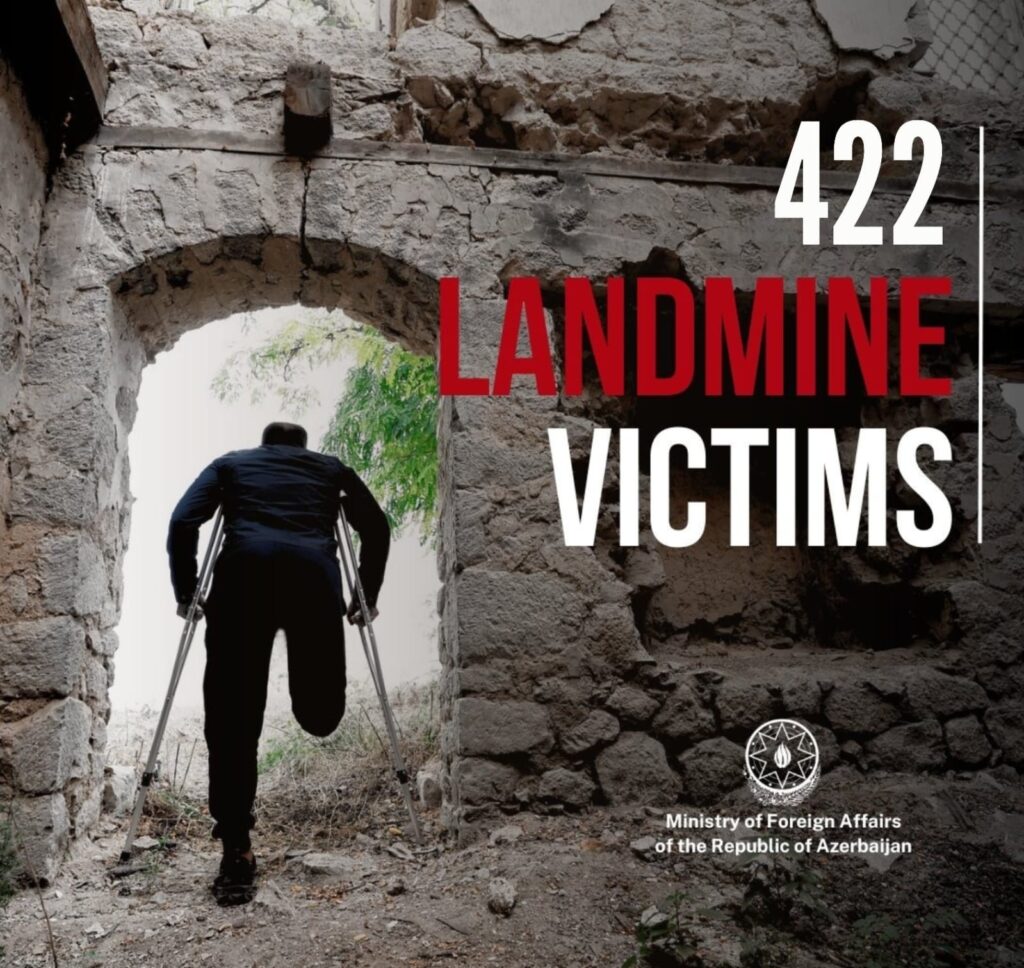

One of the most acute humanitarian, financial and security issues in the post-conflict environment is the landmine crisis (Installed by Armenia) in Azerbaijan which remains a persistent problem today. Decades after active hostilities, the remnants of war such as landmines and unexploded ordnance still take lives, livelihoods and hinder national healing. Although there has been tremendous improvement in demining efforts, the magnitude and the intricacy of contamination underscores a long-term crisis that requires continued national and international concerns.
An Enduring Humanitarian Crisis and Operational Development
Human life from the landmine contamination in Azerbaijan is still too high.
On April 14, an employee of the Mine Action Agency of the Republic of Azerbaijan @ANAMA_gov_az was killed after triggering an anti-tank landmine in the Fuzuli district, in the village of Ashaghy Abdurrahmanli.
So, since the Armenia-Azerbaijan war ended in 2020, over 422 Azerbaijani citizens have been killed or injured in landmines. Statistics do also show that between November 2020 to April 2026, 73 individuals died and 349 were injured in 259 reported cases.
The recent tragedies highlight the continued threat. An employee of the Mine Action Agency of the Republic of Azerbaijan was injured in Khojaly during the clearance operations in February 2026. In March, a civilian was killed when his horse detonated an anti-tank mine in Khojavend. In April, there were additional incidents, at Sugovushan and a demining worker was killed in Fuzuli. These incidents demonstrate a depressing truth: landmines are not discriminating murderers, as they kill and injure civilians, workers and even professional soldiers.
A landmine is not just a planted explosive danger, it is a long term hazard to human security, which may transform the lives of individuals, families and even whole communities.
It is estimated that in about 13,000 square kilometers of liberated area, there are more than one million landmines and unexploded devices. Not only former frontlines but civilian zones like agricultural fields, cemeteries and residential neighborhoods are covered by these areas.
In spite of these difficulties, Azerbaijan has achieved significant success in demining activities. Based on official statistics, more than 261, 551 hectares of land have been cleared and about 246,463 explosive devices have been defused. In March 2026, only, the area covered by clearance operations amounted to 5,336 hectares and the detection of thousands of explosive remnants, anti-personnel and anti-tank mines.
Nevertheless, analysts believe that it might take 20 to 30 years to clear the affected areas completely and may require tens of billions of dollars which shows just how huge the task at hand is.
Socio-Economic Consequences
In addition to the immediate life-threatening effect, the contamination of landmines has far-reaching socio-economic consequences. There are tens of thousands of internally displaced people (IDPs) who are still unable to go back to their homes as they are not safe. The Government Project of the Great Returnto resettle displaced populations, suffers setbacks due to numerous regions that are still under the high risk zones.
It has disastrously affected agriculture which is an important part of rural life. Fertile lands up to thousands of hectares are not used, which decreases food production and economic opportunities. This also affects infrastructure development by delaying or making more expensive major projects like roads, railways and energy systems because clearance must be provided.
There is further complexity of environmental degradation. Polluted forests, water bodies and ecosystems constrain biodiversity and limit sustainable land use. Effective demining operations are inextricably linked with the environmental recovery of these areas.
Strategic and Institutional Response
Azerbaijan has made demining a national agenda following the realization that the crisis is serious enough. ANAMA has been at the forefront in carrying out massive humanitarian demining operations with the aid of modern technologies which include drones, sophisticated detection systems and specialized equipment.
Besides operations, the government has also put safety nets in place through fencing areas of high risks and carrying out massive campaigns to sensitize the people. Educational campaigns especially to the young people have taken center stage in prevention programs.
One of the most remarkable ones is the forum called A Safe Future of the Great Return, which took place in Baku in April 2026. The event included the policymakers, experts, youth organizations and volunteers to create awareness and community participation in mine risk education. The human aspect of the crisis was brought to light through exhibitions that presented demining activities and stories of victims.
On the same note, joint programs like Safe Return Explosive Ordnance Hazard Awareness program are created to train volunteers, as well as to educate the community in the liberated territories. Universities, such as Karabakh University, have also turned to be centers of awareness and mobilization of youths with students actively engaging in safety campaigns.
Global Responsibility and Long Road to Recovery
The landmine crisis in Azerbaijan is not a stand-alone issue it is a part of a global problem in the world. The fight against landmines needs international efforts to be organized with the United Nations general assembly recognizing the importance of landmines by the international community through the International Day of Mine Awareness and Assistance in Mine Action which takes place on April 4 every year.
Azerbaijan has repeatedly requested world organizations, donor nations and humanitarian organizations to contribute more in the demining activities, technical aid and the rehabilitation of the victims. The magnitude of the pollution cannot be handled by the national means and that is why global collaboration is necessary.
European and international stakeholders are also interested in stability and recovery in South Caucasus because insecure and unsafe environment is a major deterrent to regional development, connectivity and integration of economies.
Azerbaijan is still affected by the landmine crisis which is still defining its post-conflict path. It postpones reconstruction and economic development and extends the misery of displaced populations. Although some progress has been achieved, the journey towards a mine-free Azerbaijan is a long and difficult one.
The success of demining operation will determine the success of the vision of a safe and sustainable future where the displaced families will be allowed to go home, farming can be done and infrastructure re-established. This objective cannot be attained without national commitment and the continued international involvement.
Conclusion
So, Azerbaijan’s landmine crisis is a stark reminder of the enduring legacy of conflict. It is a humanitarian problem, a development challenge and a test of solidarity in the world. Every cleared hectare is hope; every neutralized mine, a life which could be saved.
However, the threat will continue to be experienced decades unless further investment, collaboration and enlightenment are made. The international community should be aware that mine action is not only being done to remove explosives but it is also about restoring dignity, making a recovery and ensuring that the future generation enjoys peace. Armenian Government must share the coordinates and whereabouts of the installed mines for the fast processing of demining and effectiveness of the results for a peaceful future.
The struggle against landmines in Azerbaijan is not yet over but is a struggle with deeper implications to the entire human race.