3rd International Lazgi Dance Festival in Khiva
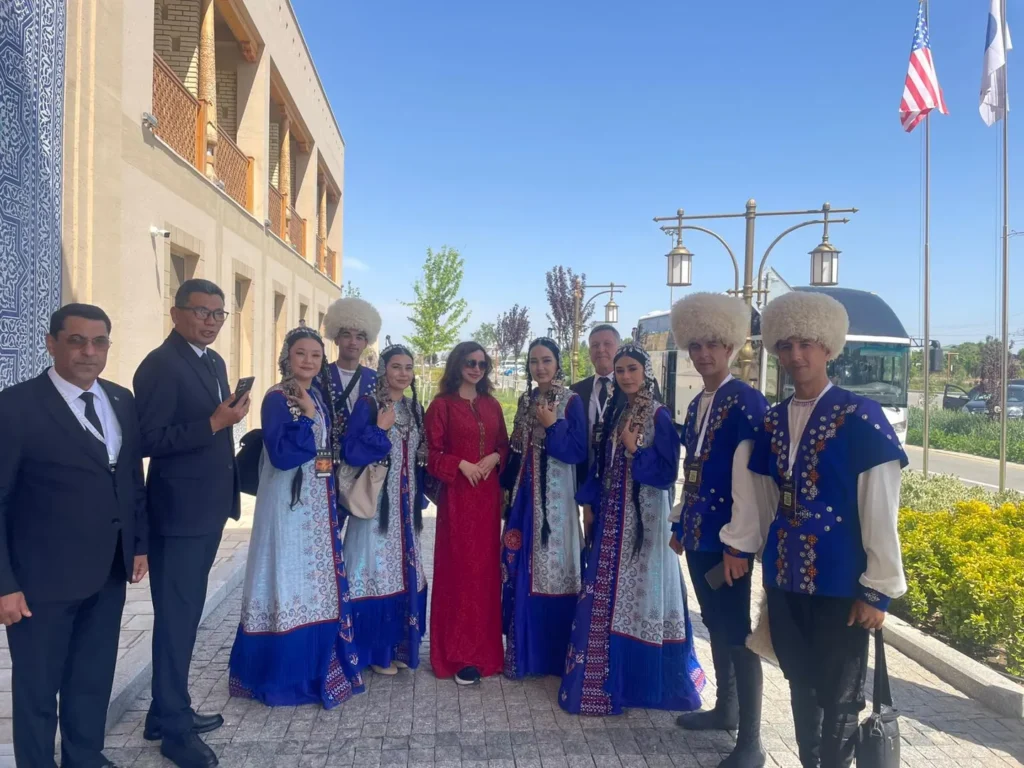
The historic city of Khiva, a UNESCO World Heritage site, has once again become a vibrant crossroads of cultures with the successful conclusion of the 3rd International Lazgi Dance Festival. Held in April (25-30 April), the festival brought together tradition and contemporary artistic exchange, celebrating Lazgi—the ancient and expressive dance of Khorezm that stands as one of Uzbekistan’s most powerful symbols of intangible cultural heritage. On April 27, Saida Mirziyoyeva attended the opening ceremony of the third International Lazgi Dance Festival in Khiva
Lazgi: A Living Heritage of Humanity
In 2019, “Khorezm Lazgi” was officially inscribed on the Representative List of the Intangible Cultural Heritage of Humanity of UNESCO (14.COM). This recognition affirmed Lazgi’s universal value as a cultural practice that embodies creativity, emotion, and human expression shaped by nature and community life.
Lazgi’s movements illustrate the sounds and rhythms of the natural world, as well as deeply human emotions such as love, joy, kindness, and happiness. Rooted in the Khorezm region, Lazgi has gradually spread throughout Uzbekistan, becoming a shared cultural treasure across the country.
Its ancient origins are visible in wall paintings found at the archaeological site of Topraq-Kala in Khorezm, bearing witness to the dance’s centuries-old history. Inspired by social life, daily labor, and communal rituals, Lazgi represents life itself through motion. During performances, musicians, singers, and dancers act in perfect harmony, creating a collective artistic expression that resonates deeply with audiences according the official Website of Unesco.
Two primary forms of Lazgi are distinguished today:
- a figurative form, which conveys emotions and ideas through concrete, symbolic movements;
- an improvised interpretative form, where dancers spontaneously adapt to increasingly dynamic rhythms.
So communicative is Lazgi that spectators often find themselves spontaneously joining the dance, blurring the boundary between performers and audience. Transmitted from generation to generation, Lazgi continues to evolve through new interpretations, while remaining a vital element of national celebrations, traditional festivals, family gatherings, and community events.
An International Platform for Dance and Dialogue
Organized biennially since 2022, the Lazgi Dance Festival was held for the third time this year under the auspices of UNESCO and TURKSOY, reinforcing its growing international stature.
This year’s edition welcomed more than 300 participants—including dance masters, professional ensembles, art historians, musicologists, and renowned cultural figures—from 30 countries. Beyond performance, the festival served as an important platform for cultural dialogue, academic exchange, and artistic cooperation.
The program extended far beyond stage performances. It featured:
- an International Scientific and Practical Conference on “Dance Art in World Cultural Development: Traditions and Universal Values”,
- an Ethnocultural Forum,
- and the 3rd Meeting of Rectors of Art and Dance Universities of TURKSOY Member Countries, focusing on the “Anthology of Traditional Dance of the Turkic World”.
Together, these events highlighted dance as both an artistic discipline and a powerful tool for cultural diplomacy.
Competition, Excellence, and Recognition
At the heart of the festival was a two-day international dance competition, where 25 ensembles from 13 countries competed. Performances were evaluated by an international jury of seven experts, assessing technical mastery, artistic expression, and cultural authenticity.
Special Award
- – Murat Karakoz (Kazakhstan) received the special TURKSOY statuette along with a $1,000 prize.
Third Place – $2,000
- – Best Solo Dance: Shohjakhon Berdibekov (Uzbekistan)
- – Best Dance Ensemble: Kryzhachok (Belarus)
- – Best Choreographic Production: Bukhoro Mavjlari (Uzbekistan)
Second Place – $3,000
- – Yoqutkhon Khasanova (Uzbekistan) and Amina Aliyeva (Azerbaijan)
- – Sema Ensemble (Azerbaijan)
- – Saltanat Ensemble (Kazakhstan)
First Place – $5,000
- – Karina Kalpakova (Russia, Bashkortostan) and Nodira Seidjanova (Uzbekistan)
- – Omsk State Russian Folk Ensemble (Russia)
- – Beijing Dance Academy Ensemble (China)
The festival’s Grand Prix was awarded to Mohira Jovliyeva (Uzbekistan), who received $7,000, a diploma, and a statuette, in recognition of her outstanding artistic achievement.
In addition, numerous participants were honored with special nominations, celebrating creativity, innovation, and dedication to dance heritage.
Art as a Bridge Between Nations
The closing ceremony featured national dances from various cultures, offering audiences a powerful visual experience of diversity in unity. Through rhythm and movement, the festival once again demonstrated the unifying power of art, transcending borders, languages, and traditions.
By fostering friendship, mutual respect, and cultural rapprochement, the 3rd International Lazgi Dance Festival reaffirmed Khiva’s role as a global cultural meeting point and strengthened international cooperation in the preservation and promotion of intangible cultural heritage.
As Lazgi continues to evolve while remaining deeply rooted in its origins, the festival stands as a compelling example of how living traditions can inspire global dialogue and shared humanity.