Uzbekistan Strengthens Economic Strategy to Sustain Growth Amid Global Market Pressures
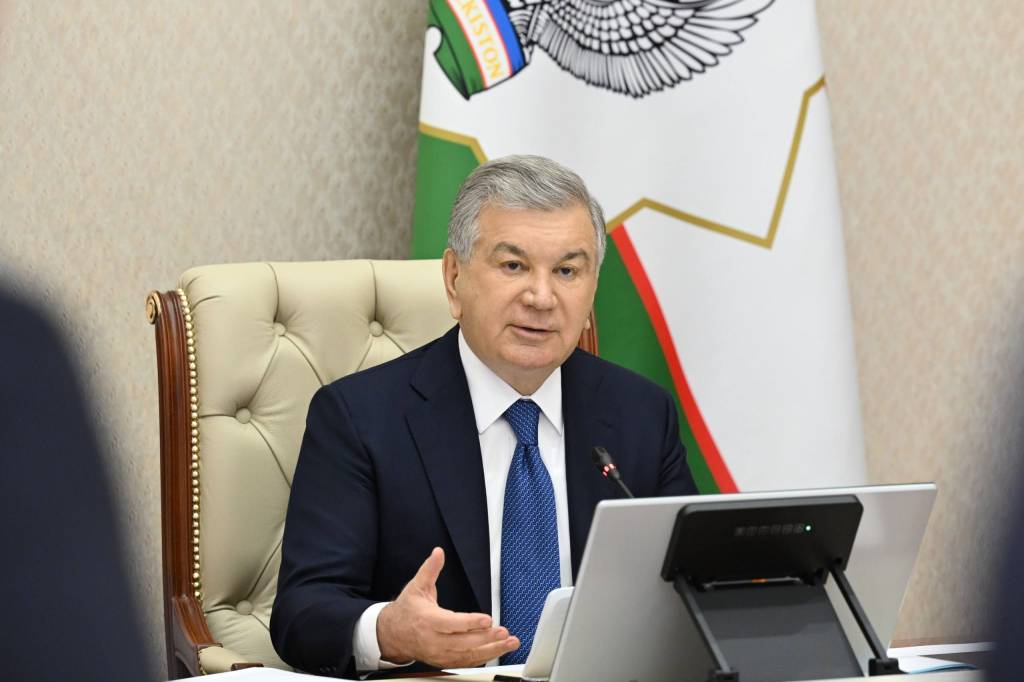
Tashkent, The Gulf Observer: President Shavkat Mirziyoyev was briefed on ongoing measures to achieve projected economic targets for the first quarter of 2026 and mitigate the impact of global market instability on the national economy.
Officials reported that during the first two months of the year, industrial output grew by 7.7 percent, while the services sector expanded by 15.4 percent. Exports reached $3.5 billion, and foreign investment inflows totaled $8.3 billion, reflecting steady economic momentum.
Significant financial resources have been mobilized to support regional development. Since the beginning of the year, an additional 2.3 trillion UZS and $500 million have been allocated from the state budget to accelerate socio-economic progress across nine regions. Moreover, 3.9 trillion UZS has been directed to local budgets for 33 districts and 330 mahallas under the “New Uzbekistan” initiative, while similar funding has been allocated for 37 challenging districts and 903 mahallas, supplemented by 1.3 trillion UZS in local contributions.
To boost economic activity, 1 trillion UZS has been allocated in the initial phase for 283 “driver” projects, with a total of 1.2 trillion UZS planned by year-end for infrastructure development along busy streets, coastal, and roadside areas. Additional investments include 450 billion UZS for improving infrastructure in 150 tourism-focused mahallas and 150 billion UZS to establish 50 industrial microcenters across 400 mahallas.
During the briefing, it was emphasized that escalating global tensions are exerting increasing pressure on economic stability, foreign trade routes, and import prices. The president stressed the importance of proactive planning and scenario-based decision-making by sectoral and regional leaders. Maintaining inflation within the target range of 6–6.5 percent was highlighted as a key priority.
Rising global oil prices were noted as a major factor driving up transportation costs and petrochemical product prices, including polyethylene and polypropylene. In response, directives were issued to expedite imports of essential food items, resolve logistics challenges, and diversify transportation routes.
The president also underscored the need to promptly address challenges faced by entrepreneurs, particularly regarding access to raw materials, markets, and financing. Exporters’ concerns over logistics disruptions and rising costs were discussed, with instructions to strengthen cooperation with neighboring countries, facilitate air freight for food exports, and introduce preferential tariffs.
Foreign investment dynamics were reviewed in detail, with acknowledgment that the current global environment could impact project implementation. Authorities were tasked with closely monitoring all ongoing projects and maintaining continuous engagement with investors.
Additionally, the performance of the banking and financial sector in supporting businesses through loans was assessed, alongside potential risks in construction and development programs.
President Mirziyoyev emphasized that despite positive economic indicators, vigilance remains essential. He called on all officials to identify risks early, implement clear strategies to mitigate them, and respond swiftly to emerging challenges to sustain economic growth and stability.
Specific directives were issued to ensure inflation control, maintain industrial and export performance, accelerate investment project implementation, and address potential vulnerabilities in the banking system and broader economic framework.