Azerbaijan’s Journey Toward Hosting WUF13 Reflects a Remarkable Story
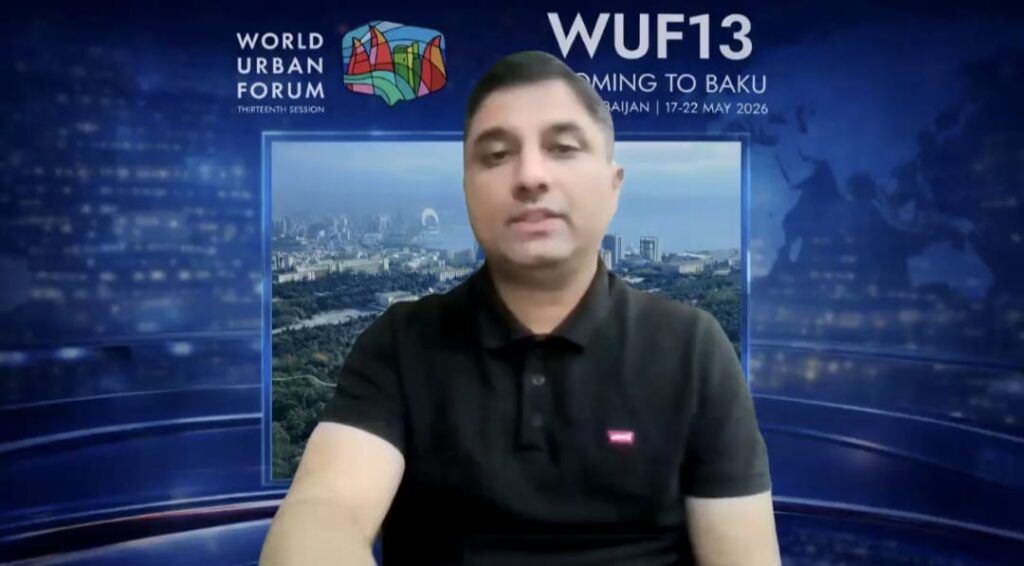
Azerbaijan’s journey toward hosting WUF13 reflects a remarkable story of vision, resilience, and transformation, Senior Foreign Affairs Expert and Chairman of the Gulf Observer Research Forum, Patron-In-Chief & Owner of “The Gulf Observer” and “The Europe Toiday” Muhammad Ali Pasha said in an interview with AZERTAC.
He noted that as the world prepares for this major global event, it is approaching a defining moment in the broader conversation on sustainable urban development. In his assessment, the World Urban Forum, convened under the auspices of UN-Habitat, should not be seen as just another international gathering. He emphasized that it serves as a powerful platform where ideas, innovation, and commitments come together to shape the cities of the future. According to him, this year’s forum has drawn global attention to Azerbaijan.
The expert pointed out that over the past decades, the country has undergone rapid urban modernization, successfully turning Baku into a vibrant, smart, and sustainable city that harmoniously blends heritage with innovation.
He stressed that such progress would not have been possible without the leadership of Ilham Aliyev. According to Muhammad Ali Pasha, President Ilham Aliyev’s forward-looking policies have consistently prioritized infrastructure development, smart urban planning, and environmental sustainability. Under his leadership, Azerbaijan has, in his view, emerged as a model for balancing economic growth with urban resilience and cultural preservation.
“President Ilham Aliyev’s commitment to sustainable development is evident in large-scale urban projects, improved public services, green initiatives, and the integration of technology into city management. Hosting WUF13 is a natural extension of this vision, positioning Azerbaijan as a global hub for dialogue on the future of cities,” he mentioned.
Muhammad Ali Pasha also drew attention to the contributions of Khazar Farhadov, Azerbaijan’s Ambassador to Pakistan. He described Ambassador Farhadov’s efforts as highly commendable, noting that his active diplomacy has significantly strengthened bilateral relations and promoted Azerbaijan’s initiatives, including WUF13, across Pakistan.
He explained that Ambassador Farhadov has played a pivotal role in raising awareness about the importance of the World Urban Forum among Pakistani stakeholders. Through engagement with policymakers, academia, media, and development experts, the ambassador has, according to the expert, not only highlighted Azerbaijan’s achievements but also opened new avenues for cooperation between Pakistan and Azerbaijan in areas such as urban planning, infrastructure, and sustainable development.
In his view, this outreach reflects a deep commitment to fostering people-to-people connections and promoting knowledge exchange, both of which he considers essential for building stronger and more future-ready societies.
Turning to Pakistan’s own situation, Muhammad Ali Pasha pointed out that as the country continues to experience rapid urbanization, the relevance of forums like WUF13 becomes increasingly significant. He noted that major cities such as Karachi, Lahore, and Islamabad are facing growing challenges, including housing shortages, pressure on infrastructure, climate vulnerability, and environmental sustainability concerns.
In this context, he emphasized that Azerbaijan’s experience offers valuable lessons. He suggested that the country’s focus on integrated urban planning, smart city solutions, and sustainable infrastructure development provides a practical roadmap that Pakistan could adapt to its own unique circumstances.
The expert concluded that WUF13 should be seen not merely as an event, but as a meaningful opportunity—particularly for Pakistan—to learn, collaborate, and contribute to global urban solutions. He described it as a platform where shared challenges can lead to shared solutions.
Looking ahead to the forum in Baku, he expressed optimism about a future in which cities become more inclusive, resilient, and sustainable. He reiterated that Azerbaijan’s leadership in hosting such a prestigious event is a clear testament to its growing role on the global stage.
In conclusion, Muhammad Ali Pasha stated that WUF13 symbolizes far more than urban dialogue. In his words, it represents hope, partnership, and progress. He emphasized that with visionary leadership, strong diplomacy, and international cooperation, it is possible to build cities that truly serve their people. He also underlined the importance of recognizing Azerbaijan’s achievements, appreciating the leadership of President Ilham Aliyev in strengthening bridges between nations.
The expert ultimately called for collective efforts to move forward toward smarter cities, stronger communities, and a more sustainable world.