Europe Steps Up as NATO Adapts to a New Defense Balance
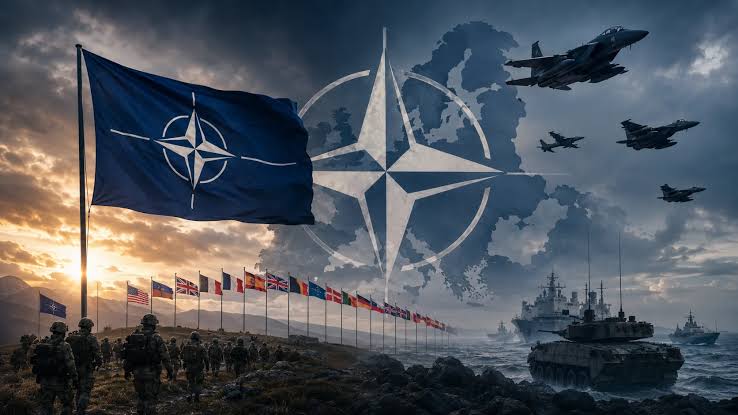
European members of NATO have moved quickly to reinforce the alliance’s collective defense posture following the United States’ decision to reduce some of the military capabilities it has traditionally committed to NATO operations. According to NATO’s Supreme Allied Commander Europe, U.S. Air Force General Alexus Grynkewich, European allies have managed to replace the vast majority of the capabilities that were withdrawn within just a few weeks. While a limited number of highly specialized capabilities remain difficult to substitute, NATO is actively developing alternative solutions to ensure that the alliance maintains the same level of operational effectiveness. This transition marks a significant milestone in NATO’s evolution, reflecting Europe’s growing willingness to assume greater responsibility for regional security while allowing the United States to adapt its military posture to an increasingly complex global security environment.
Europe Takes Greater Responsibility for Collective Defense
The recent adjustments to NATO’s force structure represent one of the most significant shifts in the alliance’s burden-sharing arrangements in decades. In May, the United States informed its allies that it would reduce the pool of military assets assigned to NATO’s defense plans during times of crisis. The decision prompted immediate concern among European governments, as questions emerged regarding the alliance’s ability to maintain its readiness without relying as heavily on American military resources.
However, the response from European allies has been both rapid and coordinated. Within weeks, many member states increased their commitments by allocating additional personnel, equipment, and operational capabilities to NATO’s defense plans. According to General Grynkewich, nearly all of the gaps created by the U.S. reductions have already been addressed by European allies. In the few areas where equivalent capabilities are not yet available, NATO commanders are identifying alternative operational solutions capable of delivering comparable military effects.
The changes also reflect a broader strategic objective pursued by Washington. American officials have repeatedly emphasized the importance of reducing what they describe as an “unhealthy co-dependence” within the alliance. As the United States prepares for the possibility of managing simultaneous security challenges in Europe, the Indo-Pacific, and other regions, it seeks to encourage European allies to strengthen their own defense capabilities while preserving NATO’s overall deterrence and readiness.
U.S. Force Reductions Reflect Changing Global Priorities
Although the Pentagon has not publicly released detailed information regarding the reductions, military sources indicate that the changes affect several critical categories of military assets. The number of fighter aircraft available for NATO missions has been reduced significantly, while allocations of reconnaissance drones, aerial refueling aircraft, maritime patrol aircraft, destroyers, and other naval assets have also declined.
These reductions should not necessarily be interpreted as a weakening of NATO’s military capabilities. Instead, they reflect a redistribution of American military resources designed to address an increasingly demanding global security landscape. The United States continues to face strategic competition with major powers while simultaneously preparing for the possibility of multiple regional conflicts. As a result, Washington is restructuring its force commitments in order to preserve greater operational flexibility without abandoning its NATO obligations.
European governments have viewed these developments as both a challenge and an opportunity. The necessity of replacing U.S. capabilities has accelerated investments in defense modernization, encouraged closer military cooperation among European allies, and reinforced ongoing efforts to increase defense spending. The process also demonstrates the alliance’s ability to adapt quickly when strategic circumstances change, highlighting NATO’s resilience despite evolving geopolitical realities.
Remaining Challenges and NATO’s Future Direction
Despite the remarkable progress made by European allies, certain highly specialized military capabilities remain difficult to replace. Strategic bomber aircraft represent the most notable example. According to NATO officials familiar with the alliance’s planning process, the United States will now allocate only one strategic bomber to NATO’s defense plans instead of two. Because no European country currently possesses an equivalent long-range strategic bombing capability, this remains one of the few significant capability gaps within the alliance.
NATO leaders are expected to discuss these remaining challenges during the alliance’s summit in Ankara on July 7–8. The meeting is likely to focus on long-term burden sharing, defense planning, capability development, and the future structure of NATO’s collective deterrence strategy. European allies are expected to present additional commitments aimed at strengthening the alliance’s defense posture while ensuring that operational readiness remains unaffected by the changes in U.S. force contributions.
The broader political context also adds significance to these discussions. The alliance continues to operate under increased political pressure amid ongoing debates regarding the future role of the United States in European security. Concerns among several European governments have been amplified by repeated statements from U.S. President Donald Trump questioning America’s long-term commitment to NATO. These uncertainties have encouraged European members to accelerate efforts toward greater strategic autonomy while remaining committed to the principle of collective defense.
Conclusion
The recent rebalancing of NATO’s military responsibilities represents an important turning point in the alliance’s history. Rather than signaling a weakening of transatlantic cooperation, the changes demonstrate NATO’s capacity to evolve in response to shifting strategic realities. European allies have shown that they are increasingly prepared to assume greater responsibility for the defense of the continent, while the United States seeks to allocate its military resources more effectively across multiple global theaters.
Although certain specialized capabilities, particularly strategic bombers, remain difficult to replace in the short term, the alliance has successfully maintained the overall integrity of its defense plans through coordinated action and increased European contributions. As NATO prepares for its upcoming summit in Ankara, the focus will increasingly shift from simply filling capability gaps toward building a more balanced, resilient, and sustainable alliance capable of responding to the complex security challenges of the coming decades.