Moroccan Government Approves New Biometric Passports, Electric Scooter Regulations and Higher Education Reforms
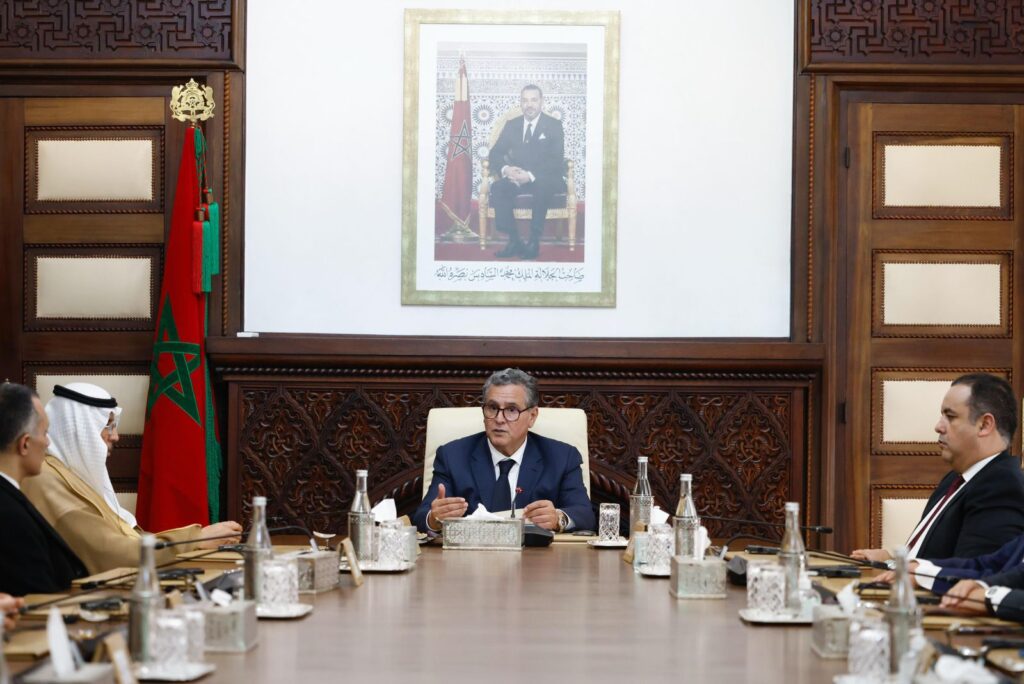
Rabat, The Gulf Observer: Morocco’s Government Council, chaired by Prime Minister Aziz Akhannouch, on Thursday approved a series of draft decrees introducing a new generation of biometric passports, establishing regulations for personal mobility vehicles, strengthening governance in higher education, and endorsing several senior government appointments.
Government spokesperson Mustapha Baitas said the Council approved Draft Decree No. 2.26.551, presented by Interior Minister Abdelouafi Laftit, paving the way for the introduction of a new generation of Moroccan biometric passports featuring enhanced security measures while incorporating elements reflecting Morocco’s rich cultural identity.
Baitas said the initiative is aimed at improving protection against passport fraud and counterfeiting. He added that the procedures for issuing the new passports and their implementation will be determined through a joint decision by the ministries responsible for the interior and foreign affairs. Existing Moroccan passports will remain valid until the gradual rollout of the new biometric documents is completed.
The Government Council also adopted Draft Decree No. 2.25.145, amending Morocco’s Highway Code regulations to establish a legal framework for personal mobility vehicles, including electric scooters.
Under the new regulations, personal mobility vehicles will be subject to a maximum speed limit of 25 kilometres per hour. Riders will be required to wear approved protective helmets, the use of headphones while riding will be prohibited to ensure awareness of surrounding traffic, and children under the age of eight will not be permitted to operate such vehicles on public roads. Additional safety measures will also apply when transporting young children.
According to the Ministry of Transport, the regulations are intended to improve road safety, reduce hazardous behaviour, and address the growing use of modern personal mobility vehicles across the country.
In the higher education sector, the Council approved two draft decrees presented by Minister of Higher Education, Scientific Research and Innovation Azzedine El Midaoui.
The first decree establishes a unified framework governing applications for the presidency of public universities, while the second outlines procedures for the appointment of heads of higher education institutions. The reforms are designed to promote transparency, merit-based recruitment, equal opportunities, and stronger institutional governance in accordance with Morocco’s Higher Education Framework Law No. 59.24.
The Government Council also approved several senior appointments across government ministries.
At the Ministry of Foreign Affairs, African Cooperation and Moroccan Expatriates, Omar Rabi was appointed Director of American Affairs, while Nada Bakkali Hassani was named Director of Public Diplomacy and Non-State Actors.
At the Ministry of Youth, Culture and Communication, Mustapha Amedjar was appointed Director of Communication and Relations with Media Stakeholders.
The Council also appointed Kotayfa El Karkri as Secretary-General at the Ministry Delegate for Digital Transition and Administrative Reform, and Halima Ghiate as Director of Relations with Civil Society at the Ministry Delegate in charge of Relations with Parliament.
The decisions form part of Morocco’s broader efforts to modernize public administration, enhance institutional governance, strengthen transport safety, and improve the delivery of public services.