A Theoretical Analysis of the Şanlıurfa and Kahramanmaraş Tragic School Shootings

When the Equation Turns Deadly – A Theoretical Analysis of the Şanlıurfa and Kahramanmaraş Tragic School Shootings Through the Lens of the “Tahir Equation of Crime (TEC)”
This article is dedicated to the victims of the Şanlıurfa and Kahramanmaraş school shootings and to all those who have suffered from school violence worldwide. May their memories inspire the changes that will prevent future tragedies.
A Dark Tragic Legacy Across Nations
Before we examine the two devastating incidents that shook Turkey within a span of forty‑eight hours, we must acknowledge a painful global reality. School shootings are not a phenomenon confined to any single nation, culture or political system. They represent a universal failure to recognize and address the psychological deterioration of young minds before they erupt into catastrophic violence.
On April 20, 1999, Columbine High School in Colorado, USA, became the archetype of modern school violence. Two teenagers, Eric Harris and Dylan Klebold armed with guns and homemade explosives killed twelve students and one teacher before taking their own lives. The world watched in horror as the term “school shooting” was permanently etched into the global lexicon. Investigators later discovered evidence of depression, narcissistic personality traits and a shared fantasy of infamy.
On March 11, 2009, in Winnenden, Germany, a seventeen‑year‑old former student, Tim Kretschmer returned to his former school and opened fire killing nine students, three teachers and three bystanders before turning the gun on himself. He had been receiving treatment for depression and his social isolation had been documented by mental health professional’s years before the attack.
On May 23, 2014, in Isla Vista, California, twenty‑two‑year‑old Elliot Rodger killed six people and injured fourteen others before committing suicide. His lengthy manifesto revealed a profound narcissistic personality disorder, a deep sense of entitlement and a rage born of perceived social rejection. Rodger would later become an icon for a disturbing subculture of alienated young men.
On October 22, 2015, in Trollhättan, Sweden, a twenty‑one‑year‑old masked attacker wearing a Star Wars‑inspired helmet killed two people including a teaching assistant before being shot by police. He had a history of autism spectrum disorder and had been described by classmates as socially withdrawn and obsessed with violent fantasies.
On May 18, 2018, in Santa Fe, Texas, seventeen‑year‑old Dimitrios Pagourtzis opened fire in his art class killing ten people, mostly students. His social media accounts revealed an obsession with Nazi symbolism and a deep simmering anger that went unnoticed until it was too late.
On March 27, 2023, in Nashville Tennessee, a twenty‑eight‑year‑old former student killed three children and three adults before being neutralized by police. The attacker had been under a doctor’s care for an emotional disorder and family members had expressed concern about access to firearms.
These incidents, spanning three decades and multiple continents share a common thread: the perpetrators were not hardened criminals or ideological extremists in the traditional sense. They were deeply troubled individuals whose psychological disorders, left untreated or unrecognized converged with access to weapons and a perceived grievance to produce unspeakable violence.
Now in April 2026, Turkey has been added to this grim roster. Within two days, two separate attacks by young perpetrators have left dozens injured and killed, prompting urgent questions about the intersection of mental illness, youth violence and systemic failures in prevention.
This article applies the Tahir Equation of Crime (TEC) as a comprehensive theoretical framework that models crime as the product of external enablers, external stressors, internal weaknesses and diminished internal strengths to understand what happened in Şanlıurfa and Kahramanmaraş. By integrating clinical psychology with criminological analysis, we seek not merely to describe these tragedies but to understand their underlying causes and more importantly to propose pathways toward prevention.
Part One: The Incidents
The Şanlıurfa Attack: A Former Student’s Revenge
On Tuesday, April 14, 2026, the Ahmet Koyuncu Vocational and Technical Anatolian High School in the Siverek district of Şanlıurfa province became the scene of unimaginable violence. Ömer Ket, a nineteen‑year‑old former student who had been transferred to open education after academic failure, returned to the school armed with a shotgun. Witnesses described a scene of chaos and terror as Ket moved through the hallways, firing indiscriminately at students, teachers and staff. When the shooting stopped, sixteen people lay injured: ten students, four teachers, a police officer and a canteen worker. Ket then turned the shotgun on himself, ending his own life as Turkish Police Special Forces arrived at the scene.
In the hours following the attack, Turkish media uncovered social media posts Ket had made in the preceding weeks. “Get ready, there will be an attack in a few days,” he had written. “I will destroy you all.” These were not the words of a spontaneous actor but of a young man who had been planning, ruminating and descending deeper into a psychological abyss. Four school administrators were suspended from duty, one suspect was detained and an investigation was launched. Yet the questions that haunted the nation were already forming: How did this happen? What drove him? Could anyone have stopped him?
The Kahramanmaraş Attack: A Fourteen‑Year‑Old’s Massacre
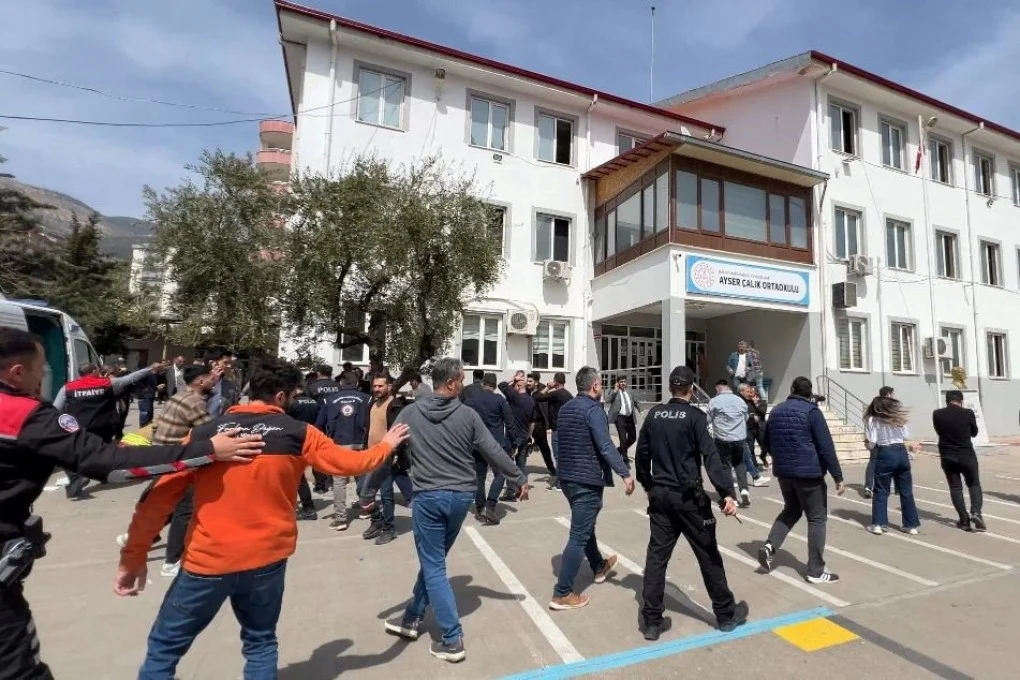
Less than twenty‑four hours later, on Wednesday, April 15, 2026, the nation was stunned again. At the Ayser Çalık Middle School in the Onikişubat district of Kahramanmaraş province, a fourteen‑year‑old eighth‑grade student named İsa Aras Mersinli carried out an attack of even greater horror. Armed with multiple weapons including his father’s service firearms, as his father was a police officer and Mersinli targeted fifth‑grade students, the youngest and most vulnerable in the school. When the shooting stopped, nine people were dead: eight children and one teacher. Thirteen others were wounded, three of them in critical condition.
The details that emerged in the aftermath were even more disturbing. Mersinli had reportedly idolized Elliot Rodger, the Isla Vista attacker whose manifesto and videos have become an object of obsession for a dark online subculture of alienated young men. On his WhatsApp profile, Mersinli had used Rodger’s image as a chilling act of identification with a mass murderer. Justice Minister Akin Gurlek announced a broad investigation, assigning three chief public prosecutors and four public prosecutors to the case. The shooter’s father, a former police officer was detained for questioning regarding how the weapons had been accessed. Education was suspended for two days in Kahramanmaraş and a publication ban was imposed. But the damage was done, and the nation was left searching for answers.
Part Two: Theoretical Framework – The Tahir Equation of Crime (TEC)
To understand these incidents not merely as isolated acts of evil but as predictable outcomes of identifiable variables, we turn to the Tahir Equation of Crime (TEC). This framework, developed for the systematic analysis of criminal behaviour, posits that crime occurs when external pressures and internal vulnerabilities exceed an individual’s capacity for lawful behaviour. The equation is expressed as C equals the sum of external enablers (Ew), external stressors (Eu) and internal weaknesses (Iw), minus the sum of internal strengths (Is).
External enablers (Ew) include opportunities for crime such as access to weapons, peer pressure, substance availability or lack of surveillance. External stressors (Eu) are environmental pressures like poverty, trauma, urban neglect, displacement or family dysfunction. Internal weaknesses (Iw) refer to psychological vulnerabilities including impulsivity, emotional dysregulation, hostility bias, identity deformation or poor coping mechanisms. Internal strengths (Is) are protective factors such as moral reasoning, rational decision‑making, healthy coping skills, social bonds and clinical support.
Crime becomes likely even inevitable, when the combined weight of external enablers, external stressors and internal weaknesses exceeds the sum of internal strengths and the individual’s threshold of resistance (T). This threshold varies from person to person based on temperament, upbringing and life experience. When we apply this equation to the two Turkish school shootings, a disturbing pattern emerges. In both cases, the perpetrators exhibited extremely high levels of internal weaknesses, significant external stressors and access to external enablers while possessing virtually no internal strengths to resist the pull toward violence.
Part Three: Clinical Analysis – Mental Illness as a Crime Variable
The diagnostic files provided for this analysis contain comprehensive criteria for six relevant categories of mental illness. When we map the observed behaviours of Ömer Ket and İsa Aras Mersinli onto these categories, a clinical picture emerges that challenges simplistic narratives of “evil” or “monstrosity.” These were young men whose psychological disorders, left untreated and unrecognized propelled them toward catastrophic violence.
Ömer Ket of Şanlıurfa: A Clinical Profile
Ömer Ket was nineteen years old, an age at which many personality disorders become fully manifest. He had failed academically, been transferred to open education (a form of distance learning often associated with students who cannot function in traditional school environments) and expressed intense rage toward the school administration and his former peers. Applying the diagnostic framework from the provided files, several potential disorders emerge as relevant.
Major depressive disorder is strongly indicated by Ket’s academic failure, his social withdrawal, his expressed hopelessness and most conclusively as his suicide. Depression in young men often manifests not as sadness but as irritability, anger and a sense of worthlessness that can transform into homicidal ideation when combined with other risk factors. Ket’s decision to end his own life immediately after the attack suggests a profound despair that had likely been building for months or years.
Narcissistic personality disorder (NPD) is suggested by Ket’s social media behaviour. The threats posted publicly like “Get ready, there will be an attack in a few days” reveal a grandiose need for attention and a desire to be recognized as powerful and feared. NPD is characterized by a sense of entitlement, a preoccupation with fantasies of unlimited power and success, and a lack of empathy for others. Ket’s decision to target students and teachers who had in his perception wronged him reflects the vengeful rage that often accompanies narcissistic injury.
Antisocial personality disorder (ASPD) cannot be ruled out, though a definitive diagnosis would require a longer pattern of behaviour. ASPD is characterized by a pervasive disregard for the rights of others, impulsivity, aggressiveness and a lack of remorse. Ket’s premeditated attack on innocent victims, many of whom had no direct involvement in his academic failure suggests a profound moral void consistent with antisocial traits.
Intermittent explosive disorder (IED) is indicated by the nature of the attack itself. IED involves recurrent, impulsive, aggressive outbursts that are grossly disproportionate to the provocation. Ket’s decision to shoot indiscriminately, without apparent targeting of specific individuals, suggests an explosive release of accumulated rage rather than a calculated act of revenge. Critically, there is no evidence that Ket was radicalized by any political or religious ideology. His grievance was personal, his rage was internal and his descent into violence was driven by psychological dysfunction, not extremist belief.
İsa Aras Mersinli of Kahramanmaraş: A Clinical Profile
İsa Aras Mersinli was only fourteen years old, an age at which many personality disorders are still developing and may not yet meet full diagnostic criteria. Nevertheless, the available evidence points to severe psychological disturbance. The most disturbing detail to emerge from the investigation was Mersinli’s idolization of Elliot Rodger, the Isla Vista attacker. Rodger, who killed six people in 2014, has become an icon for a subculture of young men who identify with his rage against perceived social rejection. Using Rodger’s image on a WhatsApp profile is not a casual act; it is a declaration of identification, a claiming of Rodger’s violence as a template for one’s own.
Narcissistic personality disorder (NPD) is strongly suggested by this identification. Rodger himself was a classic narcissist: grandiose, entitled and enraged by perceived slights. For Mersinli to adopt Rodger as a role model suggests a similar psychological structure: a belief that he was special that he had been wronged and that violence was an appropriate response to his grievances.
Major depressive disorder is also likely. The hopelessness that accompanies depression in adolescents can transform into a death‑driven rage, particularly when combined with access to weapons and a sense of having nothing to lose. Mersinli’s decision to commit suicide after the attack, like Ket’s, suggests a profound despair that made death seem preferable to continued existence.
Intermittent explosive disorder (IED) is indicated by the suddenness and intensity of the attack. While there may have been planning involved, the actual shooting appears to have been an explosive release of accumulated anger rather than a calculated military‑style operation. Antisocial personality disorder (ASPD), while difficult to diagnose in a fourteen‑year‑old is suggested by the complete disregard for the lives of young children. Targeting fifth graders children as young as ten or eleven requires a level of callousness that goes beyond typical adolescent rebellion.
Once again, there is no evidence of ideological radicalization. Mersinli was not acting on behalf of any political or religious cause. He was a deeply disturbed young man whose psychological disorders converged with access to weapons and a perceived grievance to produce devastating violence.
Part Four: Applying the TEC Equation to Both Cases
When we insert the variables from these two cases into the TEC equation, the mathematics of tragedy become starkly visible. For Ömer Ket in Şanlıurfa, the external enablers included access to a shotgun, lack of surveillance or intervention despite his social media threats and the absence of mental health screening that might have flagged his deteriorating state. The external stressors consisted of academic failure, social isolation, the family’s low socioeconomic status, perceived humiliation by teachers and administrators and the absence of meaningful support systems. His internal weaknesses were numerous: depression, narcissistic traits, emotional dysregulation, a strong hostility bias toward the school, identity deformation centered on victimhood and poor coping mechanisms. Crucially, he possessed no identifiable internal strengths like no moral reasoning to restrain him, no rational decision‑making to override his impulses, no healthy coping skills and no clinical support. The calculation therefore yields an overwhelming pressure that exceeds any possible threshold. Violence was not merely possible; given the variables, it was probabilistically inevitable.
For İsa Aras Mersinli in Kahramanmaraş, the external enablers were even more dangerous: access to his father’s multiple service weapons and ammunition, the father’s profession as a police officer (which may have normalized weapons and reduced perceived risk) and the absence of secure storage for firearms. The external stressors included the pressure of being in a law enforcement family, potential peer rejection, academic or social difficulties (reports of “disciplinary movements” in class) and exposure to violent online subcultures. His internal weaknesses mirrored Ket’s: depression, narcissistic traits, identification with a mass murderer (Elliot Rodger), emotional dysregulation, impulsivity and identity deformation centered on grievance and victimhood. Like Ket, he demonstrated no internal strengths like no moral reasoning, no rational decision‑making, no healthy coping and no clinical support. With very high external enablers, high external stressors and very high internal weaknesses and zero internal strengths, the outcome was catastrophic. The presence of multiple weapons as far more than Ket had access to fully explains the higher death toll.
Part Five: The Radicalization Distinction
It is essential to emphasize that neither perpetrator was radicalized in the traditional sense. They did not subscribe to extremist ideologies, whether religious or political. They were not acting on behalf of any organization. They had not been recruited or indoctrinated. This distinction matters because counterterrorism frameworks which focus on ideological radicalization are the wrong tools for understanding and preventing school shootings. The attackers in Şanlıurfa and Kahramanmaraş were not terrorists; they were deeply psychologically disturbed individuals whose disorders manifested as violence.
Major depressive disorder, for example, can transform into homicidal ideation when the sufferer decides to take others with them in a “murder‑suicide” scenario. Narcissistic personality disorder produces explosive vengeful violence against those perceived as responsible for a narcissistic injury like the wound to an inflated self‑image. Antisocial personality disorder removes moral barriers to violence, making calculated attacks seem like reasonable solutions to perceived problems. Intermittent explosive disorder produces sudden explosive violence in response to triggers that would not provoke most people. Neither Ket nor Mersinli needed an ideology to kill. Their psychological disorders provided all the motivation they required.
Part Six: Broader Implications for Society, Institutions and Law Enforcement
The two Turkish school shootings are not isolated anomalies. They are symptoms of systemic failures that span multiple sectors of society. Understanding these failures through the TEC framework allows us to identify specific intervention points.
For educational institutions, schools have become the front line of youth mental health, often by default rather than by design. Yet most lack the resources, training or mandate to identify and intervene with students who are deteriorating psychologically. In both cases, warning signs were present but not acted upon. Ket had failed academically and been transferred to open education as a move that should have triggered a mental health assessment. Mersinli had exhibited “disciplinary movements” in class, a vague phrase suggesting behavioural problems that went unexamined. Schools must be equipped with mandatory psychological screening for students showing academic decline, social withdrawal or behavioural changes; accessible counselling services that students trust and use; clear protocols for escalating concerns to mental health professionals and training for teachers to recognize the warning signs of depression, personality disorders and emerging psychosis.
For law enforcement and the justice system, police officers are often the first responders to mental health crises, yet they receive minimal training in recognizing psychological disorders. In both cases, social media threats were posted before the attacks like Ket explicitly warned of his intentions but these warnings were not acted upon. Law enforcement must develop dedicated mental health units trained in crisis intervention; protocols for monitoring and responding to online threats including those posted on social media; collaboration with mental health professionals for joint responses to at‑risk individuals and a clear distinction between malicious criminal intent and the compulsion of untreated mental illness. The criminal justice system, similarly must differentiate between offenders who are rational actors and those whose actions are driven by psychological dysfunction. Punishment alone will not deter someone who is suicidal and homicidal; treatment must be part of the response.
For families and communities, both attackers had families, yet neither family appears to have recognized or acted upon the warning signs. In Mersinli’s case, the father was a police officer someone who might have been expected to recognize the danger of leaving service weapons accessible to a troubled teenager. Families must be educated about the warning signs of depression, personality disorders and emerging violence; the critical importance of secure firearm storage, particularly in homes with at‑risk youth; the need to seek professional help without shame or stigma and the reality that “tough love” or ignoring problems will not make them disappear.
For mental health policy, the most fundamental failure revealed by these incidents is the inadequacy of mental health services for youth. Depression, personality disorders and other psychological conditions are treatable but treatment requires access. In Turkey, as in many nations, mental health services are underfunded, stigmatized and difficult to access. Policymakers must prioritize school‑based mental health clinics that provide free or low‑cost services; early intervention programs for youth showing warning signs; public education campaigns to reduce stigma and encourage help‑seeking; and integration of mental health screening into routine medical care.
Part Seven: Pathways Toward Prevention
The TEC equation is not merely a tool for understanding past tragedies; it is a roadmap for preventing future ones. By intervening at each variable, we can reduce the pressure that leads to violence.
To reduce external enablers (Ew), societies should implement secure firearm storage laws with penalties for noncompliance, monitor social media for threats and intervene before they become action, increase surveillance in schools (cameras, security personnel) without creating prison‑like environments and restrict access to weapons for individuals with documented mental health crises.
To reduce external stressors (Eu), communities should provide academic support for struggling students before they fail, create anti‑bullying programs that actually work, address poverty and family dysfunction through social services and reduce academic pressure that contributes to hopelessness and despair.
To reduce internal weaknesses (Iw), health systems should implement universal mental health screening in schools, provide therapy and medication for diagnosed conditions, teach coping skills and emotional regulation as part of the standard curriculum and identify and intervene with youth showing narcissistic, antisocial or depressive traits.
To strengthen internal strengths (Is), educators and families should build moral reasoning through ethics education, develop healthy coping mechanisms through sports, arts and community activities, create strong social bonds through mentoring programs and positive peer groups and provide clinical support through accessible mental health services.
The expanded TEC equation, incorporating mental health variables provides an even more precise tool for prevention. This version adds trauma reactivity (TR) for PTSD, mood dysregulation (MD) for depression and bipolar disorder, psychotic disconnection (PD) for schizophrenia, social misinterpretation (SM) for autism spectrum disorder, addictive compulsion (AC) for substance use disorders and maladaptive dependency (MDP) for personality disorders. On the strength side, it adds clinical support (CS) and insight and awareness (IA). By measuring these variables, we can identify at‑risk individuals before they reach the threshold of violence and intervene with targeted treatments.
Conclusion: From Tragedy to Transformation
The school shootings in Şanlıurfa and Kahramanmaraş are not the first such tragedies and unless we act, they will not be the last. They join a grim global legacy that includes Columbine, Winnenden, Isla Vista, Trollhättan, Santa Fe, Nashville and too many others. But these tragedies need not be meaningless. They can serve as catalysts for transformation if we have the courage to look beyond outrage and blame, and instead examine the underlying variables that produced them.
The Tahir Equation of Crime (TEC) provides a framework for that examination. By understanding crime as the product of identifiable variables like external enablers, external stressors, internal weaknesses and diminished internal strengths, we can move from reactive punishment to proactive prevention. The young men who committed these acts were not monsters. They were deeply troubled human beings whose psychological disorders, left untreated, converged with access to weapons and perceived grievances to produce devastating violence. They could have been helped. Their victims could have been saved. But helping them would have required recognizing the warning signs, providing accessible mental health services and securing weapons so that troubled youth could not access them.
We owe it to the victims like the students and teachers who died, the families who grieve, the survivors who will carry trauma for the rest of their lives and to learn from these tragedies. We owe it to the next potential perpetrator to intervene before violence becomes inevitable. The equation is clear. The variables are known. The question is whether we have the will to act.
Afterword: A Call for Further Research
This theoretical article represents an initial application of the TEC framework to school shootings. Further research is needed to validate the TEC equation empirically by applying it to a larger sample of school shootings and other forms of youth violence. Researchers should develop screening tools based on TEC variables that can identify at‑risk youth in clinical and educational settings. Interventions that target each TEC variable should be tested to determine which are most effective at preventing violence. Law enforcement and educators require training in TEC‑based risk assessment. Finally, mental health variables should be integrated more precisely into the equation, with specific weights for each disorder based on empirical research. The author invites collaboration with criminologists, forensic psychiatrists, psychologists and law enforcement professionals to refine and validate the TEC framework.
A Necessary Shift: From Classical Theories to Knowledge‑Based Criminology
The tragic school shootings in Şanlıurfa and Kahramanmaraş are not isolated anomalies; they are symptoms of a deeper, systemic failure that extends far beyond Turkey’s borders. For decades, criminology has relied on a collection of venerable but increasingly inadequate theories like Social Disorganization, Labelling, Rational Choice, Routine Activity, General Strain, Social Learning, Cognitive, Biological and Crime Pattern theories. Each offered valuable insights in its time, yet each operates in a silo, assumes a static world and struggles to explain the digitally mediated, psychologically complex and spatially unbound crimes of the 21st century.
As documented in the reassessment of classic crime theories, these models have very little operational value in modern law enforcement and prevention. They cannot account for ransomware attacks launched from foreign continents, for radicalization that occurs through anonymous online echo chambers or for criminal networks that thrive inside high‑security prisons using contraband smartphones. The continued evolution of crime especially among youth demands a framework that is dynamic, integrative and grounded in measurable variables, not outdated assumptions about neighbourhood disorganization or rational cost‑benefit calculations.
What is urgently needed is a shift toward “knowledge‑based criminology”: a discipline that builds on research‑driven methods, real‑time data and causal modelling rather than on static theories borrowed from the mid‑20th century. This new approach must be “operational” directly useful to police, prosecutors, judges and policymakers and “predictive” capable of identifying at‑risk individuals before they cross the threshold into violence. It must also be “interdisciplinary” fusing psychology, neuroscience, digital forensics and systems analysis into a coherent framework.
The Tahir Equation of Crime (TEC) represents one such innovative knowledge‑based tool. By modelling crime as the dynamic interaction of external enablers, external stressors, internal weaknesses, and internal strengths, TEC provides a testable, quantifiable foundation for understanding why individuals offend and crucially, how to intervene before they do. It transforms criminology from a reactive explanatory discipline into a proactive preventive science.
The choice is clear: we can continue to apply 20th‑century theories to 21st‑century problems and accept the predictable results like rising crime, repeated tragedies and a justice system that always lags behind reality. Or we can embrace knowledge‑based tools, invest in research‑driven methods and build a criminology that is fit for the modern age. The victims of Şanlıurfa and Kahramanmaraş deserve nothing less.