An Emerging New World Order (Part 2)
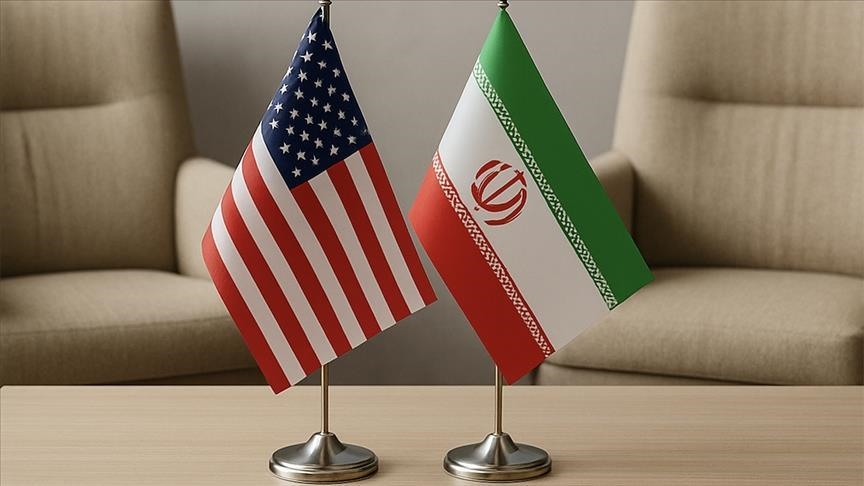

The US-Israel-Iran war presented a new arithmetic where Iranian weapons costing thousands of dollars were intercepted by US-Israel air defence systems priced at millions of dollars. For example, $35,000 Iranian Shahed-type drones were shot by $4 million Patriot interceptors. The old model of establishing military supremacy based on exquisite and expensive systems, prone to loss, has been rendered obsolete through Iranian asymmetric air power.
According to a May 2026 report by the Congressional Research Service, Washington spent a staggering $29 billion and lost 42 state-of-the-art aircraft. They included F35A, F-15Es, A-10, KC-135s, E-3 Sentry AWACS, MC-130Js, HH-60W, MQ-9 Reapers, and MQ-4C Triton drone. Downed by cheaper but intelligently networked Iranian systems, a new logic of warfare predicated on quantity has emerged. It was adopted by Iran following its turbulent history, which strengthened its resolve for indigenisation and produce hundreds of drones and ballistic missiles on a daily basis.
Contrarily, studies warned of severe shortages of munitions and advanced air defence interceptor missiles for the US-Israel coalition. With limited production capacity, the US-Israel use of munitions at an unsustainable rate could not be maintained by production systems not designed for prolonged, high‑intensity exchanges. Assessments also reveal that Israel and US would have faced mounting strain on missile inventory for Iron Dome, THAAD, Patriot, David’s Sling, and Arrow 2 and 3 if the current operational tempo continued. Hence, Iran imposed a strategic burden on its opponents by compelling them to expend vast numbers of costly interceptors, which, to the dismay of US Senator Mark Kelly, has made the American people less safe in future conflicts.
The plummeting reputation of Israel and the US emerged as another consequence of the war. A Pew survey showed Tel Aviv’s image hit a record low after its war on Iran. Washington’s reputation deteriorated due to Tehran’s horizontal escalation strategy to spread economic pain, by attacking US bases in seven Gulf countries and multiple Israeli Air Bases. The war’s existential nature left no red lines for Iran to put a direct cost on the US-Israel alliance. In a tit-for-tat strategy, Israel and Gulf’s critical infrastructure, such as petrochemical facilities and water desalination plants, was targeted. This splintered the region’s carefully cultivated image of peace and stability for investment and development. Trepidation spread across the Gulf region as the realisation slowly took hold that US bases exist not to protect them, but to support Israel. This has undermined Washington’s presence, eroded confidence in its security umbrella, and cast doubt on Gulf investments in the US. Meanwhile, Israel also succeeded in redirecting Gulf states’ antagonism from itself towards Iran.
The war also laid bare Tel Aviv’s priority to perpetuate chaos as a means of sustaining regional hegemony. A core element of the broader Zionist project of Greater Israel lies in Iran’s regime change, dismantling its nuclear programme, and securing Israel’s unrivalled regional dominance. However, according to the war logic, Israel’s narrow strategic depth, small army, and engagement in a multi-frontal war in Syria, Lebanon, and Gaza, reflect its incapability for the establishment of Greater Israel on its own. A warning was also issued by Israel’s Chief of Staff about a potential army collapse because of troop shortages, which will disallow boots on ground and establishment of an occupational force in Iran.
The developments in the Middle East can be viewed through the Thucydides Trap. It states the inevitability of war when a rising power challenges the dominance of an established one. China’s growing technological and economic power is challenging Washington’s global supremacy, which has pursued US-centric foreign policy decisions, inclusive of Iran war, in a bid to retain its hegemonic grasp. On the other hand, President Xi through his global economic strategic partnerships has envisioned a multipolar world with shared global governance embedded with the concepts of fairness and justice. Within this new world order, although the US would continue to play a role, Washington’s assertiveness in setting international rules and imposing its will would diminish. The rise of middle powers is accelerating the emergence of the new world order, with Pakistan’s mediatory role between the US and Iran demonstrating a pertinent example.
The US-Israel war on Iran underscored the emergence of a new world order, where a middle power has directly challenged a hegemon, which research hints is in its twilight era. Other truths also became apparent. The effectiveness of air power is dependent on its ability to achieve specific political objectives. Lacking a coherent strategy, the US-Israel bombing campaign strengthened Iranian unity. Iran’s geoeconomic counter by closing the Strait of Hormuz demonstrated how a single regional power can hold the global economy hostage through control of a strategic chokepoint, despite advanced US-Israeli weaponry. These outcomes confirm the broader shift from US‑led unipolarity to a multipolar order, where middle powers and regional states now shape global dynamics.