Azerbaijan Calls for Stronger Parliamentary Action to Protect Environment During Armed Conflicts
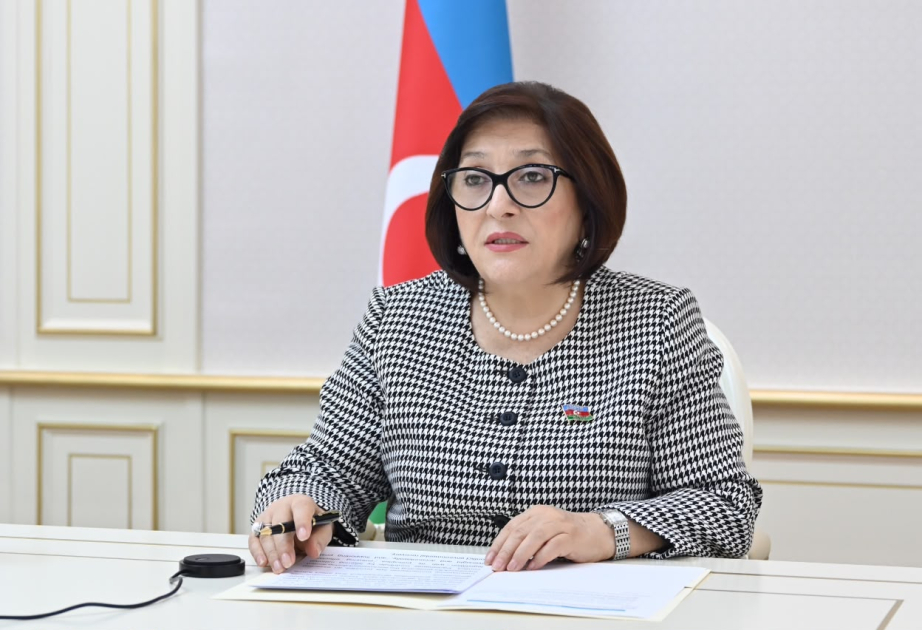
Baku, The Gulf Observer: Speaker of Azerbaijan’s Milli Majlis Sahiba Gafarova has called for stronger parliamentary action to protect the natural environment during armed conflicts, stressing that environmental destruction poses serious humanitarian, legal, and security challenges with long-term consequences for future generations.
Addressing the Inter-Parliamentary Union (IPU) webinar titled “Protection of the Natural Environment in Armed Conflicts” on July 9, Gafarova said that armed conflicts not only result in human suffering but also inflict lasting damage on ecosystems, biodiversity, water resources, and agricultural land, undermining sustainable development.
She emphasized that while international humanitarian law provides an important legal framework for environmental protection during conflicts, its effectiveness depends largely on implementation at the national level.
The Speaker noted that parliaments have a crucial role in incorporating the principles of international humanitarian law into domestic legislation, strengthening oversight of implementation, improving legal accountability for environmental damage, and supporting post-conflict environmental restoration.
Referring to Azerbaijan’s own experience, Gafarova said that during the 30-year occupation of Azerbaijani territories, forests were destroyed, agricultural lands were degraded, water resources were polluted, biodiversity was severely damaged, and natural resources were illegally exploited.
She further noted that more than one million landmines planted in the formerly occupied territories continue to pose a significant threat to both human lives and the environment, hampering ecological restoration efforts and delaying the safe return of internally displaced persons.
Highlighting Azerbaijan’s ongoing recovery initiatives, Gafarova said the country is implementing extensive humanitarian demining operations, ecosystem restoration programmes, tree-planting campaigns, and green energy projects in the liberated territories.
She also pointed to legislative measures adopted by the Milli Majlis to strengthen the country’s environmental protection framework. These include the addition of the crime of “Ecocide” to Azerbaijan’s Criminal Code in 2024, classifying it as a crime against peace and humanity, as well as the adoption of laws on the prohibition of the development, production, stockpiling, and use of chemical weapons and on demining operations.
Gafarova also referred to the Final Document of the Parliamentary Meeting jointly organized by the Inter-Parliamentary Union (IPU) and the Milli Majlis during COP29, noting that it calls on parliaments worldwide to prevent the environmental impacts of armed conflicts, raise awareness of ecological damage caused by landmines, and strengthen legislative initiatives against ecocide.
She said the document reflects Azerbaijan’s commitment as the host country of COP29 to advancing environmental protection and sustainable development on the global agenda.
Concluding her address, Gafarova called for enhanced international cooperation to strengthen the implementation of international humanitarian law, protect the environment during armed conflicts, and build a safer, more sustainable future for generations to come.