Peace is the New Formula for the Future
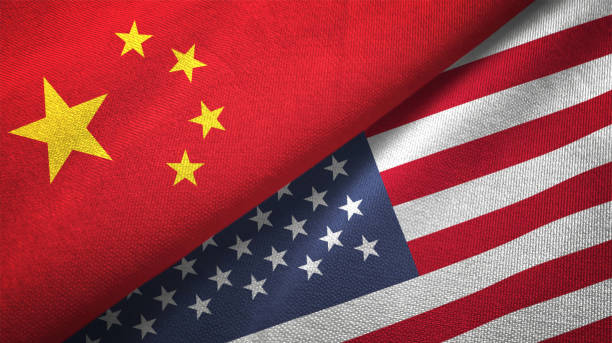

The May 2026 summit between President Trump and President Xi augmented the multipolar reality of the global order. The meeting marked a turning point, accelerating this reality through speeches that promoted unity, cooperation, and collaboration as the path to win-win outcomes in a turbulent world. Moreover, China conveyed its role as an emerging positive power with an acknowledgement that the rejuvenation of the Chinese nation and Making America Great Again can proceed in tandem. Therefore, Beijing’s aim for multipolarity and a redistribution of power within the existing system instead of seeking dominance has augured well. This is evident in the amicable acceptance of the new multipolar world which has created space for other players to emerge. Recent developments in the Gulf, and Pakistan’s expanded strategic footprint highlight a shift towards President Xi’s envisioned cordial world order.
The meeting between of the world’s two largest economies is a success in itself. This is because regular communication, also seen during the Cold War, is vital to reducing the risk of miscalculation amid flashpoints such as Taiwan, the South China Sea, and non-traditional domains vulnerable to sabotage and cyberattacks. The meeting produced a cautious strategic settlement, a form of cold peace grounded in a shared recognition of potential catastrophe. However, it also paved an arrangement for the two countries to collaborate on shared problems within an orderly and equal multipolar world.
Notably, the meeting reinforced the current global order’s arrangement. US’s role as a unipolar dominant actor is waning and China is emerging as a rising power. This evolving reality has stirred fears of a modern Thucydides Trap, describing the likelihood of war when a rising power threatens to displace an established one. Yet nuclear weapons, digital connectivity and global supply chains mean challenges are not inevitable. Moreover, US-China relations remain defined by interdependence, as reflected in World Trade Organization data and World Bank forecasts. For example, despite tariff war, trade in goods and services between the two countries continued, underscoring the resilience of their commercial links. In 2025, the US trade in goods with China was approximately 414.7 billion USD. Supply chains have evolved as Chinese components continue to reach the US in large quantities through third parties.
Projections for the coming decade point towards a multipolar world shaped by US-China rivalry confined to economic and technological spheres, in the domains of technology, finance, and AI. Similar to US-China, economic cooperation between Pakistan and India can create peace, serve national interests, and increase the cost of prolonged tensions and stalemate. For this to become a reality, India needs to mellow down its belligerent attitude.
The new reality of the emergent global order was further reinforced when President Putin landed in Beijing. The two leaders signed a joint declaration for a multipolar world, and spoke against US’s unipolarity nearing its end as global power is becoming distributed among many centres of influence. Presently, no single power holds all the advantages. China has become emblematic of industry and commerce. The US retains its lead in military reach and control over key international financial institutions. Russia continues to project considerable military and geopolitical influence. In this regard, China becoming the central meeting place for the leaders of the US and Russia is an important development to note. It underscores the gradual redistribution of global influence, a shift demonstrating that no single actor is able to control systemic developments entirely on its own.
Nevertheless, the ripples of multipolarity have not been confined to rhetoric, but are being felt in practice too. An example is Pakistan. Leveraging its geographical position, as well as friendly relations with Tehran and Washington, Pakistan has emerged as a credible mediator and negotiator between the two warring states. Islamabad’s enhanced diplomatic standing and ability to carve out space as a member of the global community have stemmed directly from its victory in Marka-e-Haq. This achievement has strengthened Pakistan’s reputation as a responsible, mature, and reliable partner in global diplomacy. Resultantly, the Islamabad Memorandum of Understanding (MoU) highlighted Pakistan’s emerging status as a vital mediator in an increasingly multipolar world. The brokering of this historic 14-point agreement effectively halted a dangerous military conflict, as Pakistan has positioned itself as a trusted bridge between the US and Iran. Thus, indicative of power diffusing away from a unipolar international order, the Islamabad MoU has positioned Pakistan as an indispensable middle power capable of driving stability, connectivity, and multilateral agreements across the Middle East.
Conclusively, the Xi-Trump meeting conveyed Beijing’s continued commitment to building lasting peace through dialogue and consultation, and creating common security through joint efforts. Captured in the adage, “United we stand, divided we fall”, is President’s Xi’s emphasis on the pursuit of cooperative, comprehensive, and sustainable security for a peaceful and prosperous world. Thus, the Chinese President’s message for the world has been demonstrated in practice through Pakistan’s commendable efforts in the Gulf.