President Mirziyoyev Outlines Strategic Expansion for Uzbekistan’s Leather and Footwear Industry
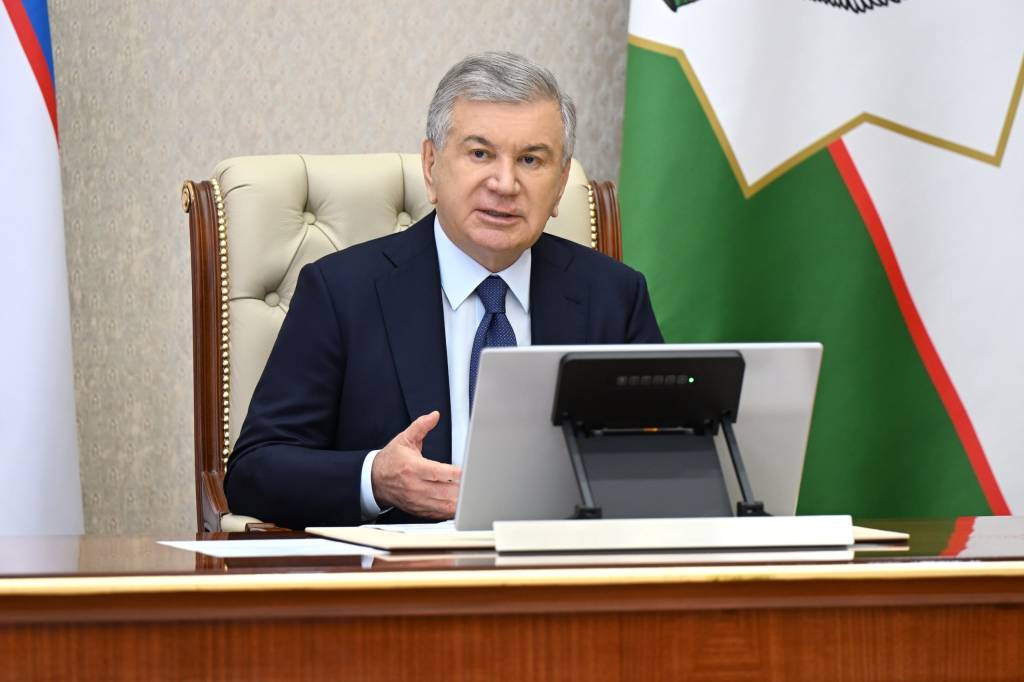
Tashkent, The Gulf Observer: President Shavkat Mirziyoyev has reviewed a comprehensive presentation detailing the current progress and future roadmap for Uzbekistan’s leather and footwear sector. The strategic plan aims to transform the industry from a raw material exporter into a high-tech manufacturing hub by 2030.
Rapid Growth and Ambitious Targets
The sector has demonstrated strong momentum, with leather industry output growing by 25 percent to 962 billion UZS in the first quarter of this year. The government has set rigorous benchmarks for the coming years to capitalize on this trajectory:
| Metric | 2024 Year-End (Planned) | 2030 Target |
| Total Production | 5.4 trillion UZS | 12 trillion UZS |
| Export Volume | $110 million | $500 million |
| New Job Creation | — | 12,000 jobs |
Addressing the Processing Gap
Despite high procurement volumes, the President noted significant untapped potential in deep processing. Currently, only 30 percent of sheep and goat skins are processed, while only 15 percent of the 40,000 tons of wool procured annually undergoes processing.
To bridge this gap, several infrastructure projects were announced:
- Specialized Industrial Zones: New zones will be established in the Akhangaran district (Tashkent region) and Shahrihan district (Andijan region), featuring integrated logistics, design centers, and training facilities.
- Modern Industrial Cluster: A centralized, environmentally compliant leather processing cluster will be built in Akhangaran. This facility will include a treatment system capable of recycling 8,000 cubic meters of water per day.
- Wool Processing Complex: A new complex in the Syrdarya region will be designed to process 30,000 tons of wool, creating a full production chain from raw materials to finished goods.
Supply Chain and Market Innovation
To support entrepreneurs, the government plans to organize centralized imports of cattle hides from neighboring countries using a “single window” principle. Measures include compensating transportation costs and providing working capital to processing firms.
The presentation also highlighted a shift toward artificial leather. In response to global trends favored by major brands for environmental and cost reasons, Uzbekistan plans seven projects to produce 50 million linear meters of artificial leather, aiming to satisfy domestic demand and boost exports.
Moving Beyond Subsidies
President Mirziyoyev emphasized that while industry benefits are helpful, they are not a substitute for rigorous execution.
“The benefits provided to the industry alone will not yield results – precise calculations and practical actions are required for each enterprise, project, and market,” the President stated.
Regional leaders and officials have been instructed to focus on the financial recovery of enterprises, the production of competitive import-substituting goods, and assisting local entrepreneurs in securing international certifications to compete on the global stage.