President Mirziyoyev Reviews Bukhara Reforms, Sets Ambitious Economic Growth and Development Targets
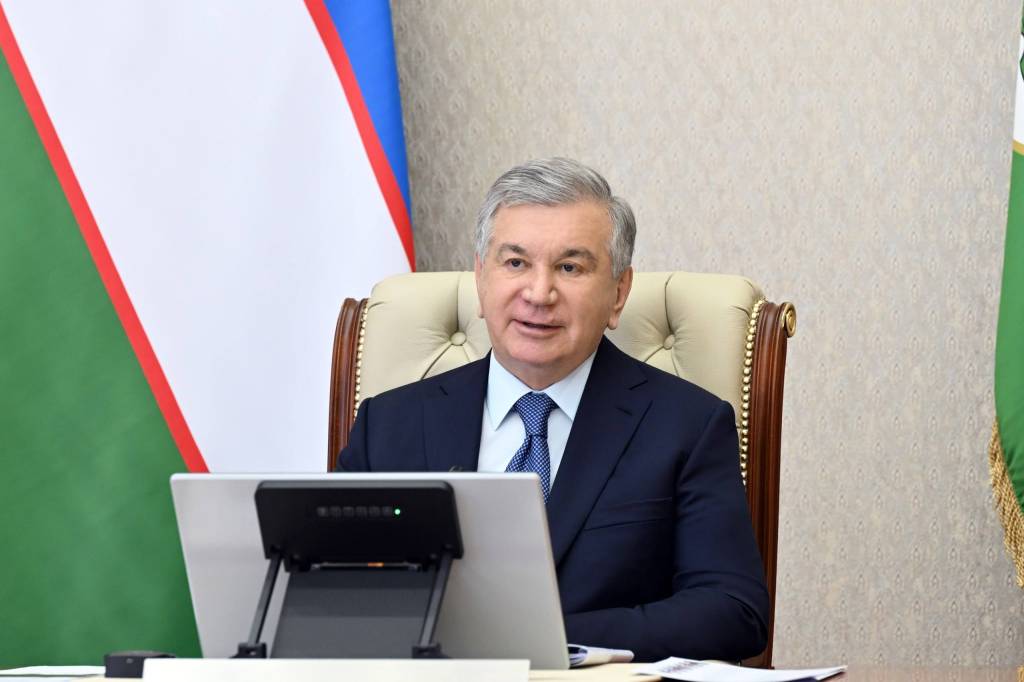
Tashkent, The Gulf Observer: President of Uzbekistan Shavkat Mirziyoyev chaired a high-level meeting to assess the effectiveness of ongoing reforms in the Bukhara Region, focusing on unlocking its economic potential and defining priority development tasks for the coming years.
During the meeting, the head of state highlighted Bukhara’s vast capabilities across industry, agriculture, services, and tourism, noting that the region is already home to two major oil and gas chemical plants, with another facility under construction. In addition, 10 large-scale solar and wind energy projects with a combined capacity of 4.5 gigawatts, valued at $5.2 billion, are currently underway.
Economic indicators for 2025 reflected steady growth, with the gross regional product increasing by 7.2 percent to reach 86.6 trillion UZS. Industrial output rose by 7.1 percent, agriculture by 4.3 percent, and the services sector recorded a significant 14 percent growth. Meanwhile, unemployment declined to 4.7 percent and poverty fell to 6 percent compared to the previous year.
For 2026, the government has set ambitious targets, including raising the gross regional product to 102.1 trillion UZS, achieving 9.1 percent growth. Plans also aim to expand industry by 9.1 percent, agriculture by 5.9 percent, and services by 20.1 percent, while reducing unemployment and poverty rates to 2 percent and creating income opportunities for more than 381,000 people.
To achieve these objectives, authorities will implement targeted measures to transform key urban and rural areas—including Bukhara and Kagan cities, as well as several districts—into zones free from unemployment and poverty.
President Mirziyoyev emphasized Bukhara’s unique historical and cultural significance, noting its 3,000-year heritage and concentration of world-renowned monuments. He stressed that this potential must be leveraged to drive economic growth, job creation, and infrastructure development.
In the investment and export sectors, Uzbekistan aims to attract $3.3 billion in foreign investment and secure $1.5 billion in exports in 2026, alongside implementing projects worth $9.2 billion. Industrial development remains a central focus, with 61 major projects valued at $2.2 billion expected to create 18,000 jobs and boost per capita industrial output.
Among key initiatives, plans include establishing an annual production capacity of 80,000 electric and hybrid vehicles in Kagan district, alongside major petrochemical and manufacturing projects across the region. Additional investments target fertilizer production, construction materials, and expanded industrial zones tailored to various sectors.
The meeting also underscored agricultural modernization, including the development of 100,000 hectares of land through advanced irrigation technologies, expansion of livestock farming, and improved efficiency in cotton and grain production. Measures to conserve water resources and enhance land reclamation were also discussed.
In the services and tourism sectors, authorities plan to implement dozens of projects, develop trade and service corridors, and establish new tourist zones. The goal is to attract up to 9 million visitors in 2026, supported by new hotels, tourism facilities, and cultural destinations.
Special attention was given to expanding tourism beyond the city of Bukhara to surrounding districts, as well as aligning heritage site management with UNESCO standards.
The president also highlighted the importance of human capital development, including plans to establish a joint faculty with Danube University Krems and introduce dual education systems to enhance workforce skills.
Urban development and infrastructure upgrades were also on the agenda, with large-scale housing, road construction, and public service projects planned to accommodate population growth and improve living standards.
President Mirziyoyev instructed relevant authorities to ensure effective implementation of all initiatives, emphasizing that each reform must translate into tangible economic and social outcomes for the region.