Uzbekistan Positions Itself as Eurasia’s Investment Hub
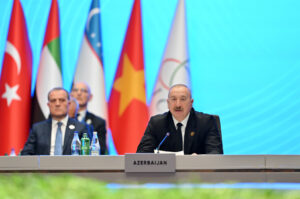
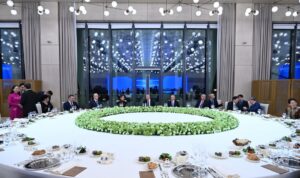
The Tashkent International Investment Forum (TIIF 2026) has unveiled a highly influential lineup of speakers and distinguished guests, reflecting a growing convergence between geopolitical leadership and global investment architecture. The composition of participants demonstrates that the forum has evolved beyond a traditional investment platform into a high-level diplomatic and economic coordination arena involving heads of state, prime ministers, ministers of finance and trade, central development banks, and major international financial institutions.
The presence of such a diverse and strategically positioned group of leaders indicates Uzbekistan’s increasing role as a central node in Eurasian economic connectivity and investment diplomacy.
Heads of State and Government-Level Representation
One of the most notable features of TIIF 2026 is the participation of multiple heads of state and government officials, underscoring the forum’s political significance in addition to its economic agenda.
Confirmed participants include:
Shavkat Miromonovich Mirziyoyev, President of the Republic of Uzbekistan; Frank-Walter Steinmeier, President of Germany; Bajram Begaj, President of Albania; Ali Asadov, Prime Minister of the Republic of Azerbaijan; Olzhas Bektenov, Prime Minister of the Republic of Kazakhstan; Adylbek Kasymaliev, Chairman of the Cabinet of Ministers of the Kyrgyz Republic and Head of the Presidential Administration; Mikhail Mishustin, Prime Minister of the Russian Federation; and Kokhir Rasulzoda, Prime Minister of the Republic of Tajikistan.
This level of participation reflects a strong institutional alignment between Central Asian states, key Eurasian powers, and select European leadership, highlighting TIIF’s role as a platform for intergovernmental economic coordination.
Global Financial Institutions and Investment Authorities
TIIF 2026 also brings together leading figures from international financial institutions and sovereign investment bodies. Among them is Odile Renaud-Basso, President of the European Bank for Reconstruction and Development, whose presence signals continued institutional engagement in regional development financing and infrastructure investment across Central Asia.
In addition, Mohamed Hassan Alsuwaidi, UAE Minister of Investment, and Suhail Mohamed Al Mazrouei, UAE Minister of Energy and Infrastructure, represent the Gulf region’s expanding strategic interest in Eurasian infrastructure, logistics corridors, and energy diversification projects. Similarly, Fahad bin Abduljaleel Al-Saif, Saudi Arabia’s Minister of Investment, reflects Riyadh’s ongoing efforts to diversify its global investment footprint under long-term economic transformation strategies.
From the Western institutional investment side, John Jovanovic, President and Chairman of the Export-Import Bank of the United States, and Ben Black, CEO of the U.S. International Development Finance Corporation (DFC), indicate continued American engagement in structured development finance and strategic investment projects in emerging markets.
Trade, Energy, and Economic Policy Leadership
The forum also features a significant number of ministers responsible for trade, energy, and economic development, highlighting TIIF’s focus on sector-specific investment frameworks.
These include Omer Bolat, Minister of Trade of Türkiye; Nazar Agakhanov, Minister of Trade and Foreign Economic Relations of Turkmenistan; Rajesh Agrawal, Deputy Minister of Commerce and Industry of India; Wang Hongzhi, Administrator of China’s National Energy Administration; Stefan Rouenhoff, State Secretary of Germany’s Federal Ministry for Economic Affairs and Energy; and Maxim Reshetnikov, Minister of Economic Development of the Russian Federation.
This composition reflects a multi-polar economic dialogue structure, where energy security, trade corridors, and industrial development policies are increasingly discussed within a unified investment platform.
Former Heads of State and Strategic Advisory Influence
TIIF 2026 also includes former heads of state and senior political figures, adding a strategic advisory dimension to the forum’s institutional profile. Participants such as Katalin Novák, former President of Hungary; Kolinda Grabar-Kitarović, former President of Croatia; and Ramona Mănescu, former Romanian Foreign Minister, contribute experience in European governance, diplomacy, and international institutional coordination.
Their presence reinforces TIIF’s role not only as an investment platform but also as a venue for high-level policy dialogue and geopolitical economic assessment.
Conclusion
The TIIF 2026 speaker and distinguished guest lineup demonstrates a deliberate effort to position Uzbekistan at the intersection of global investment diplomacy and geopolitical economic coordination. The participation of heads of state, ministers, development banks, and institutional investors from Europe, Asia, the Middle East, and North America reflects the forum’s transformation into a hybrid platform where economic strategy and international relations converge.
This structure highlights Central Asia’s growing relevance in global capital flows, infrastructure development strategies, and cross-regional connectivity projects, with TIIF serving as a key institutional bridge between diverse economic blocs.