Sri Lanka 2026: Tourism Growth Projections and Sectoral Challenges
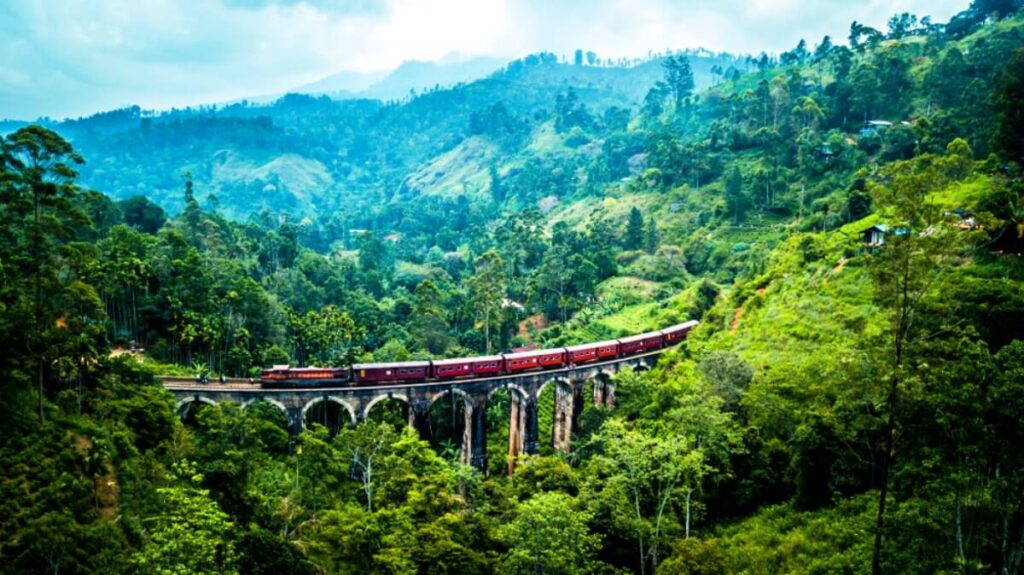
Sri Lanka’s tourism grew by 15.1% in 2025, reaching 2.36 million visitors. For 2026, arrivals are projected at 2.5–3 million. Despite global uncertainties, market diversification, digitalization, and sustainability remain key drivers of continued growth.
During the second quarter of the 2020s, the global tourism industry entered a phase of restructuring, recovery, and structural transformation. In this context, Sri Lanka has emerged as one of the countries that not only recovered but also achieved a strategic leap forward. As of 2025, the country’s tourism sector maintained its strong recovery trajectory, recording a 15.1% increase compared to the previous year and reaching a total of 2,362,521 tourist arrivals, thereby surpassing pre-pandemic benchmark levels. This performance clearly demonstrates that tourism is not merely an economic activity but a critical macroeconomic driver contributing to foreign exchange earnings, employment generation, and regional development.
This growth has been enabled by a combination of multiple factors, including enhanced air connectivity, diversification of source markets, targeted promotional strategies, and increased traveler confidence. Simultaneously, the evolution of public policies into more adaptive and learning-oriented frameworks has strengthened the sector’s resilience against external shocks. Nevertheless, persistent global economic uncertainties, geopolitical tensions, and shifting consumer preferences necessitate a carefully calibrated strategic approach for sustaining growth in 2026.
Within this framework, Sri Lanka aims to attract between 2.5 million and 3 million tourists in 2026. However, achieving this target will depend heavily on global economic conditions, international tourism demand, and regional competitive dynamics.
1. Tourism Performance in 2025 and Structural Strengthening Dynamics
The year 2025 marked a period not only of quantitative expansion but also of structural consolidation for Sri Lanka’s tourism sector. The increase in tourist arrivals to 2,362,521 indicates that the post-pandemic recovery phase has been successfully completed. Four key drivers underpin this growth.
First, the expansion of air transport capacity and the introduction of new routes significantly improved the country’s accessibility. Second, the integration of alternative source markets—particularly from Asia and the Middle East—alongside traditional European markets helped diversify demand and mitigate market concentration risks. Third, digital marketing initiatives and strategic destination branding strengthened Sri Lanka’s global image and visibility. Finally, advancements in institutional capacity, particularly in crisis management and policy adaptation, contributed to greater sectoral stability.
As a result, tourism has evolved beyond a conventional service industry into a cornerstone of macroeconomic stability. Its capacity to generate foreign exchange has alleviated pressure on the current account balance, while both direct and indirect employment creation has contributed to broader social welfare. Additionally, tourism has acted as a catalyst for regional and rural development by stimulating infrastructure investments.
2. Implications of Global Tourism and Economic Trends for Sri Lanka
At the global level, the tourism sector grew by approximately 4% in 2025, reaching around 1.52 billion international tourist arrivals. While this indicates continued recovery, the deceleration in growth suggests a transition toward normalization. International organizations project global tourism growth of approximately 3–4% in 2026.
Despite this positive outlook, the global economic environment remains fragile. Growth rates are expected to fluctuate between 2.7% and 3.3%, signaling constrained demand, particularly in advanced economies. Regions such as the United States, Europe, and Japan are facing low growth, high debt burdens, and fiscal pressures, all of which are likely to influence international travel demand.
For Sri Lanka, this presents a dual challenge. On one hand, long-haul travel demand may weaken, accompanied by reduced per capita spending. On the other hand, increased price sensitivity among tourists may intensify competition among destinations. Furthermore, geopolitical tensions, energy price volatility, and climate-related risks continue to shape global tourism flows.
Notably, rising trade tensions and tariff increases observed in 2025 may exert downward pressure on business travel and MICE (Meetings, Incentives, Conferences, and Exhibitions) tourism. A potential contraction in corporate spending could negatively affect these segments.
3. Outlook for 2026: Opportunities, Risks, and Strategic Directions
Projections for 2026 indicate a cautiously optimistic outlook for Sri Lanka’s tourism sector, with expected arrivals ranging between 2,546,644 and 3,000,000 tourists. This anticipated growth is supported by continued investments in infrastructure, ongoing digital transformation, and diversification of tourism products.
One of the most significant opportunities lies in emerging markets. Regions such as India, Southeast Asia, and the Middle East, which are expected to maintain relatively stronger economic performance, present viable alternatives to traditional high-income markets. Tailored offerings—including cultural tourism, wellness tourism, and short-haul travel packages—can enhance demand diversification and resilience.
However, the anticipated global economic slowdown is likely to reshape tourist behavior, making it more rational and cost-sensitive. Shorter booking windows, preference for affordable packages, and a growing emphasis on experiential travel are expected to dominate. In this context, Sri Lanka must recalibrate its pricing strategies and strengthen its value-for-money proposition.
Meanwhile, the domestic economic outlook—projected to grow at approximately 3.3%–3.5% in 2026—may constrain domestic tourism demand. Tightened financial conditions and fiscal limitations could also restrict investments in tourism infrastructure. Additionally, exposure to natural hazards, such as cyclones, poses operational risks that may temporarily disrupt tourism activities.
Conversely, potential easing of trade tensions, technological advancements, and improved regional political stability could provide upside momentum. Digitalization, in particular, offers significant potential for enhancing destination management and improving the overall tourist experience.
Conclusion: Balancing Resilience and Competitiveness
Sri Lanka’s tourism sector has successfully repositioned itself in the global market through its strong performance in 2025 and holds considerable growth potential for 2026. However, the sustainability of this growth depends not only on increasing demand but also on the sector’s resilience to external shocks, policy coherence, and competitive positioning.
In an environment shaped by global economic uncertainty, geopolitical risks, and evolving consumer behavior, Sri Lanka must prioritize market diversification, product innovation, sustainable tourism practices, and infrastructure development. A strategic focus on niche segments—such as eco-tourism, cultural tourism, and wellness tourism—along with the integration of local communities into the tourism value chain, will be essential for long-term success.
Ultimately, with a cautious yet strategic approach, Sri Lanka has the potential to evolve from a recovering destination into a resilient and preferred hub within the global tourism landscape.
References
- World Tourism Organization. (2025), World Tourism Barometer, volume 24, issue 1, January 2026, UN Tourism, Madrid, DOI: https://doi.org/10.18111/wtobarometereng
- International Monetary Fund. (2025), World Economic Outlook: Global Economy in Flux, Prospects Remain Dim. Washington, DC. October.
- Available at: https://www.imf.org/- /media/files/publications/weo/2025/october/english/text.pdf
- The World Bank. (2026), Global Economic prospects, January 2026, Washington DC. Available at https://openknowledge.worldbank.org/server/api/core/bitstreams/a9e24256- baf8-45bb-9075-75e437e1d6f7/content
- United Nations (2026), World Economic Situation and Prospects 2026.
- Asian Development Bank https://www.adb.org/where-we-work/sri-lanka/economy
- Central Bank of Sri Lanka. (2026), Central Bank’s Policy Agenda for 2026 and Beyond, Available at: https://www.cbsl.gov.lk/sites/default/files/cbslweb_documents/about/central_banks_policy_agenda_for_2026_and_beyond_e.pdf