President Shavkat Mirziyoyev Reviews Strong Q1 Growth, Sets Strategic Economic Priorities for 2026
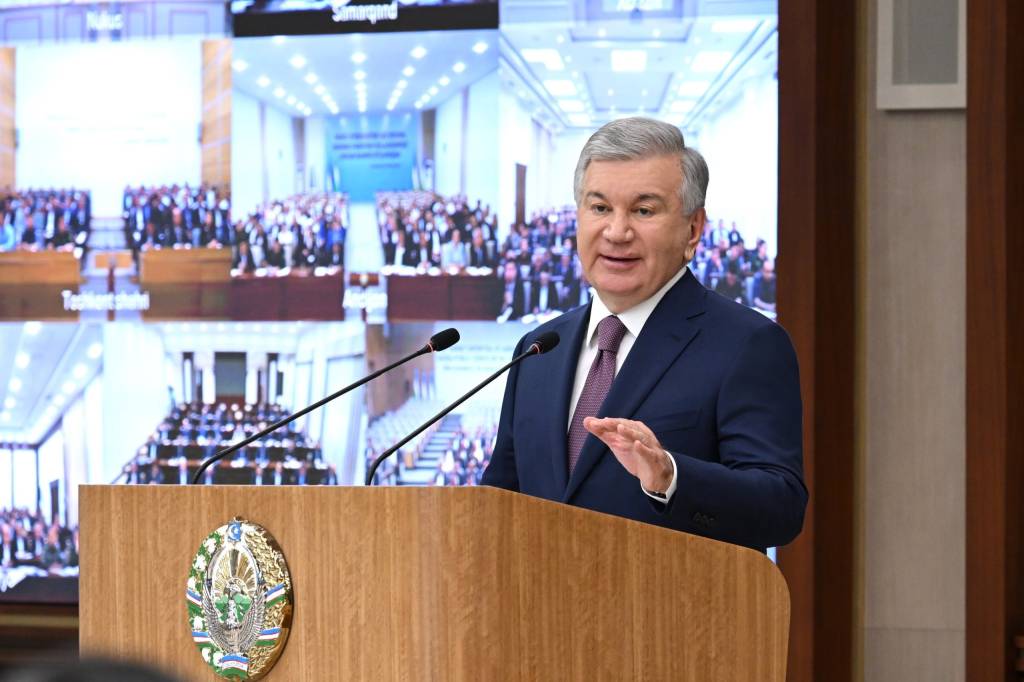
Tashkent, The Gulf Observer: President Shavkat Mirziyoyev chaired a high-level meeting on April 24 to review first-quarter economic performance across regions and sectors, while outlining key priorities for the remainder of the year amid evolving global challenges.
The meeting highlighted robust macroeconomic indicators, with gross domestic product growing by 8.7 percent, industrial output rising by 8 percent, the service sector expanding by 16.1 percent, and agriculture increasing by 5.1 percent. Exports reached $5.8 billion, while foreign investment totaled $13.7 billion. Annual inflation declined to 7.1 percent, marking a notable milestone.
Budget revenues for January–March rose by 35 percent year-on-year, reaching 103 trillion UZS, with an additional 2.2 trillion UZS generated for local budgets. Of this, 1.4 trillion UZS was retained at district and city levels, reflecting improved fiscal decentralization.
The President underscored that wide-ranging structural reforms are underway to elevate the national economy to a new international level. He noted that 30 percent of state assets, valued at $2.4 billion, are set to be listed on international stock markets for the first time. This initiative is linked to the establishment of the National Investment Fund and the transfer of management of 13 strategic enterprises to global asset manager Franklin Templeton.
According to a recent report by the International Monetary Fund, Uzbekistan continues to demonstrate stable and dynamic growth driven by strong economic activity. The country also improved its standing in the global Index of Economic Freedom, rising 14 positions and entering the category of “moderately free economies” for the first time.
Despite these achievements, President Mirziyoyev cautioned against complacency, citing increasing global uncertainties, rising geopolitical tensions, and intensifying economic competition. He called for a fundamental reassessment of governance approaches and leadership practices at all levels.
The meeting placed strong emphasis on the development of small and medium-sized enterprises (SMEs), with 140 trillion UZS allocated to the sector through banking channels this year. While some regions demonstrated strong job creation outcomes, disparities were noted, prompting directives to integrate artificial intelligence in credit allocation processes and to launch an AI Advisor platform to support entrepreneurs with data-driven solutions.
The President also addressed bureaucratic inefficiencies hindering business development, stressing accountability among officials and directing regional leaders to evaluate underperforming administrators.
Inflation control was identified as a top priority, with global factors such as rising oil prices and increased logistics costs exerting pressure on domestic markets. Authorities were tasked with boosting local production and stabilizing prices to achieve a 6.5 percent inflation target by year-end.
Food security concerns were also discussed, particularly the decline in cattle imports due to logistical disruptions. Measures were introduced to subsidize transportation costs and ensure sufficient meat imports, with a target of 130,000 tons by the end of the year.
In the agricultural sector, plans were announced to auction an additional 100,000 hectares of land and expand fodder crop cultivation across 478,000 hectares. Regional authorities were instructed to accelerate implementation and improve performance in lagging areas.
The meeting also reviewed shortcomings in industrial production and export performance in several districts, with disciplinary actions ordered against underperforming regional leaders. Efforts to enhance industrial output, particularly in the electrical engineering sector, were emphasized, alongside a target of increasing production to 25 trillion UZS and exports to $1 billion by the end of the second quarter.
Attention was given to improving efficiency and productivity through modern management practices such as lean production and Kaizen methodologies. The Ministry of Economy and Finance was tasked with implementing efficiency programs in 100 enterprises and securing $30 million in grant funding.
Support for exporters was also highlighted, with officials directed to address barriers faced by businesses unable to fulfill export contracts. Measures to strengthen industrial zones, improve infrastructure utilization, and expand investment opportunities were also discussed.
The President further outlined plans to optimize administrative infrastructure by relocating state institutions to unified centers, freeing up commercial space and reducing energy consumption. A five-year program will guide this transformation.
The meeting concluded with a strong emphasis on improving investment quality, maximizing economic returns, and ensuring accountability. A new AI-driven platform will be introduced to guide investment decisions based on market demand and production capacity.
President Mirziyoyev reaffirmed that achieving sustained economic growth, controlling inflation, expanding exports, creating jobs, and addressing business challenges will remain the key performance benchmarks for all government leaders.
Reports were presented by ministers, industry heads, and regional authorities during the session.